Maharashtra State Board Class 8 History Solutions Chapter 6 Beginning of Freedom Movement
Class 8 History Chapter 6 Beginning of Freedom Movement Textbook Questions and Answers
1. (A) Rewrite the statements by choosing the appropriate options:
Solution & Step-by-Step Answer:
(d) Gopal Krishna Gokhale
Solution & Step-by-Step Answer:
(b) Mumbai
Solution & Step-by-Step Answer:
(a) Lokmanya Tilak
B. Write the Names :
Solution & Step-by-Step Answer:
(i) Gopal Krishna Gokhale (ii) Ferozshah Mehta
Solution & Step-by-Step Answer:
(i) Lokmanya Tilak (ii) Lala Lajpat Rai
2. Explain the following statements with reasons:
Solution & Step-by-Step Answer:
Solution & Step-by-Step Answer:
1. Though at a slow pace, the contribution of Indian National Congress was consistent in the initial stage. But the extremists felt to intensify the freedom struggle. 2. Moderates and Extremists were unanimous about the objectives of Congress. But they had differences regarding the methods/ways to achieve it. 3. The moderates insisted on constitutional measures whereas extremists wanted to adopt severe methods. 4. The tension between these groups increased during the Surat session in 1907. This led to the formation of two groups within the Congress.
Solution & Step-by-Step Answer:
1. Bengal was a large province. So under the pretext of administrative convenience, the province of Bengal was partitioned by Lord Curzon. 2. Accordingly, the Muslim-majority East Bengal and the Hindu-Majority West Bengal were created in 1905. 3. The real motive was to create a divide between the Hindus and the Muslims and thereby weaken the nationalist movement. The British used the Policy of ‘Divide and Rule’.
3. Write short notes:
Solution & Step-by-Step Answer:
The Indian National Congress was established in 1885 with the following objectives:
Solution & Step-by-Step Answer:
Solution & Step-by-Step Answer:
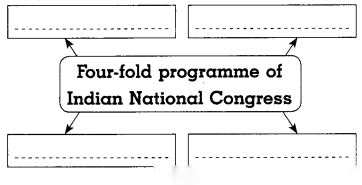
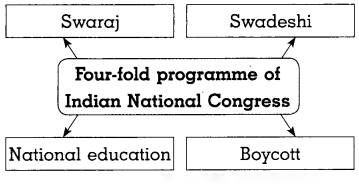
In the session of 1906 of the Indian National Congress, the four-point programme was unanimously accepted.
4. Explain the background behind the establishment of Indian National Congress with the help of following points:
1. Centralisation of administration
2. Economic exploitation
3. Western education
4. Study of Ancient Indian History
5. Role of newspapers
Answer:
The background behind the establishment of the Indian National Congress in 1885:
1. Centralisation of administration :
2. Economic exploitation :
3. Western education :
4. Study of Ancient Indian History :
5. Role of newspapers :
Do you Know?
Project:
Collect additional information about the leaders of the early phase of Indian National Congress with the help of the internet.
Class 8 History Chapter 6 Beginning of Freedom Movement Additional Important Questions and Answers
Rewrite the statements by choosing the appropriate options:
Solution & Step-by-Step Answer:
(c) Amrit Bazar Patrika
Solution & Step-by-Step Answer:
(a) Montague
Solution & Step-by-Step Answer:
(d) Aga Khan
Solution & Step-by-Step Answer:
(b) Ireland
Solution & Step-by-Step Answer:
(d) The Muslim League
Identify the wrong pair and correct it:
(1) The first President of Indian National Congress
– Wyomesh Chandra Banerjee
(2) Assassinated Rand
– The Chapekhar Brothers
(3) He pronounced the word Swaraj for the first time
– Lokmanya Tilak
(4) The British officer who took initiative in forming the Indian National Congress.
– Allen Octavian Hume
Answer:
Wrong Pair: He pronounced the word Swaraj for the first time.
– Lokmanya Tilak
Corrected pair: He pronounced the word Swaraj for the first time
– Dadabhai Nowrojee.
Write the Names:
Solution & Step-by-Step Answer:
(i) Dr. Bhau Daji Lad (ii) Dr. R.G. Bhandarkar
Solution & Step-by-Step Answer:
(i) Dr. Annie Besant (ii) Lokmanya Tilak.
Answer the following questions in one sentence each:
Solution & Step-by-Step Answer:
The Asiatic Society was established in Bengal to study ancient Indian culture.
Solution & Step-by-Step Answer:
The extremist leaders initially used the mediums of newspapers, national education and national festivals.
Solution & Step-by-Step Answer:
The extremist leaders established educational institutions for creating a generation which will have concern for their own language and tradition.
Solution & Step-by-Step Answer:
Surendranath Banerjee, Anand Mohan Bose, Rabindranath Tagore and such other leaders led the Anti-Partition Movement.
Solution & Step-by-Step Answer:
Lokmanya Tilak criticised the Moptague-Chelmsford Act in the following words, “This is neither Swaraj nor its foundation.”
Solution & Step-by-Step Answer:
Lokmanya firmly stated that “Swaraj is my birthright and I shall have it.”
Complete the graphical presentation:
Solution & Step-by-Step Answer:


Solution & Step-by-Step Answer:
Answer:
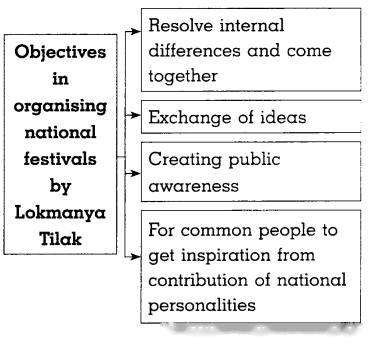
Solution & Step-by-Step Answer:
Explain the Concept :
Solution & Step-by-Step Answer:
Solution & Step-by-Step Answer:
Write short notes :
Solution & Step-by-Step Answer:
Solution & Step-by-Step Answer:
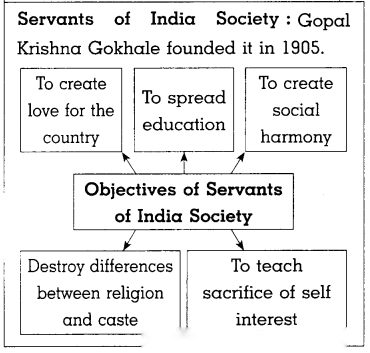
1. Gopal Krishna Gokhale founded the Servants of India Society in 1905. 2. Its main objectives were :
Solution & Step-by-Step Answer:
Solution & Step-by-Step Answer:
Explain the following statements with reasons:
Solution & Step-by-Step Answer:
Answer:
Solution & Step-by-Step Answer:
Solution & Step-by-Step Answer:
Solution & Step-by-Step Answer:
Therefore, the charge of sedition was put on Lokmanya Tilak by the British government for which he was sent to Mandalay jail for 6 years.
Solution & Step-by-Step Answer:
1. The economic policies of the British increased poverty in India. 2. It created dissatisfaction in the minds of the people against British rule. 3. The oppressive measures adopted by Lord Curzon to suppress the protest of partition of Bengal, exclusion of educated Indians in government services and the unjust treatment towards Indians in Africa all this added to the dissatisfaction among the IndiAnswer: 4. Morley-Minto reforms were passed by the British government as a temporary remedy to calm discontent among the IndiAnswer:
Solution & Step-by-Step Answer:
The Montague-Chelmsford Act disappointed the people of India, because
Answer the following questions in 25-30 words:
Solution & Step-by-Step Answer:
Solution & Step-by-Step Answer:
Solution & Step-by-Step Answer:
Solution & Step-by-Step Answer:
At the session of the Indian National Congress in 1906, Dadabhai Nowrojee pronounced the word ‘Swaraj’ for the first time. He gave the message
Solution & Step-by-Step Answer:
Solution & Step-by-Step Answer:
1. The Morley-Minto Act of 1909 provided for increase of the number of Indian members in the legislatures and the inclusion of some elected Indian members. 2. It created separate electorates for the Indian Muslims.
Solution & Step-by-Step Answer:
1. India had to face the brunt of First World War which led to growing dissatisfaction among people. 2. To curb their dissatisfaction and get cooperation, Montague, the Secretary of State for India, declared in 1917 that Britain would gradually grant the right to self-rule and a responsible government to India., 3. Lokmanya Tilak declared that if the British Government showed sympathy and a considerate attitude to the demands of the people then the people of India would cooperate with the government. This is called ‘Responsive Cooperation’.
Write answer in details :
Solution & Step-by-Step Answer:
Solution & Step-by-Step Answer:
The British government adopted following measures to suppress the anti-partition movement:
Identify the picture and write about his contribution to the freedom struggle.
Answer:
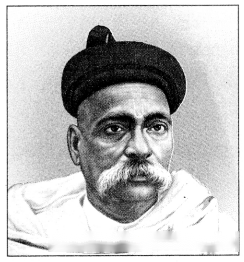
Solution & Step-by-Step Answer:
In the pre-independence period, Indian National Congress implemented the four-fold programme of Swaraj, Swadeshi, Boycott and National education. The programme needs to be implemented today but with slight changes.
1. Swaraj: Today we have political freedom but we lack good Governance. Common man, farmer, women and the backward classes still suffer.
2. Swadeshi: In the world of Globalisation, goods from other countries have entered Indian markets. It is necessary for the Indian industries to implement programme of Swadeshi to sustain.
3. Boycott: It is not possible to boycott foreign goods but we should insist on indigenous goods wherever possible.
4. National education: Schools in India impart education catering to different needs and ideologies but they fall short to create national pride and imparting character training.