Maharashtra State Board Class 9 Science Solutions Chapter 6 Classification of Plants
Class 9 Science Chapter 6 Classification of Plants Textbook Questions and Answers
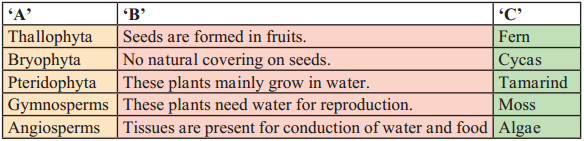
1. Match the proper terms from columns A and C with the description in column B.
2. Complete the sentences by filling in the blanks and explain those statements.
(angiosperms, gymnosperms, spore, Bryophyta, thallophyta, zygote)
a. ……………….. plants have soft and fiber-like body.
b. ……………….. is called the ‘amphibian’ of the plant kingdom.
Answer:
Bryophyta plant is called the ‘amphibian’ of the plant kingdom
c. In pteridophytes, asexual reproduction occurs by ……………….. formation and sexual reproduction occurs by ………………..formation.
Answer:
Spore, zygote: Pteridophyta plants show alteration of generation. One generation reproduces by spore-formation and the next generation reproduces sexually by zygote formation.
d. Male and female flowers of ……………….. are borne on different sporophylls of the same plant.
Answer:
Gymnosperms bear their male and female flowers on different sporophylls of the same plant
3. Answer the following questions in your own words.
a. Write the characteristics of subkingdom Phanerogams.
Answer:
b. Distinguish between monocots and dicots.
Answer:
| Dicots | Monocots |
Seed | Two cotyledons | Single cotyledon |
Root | Well developed, primary root (Taproot) | Fibrous roots |
Stem | Strong, hard. e.g. Banyan tree | Hollow, e.g. Bamboo
False, e.g. Banana
Disc-like, e.g. Onion. |
Leaf | Reticulate venation | Parallel venation |
Flower | Flowers with 4 or 5 parts or in their multiples (tetramerous or pentamerous) | Flowers with 3 parts or in multiples of three (trimerous). |
c. Write a paragraph in your own words about the ornamental plants called ferns.
Answer:
d. Sketch, label and describe the Spirogyra.
e. Write the characteristics of the plants belonging to division Bryophyta.
Answer:
4. Sketch and label the figures of the following plants and explain them into brief.
Marchantia, Funaria, Fern, Spirogyra.
Solution & Step-by-Step Answer:
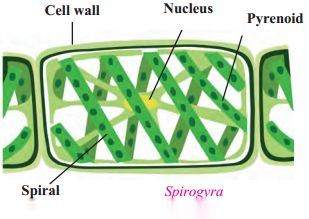
Solution & Step-by-Step Answer:
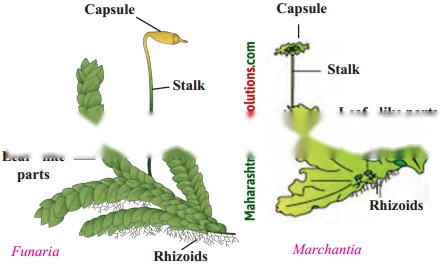
Solution & Step-by-Step Answer:
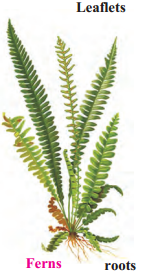
5. Collect a monocot and dicot plant available in your area. Observe the plants carefully and describe them in scientific language.
6. Which criteria are used for the classification of plants? Explain with reasons.
Answer:
Criteria for classification of plants:
Class 9 Science Chapter 6 Classification of Plants Intext Questions and Answers
Can you recall?
Solution & Step-by-Step Answer:
(i) Organisms have been classified based on the following:
(ii) Organisms are also classified at kingdom level and groups and subgroups.
Activity-based questions
Solution & Step-by-Step Answer:
Solution & Step-by-Step Answer:
Solution & Step-by-Step Answer:
Cycas and Christmas tree are gymnosperms, whereas Hibiscus and lily are angiosperms.
Solution & Step-by-Step Answer:
Monocots: com, wheat (it cannot be divided into equal halves) Dicots: beans, groundnut, tamarind and mango (it can be divided into two equal halves)
Class 9 Science Chapter 6 Classification of Plants Additional Important Questions and Answers
Choose and write the correct option:
Solution & Step-by-Step Answer:
(a) Robert Whittaker
Solution & Step-by-Step Answer:
(c) Eichler
Solution & Step-by-Step Answer:
(b) Thallophyta
Solution & Step-by-Step Answer:
(c) Funaria
Solution & Step-by-Step Answer:
(c) Gymnosperms
Solution & Step-by-Step Answer:
(a) Angiosperms
Solution & Step-by-Step Answer:
(b) Dicotyledons
Solution & Step-by-Step Answer:
(d) all of these
Solution & Step-by-Step Answer:
(d) Pteridophyta
Solution & Step-by-Step Answer:
(d) Banyan
Solution & Step-by-Step Answer:
(a) Thallophyta
Solution & Step-by-Step Answer:
(b) Rhizoids
Solution & Step-by-Step Answer:
(b) Pteridophyta
Solution & Step-by-Step Answer:
(b) Cryptogams
Solution & Step-by-Step Answer:
(c) Gymnosperms
Solution & Step-by-Step Answer:
(c) Sporophylls
Solution & Step-by-Step Answer:
(c) Gymnosperms
Solution & Step-by-Step Answer:
(d) Angiosperms
Solution & Step-by-Step Answer:
(d) Monocotyledons
Solution & Step-by-Step Answer:
(c) Dicotyledons
Find the odd one out:
Solution & Step-by-Step Answer:
Nephrolepis: It belongs to division Pteridophyta whereas the others belong to division thallophyta.
Solution & Step-by-Step Answer:
Spirogyra:
Solution & Step-by-Step Answer:
Riccia:
Solution & Step-by-Step Answer:
Cycas:
Solution & Step-by-Step Answer:
Green peas:
Complete the analogy:
(1) Spirogyra : Thallophyta : : Riccia :
(2) Moss : Bryophyta : : Selaginella :
(3) Nephrolepis : Pteridophyta :: Ulothrix :
(4) Pteridophyta : Roots :: Bryophyta :
(5) Gymnosperms : naked seeds : : Angiosperms :
(6) Dicotyledon : Reticulate venation : : Monocotyledon:
(7) Bamboo stem: Hollow:: Onion Stem:
(8) Monocotylendon : Tap root:: Dicotyledon :
Answer:
(1) Bryophyta
(2) Pteridophyta
(3) Thallophyta
(4) Rhizoids
(5) Covered seeds
(6) Parallel venation
(7) Disc like
(8) Fibrous roots
Difference between:
Solution & Step-by-Step Answer:
Thallophyta | Bryophyta |
These plants grow mainly in water | They grow in moist soil but need water for reproduction |
Solution & Step-by-Step Answer:
Gymnosperms | Angiosperms |
No natural covering on seeds | Seeds are formed in fruits |
Solution & Step-by-Step Answer:
Algae | Moss |
These plants mainly grow in water. | These plants need water for reproduction. |
State whether the following statements are true or false. Correct the false statements:
(1) Thallophyta are called as the amphibians of the plant kingdom.
(2) Fungi like yeasts and moulds are included in division bryophyta.
(3) Moss (Funaria) belongs to division bryophyta.
(4) Bryophyta have specific tissues for conduction of food and water.
(5) Plants belonging to Thallophyta group are only unicellular.
(6) Pteridophytes have well developed roots, stems and leaves.
(7) Pteridophytes reproduce with the help of spores formed along the back or posterior surface of their leaves.
(8) Nephrolepis belongs to division Pteridophyta.
(9) Depending upon whether seeds are enclosed in a fruit or not, phanerogams are classified into monocots and dicots.
(10) Gymnosperms are mostly evergreen, perennial and woody.
(11) Gymnosperms bear male and female flowers on different sporophylls of different plants.
(12) In Angiosperms, the seeds are covered by fruits.
(13) Dicotyledonous plants show reticulate venation.
(14) Moncotyledonous plants have trimerous flowers.
(15) In dicotyledonous plants, the stem is strong and hard.
Answer:
(1) False. Thallophyta plants grow mainly in water.
(2) False. Fungi like yeasts and moulds are included in division thallophyta.
(3) True
(4) False. Bryophyta do not have specialised tissuesfor conduction of food and water.
(5) False. Plants belonging to thallophyta group may be unicellular or multicellular.
(6) True
(7) True
(8) True
(9) False. Depending whether seeds are enclosed in. a fruit or not, angiosperms are classified into monocots and dicots.
(10) True
(11) False. Gymnosperms bear male and female flowers on different sporophylls of the same plant.
(12) True
(13) False. Dicotyledonous plants show parallel venation.
(14) True
(15) True.
Give name
Solution & Step-by-Step Answer:
Ferns
Solution & Step-by-Step Answer:
Dicots
Solution & Step-by-Step Answer:
Monocots
Solution & Step-by-Step Answer:
Reticulate venation
Solution & Step-by-Step Answer:
Parallel venation
One line answers
Solution & Step-by-Step Answer:
Gymnosperms are mostly evergreen, perennial and woody.
Solution & Step-by-Step Answer:
Leaves of dicot plants show reticulated venation.
Solution & Step-by-Step Answer:
Leaves of monocot plants show parallel venation
Solution & Step-by-Step Answer:
Depending whether seeds and enclosed in fruit or not, angiosperms are classified into monocot and dicot
Solution & Step-by-Step Answer:
Fungi like moulds and yeast classified in division thallophyta.
Solution & Step-by-Step Answer:
Plants belonging to thallophyta group may be unicellular or multicellular
Give scientific reason
Solution & Step-by-Step Answer:
Thallophyta: These plants grow mainly in water i.e. fresh water as well as in saline water, therefore they usually have a soft and fibre-like (filamentous) body.
Solution & Step-by-Step Answer:
Bryophyta: They grow in moist soil but need water for reproduction. Therefore, they are called ‘amphibians of plant kingdom’.
Solution & Step-by-Step Answer:
Gymnosperms: As these plants do not take the assistance of pollinators i.e. vectors, the male and female flowers are present on the different sporophyll of the same plant for successful fertilisation.
Write note on
Solution & Step-by-Step Answer:
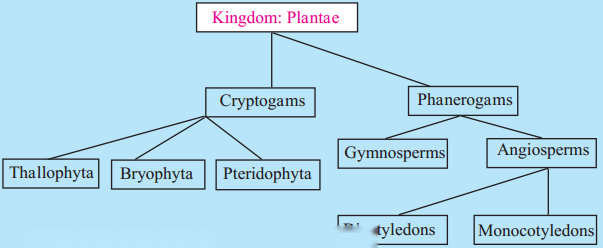
In 1883, Eichler, a botanist, classified the Kingdom Plantae into two subkingdoms. As a result, two subkingdoms, cryptogams and phanerogams were considered for plant classification.
Solution & Step-by-Step Answer:
These plants grow mainly in water. This group of plants, which do not have specific parts like root-stem-leaves-flowers but are autotrophic due to the presence of chlorophyll, is called algae. Algae show great diversity. They may be unicellular or multicellular, and microscopic or large. Examples of algae are Spirogyra, Ulothrix, Ulva, Sargassum, etc. Some of these are found in fresh water while some are found in saline water. These plants usually have a soft and fibre-like body. Various types of fungi like yeasts and moulds which do not have chlorophyll are also included in this group.
Solution & Step-by-Step Answer:
This group of plants is called the amphibians’ of the plant kingdom because they grow in moist soil but need water for reproduction. These plants are thalloid, multicellular and autotrophic. They reproduce by spore formation. The structure of the plant body of bryophytes is flat, ribbon-like long, without true roots, stem and leaves. Instead, they have stem-like or leaf-like parts and root-like rhizoids. They do not have specific tissues for conduction of food and water. Examples are Moss (Funaria), Marchantia, Anthoceros, Riccia, etc.
Solution & Step-by-Step Answer:
Plants from this group have well developed roots, stem and leaves and separate tissues for conduction of food and water. But, they do not bear flowers and fruits. They reproduce with the help of spores formed along the back or posterior surface of their leaves. Examples are ferns like Nephrolepis, Marsilea, Pteris, Adiantum, Equisetum, Selaginella, Lycopodium, etc. These plants reproduce asexually by spore-formation and sexually by zygote formation. They have a well-developed conducting system.
Solution & Step-by-Step Answer:
Plants which have special structures for reproduction and produce seeds are called phanerogams. In these plants, after the process of reproduction, seeds are formed which contain the embryo and stored food. During germination of the seed, the stored food is used for the initial growth of the embryo. Depending upon whether seeds are enclosed in a fruit or not, phanerogams are classified into gymnosperms and angiosperms.
Solution & Step-by-Step Answer:
Gymnosperms are mostly evergreen, perennial and woody. Their stems are without branches. The leaves form a crown. These plants bear male and female flowers on different sporophylls of the same plant. Seeds of these plants do not have natural coverings, i.e. these plants do not form fruits and are therefore called gymnosperms. (gymnos: naked, sperms: seeds). Examples Cycas, Picea (Christmas tree), Thuja (Morpankhi), Pinus (Deodar), etc.
Solution & Step-by-Step Answer:
The flowers these plants bear are their reproductive organs. Flowers develop into fruits and seeds are formed within fruits. Thus, these seeds are covered; hence, they are called angiosperms (angios: cover, sperms: seeds). The plants whose seeds can be divided into two equal halves or dicotyledons are called dicotyledonous plants and those whose seeds cannot be divided into equal parts are called monocotyledonous plants.
Complete the flow chart.
Solution & Step-by-Step Answer:
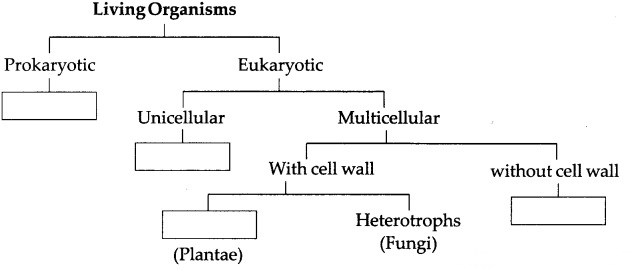
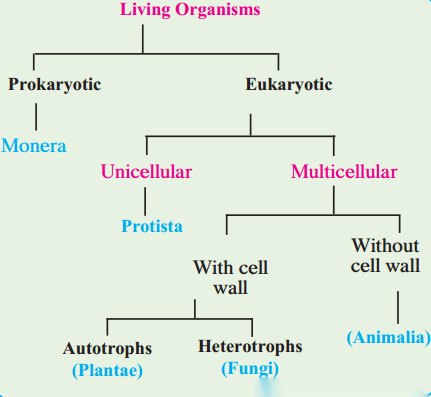
Solution & Step-by-Step Answer:
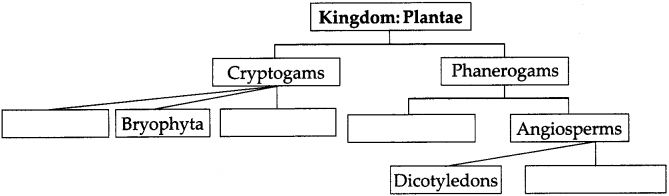
Distinguish between:
Solution & Step-by-Step Answer:
Bryophyta | Pteridophyta |
Bryophytes grow in soil but need water for reproduction. | Pteridophytes grow in soil. |
Plant body is without specific parts like true roots, stem and leaves. | Plant body is differentiated into true roots, stem and leaves. |
Conducting tissues for food and water absent. | Conducting tissues for food and water present. |
Examples: Moss (Funaria), Marchantia, Anthoceros, etc. | Examples: Nephrolepis, Marsilea, Pteris, Adiantum, Lycopodium etc. |
Solution & Step-by-Step Answer:
Angiosperms | Gymnosperms |
(i) In Angiosperms, the stems have branches. | (i) In Gymnosperms, the stems are without branches. |
(ii) Reproductive organs are flowers. | (ii) Reprodcutive organs are cones. |
(iii) Seeds are enclosed in natural coverings, i.e., fruits. | (iii) Seeds are not enclosed in natural coverings. |
(iv) Examples: Mango, Bamboo, etc. | (iv) Examples: Cycas, Picea etc. |
Solution & Step-by-Step Answer:
Cryptogams | Phanerogams |
(iii) Their reproductive organs are hidden. | (iii) Their reproductive organs are exposed. |
(iii) They reproduce by forming spores. | (iii) They reproduce by forming seeds. |
(iii) They are less evolved plants. | (iii) They are highly evolved plants. |
(iv) They are divided into Thallophyta, | (iv) They are divided into Gymnosperms and |
Bryophyta, Pteridophyta. | Angiosperms. |
Distinguish between:
Solution & Step-by-Step Answer:
Spirogvra, Ulothrix, Ulva, Sargassum
Solution & Step-by-Step Answer:
Moss (Funaria), Marchantia, Anthoceros, Riccia
Solution & Step-by-Step Answer:
Nephrolepis, Marsilea, Pteris, Adiantum, Equisetum, Selaginella, Lycopodium
Solution & Step-by-Step Answer:
Cycas, Picca (Christmas tree), Thuja (Morpankhi), Pinus (Deodar)
Solution & Step-by-Step Answer:
Tamarind, Mango, Apple, Lemon
Solution & Step-by-Step Answer:
Bamboo, bananas, corn, daffodils, garlic, ginger, grass, lilies, onions, orchids, rice, sugarcane, tulips, and wheat
Solution & Step-by-Step Answer:
Rose, sunflower, grapes, strawberries, tomatoes, peas, peanuts and potatoes
Observe the figure and answer the questions
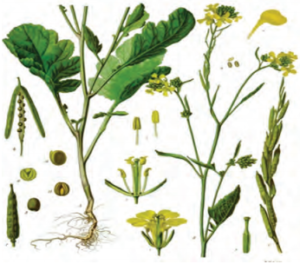
1. Dicot Plants
Solution & Step-by-Step Answer:
Well developed, primary root (Tap root)
Solution & Step-by-Step Answer:
Flowers with 4 or 5 parts or in their multiples (tetramerous or pentamerous)
Solution & Step-by-Step Answer:
Reticulate Venation
Solution & Step-by-Step Answer:
Strong and hard
Solution & Step-by-Step Answer:
Two cotyledons
Solution & Step-by-Step Answer:
Rose, sunflower, grapes, strawberries, tomatoes, peas, peanuts and potatoes
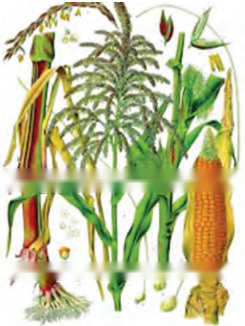
2. Monocot Plants
Solution & Step-by-Step Answer:
Fibrous roots
Solution & Step-by-Step Answer:
Flowers with 3 parts or in multiples of three (trimerous).
Solution & Step-by-Step Answer:
Parallel Venation
Solution & Step-by-Step Answer:
Hollow, False or Disc-like
Solution & Step-by-Step Answer:
Single cotyledons
Solution & Step-by-Step Answer:
Bamboo, bananas, com, daffodils, garlic, ginger, grass, lilies, onions, orchids, rice, sugarcane, tulips, and wheat
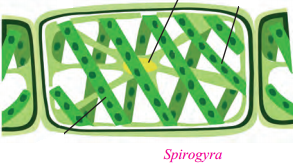
3. Spirogyra
Solution & Step-by-Step Answer:
This plant come under Division I Thallophyta.
Solution & Step-by-Step Answer:
These plants grow mainly in water.
Solution & Step-by-Step Answer:
They may be unicellular or multicellular and microscopic or large.
Solution & Step-by-Step Answer:
They are autotrophic due to the presence of chlorophyll but types of fungi like yeasts and moulds which do not have chlorophyll are also included in this group.
Solution & Step-by-Step Answer:
They do not have specific parts like root-stem- leaves-flowers.
Solution & Step-by-Step Answer:
These plants usually have a soft and fibre-like body.
4. Funaria
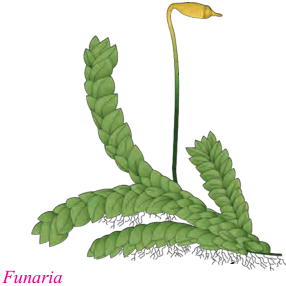
Solution & Step-by-Step Answer:
This plant come under Division II Bryophyta.
Solution & Step-by-Step Answer:
They grow in moist soil but need water for reproduction.
Solution & Step-by-Step Answer:
This group of plants is called the ‘amphibians’ of the plant kingdom.
Solution & Step-by-Step Answer:
They reproduce by spore formation.
Solution & Step-by-Step Answer:
The structure of the plant body of bryophytes is flat, ribbon-like long, without true roots, stem and leaves.
Solution & Step-by-Step Answer:
They have root like rhizoids.
5. Fern
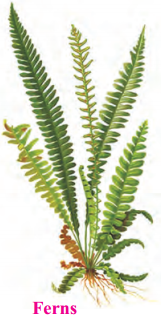
Solution & Step-by-Step Answer:
This plant come under Division III Pteridophy ta.
Solution & Step-by-Step Answer:
They grow in soil.
Solution & Step-by-Step Answer:
These plants reproduce asexually by spore- formation and sexually by zygote formation.
Solution & Step-by-Step Answer:
They do not bear flowers and fruits.
Solution & Step-by-Step Answer:
Plants from this group have well developed roots, stem and leaves and separate tissues for conduction of food and water.
Solution & Step-by-Step Answer:
The spores formed along the back or posterior surface of their leaves.
6. Cycas
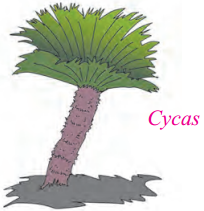
Solution & Step-by-Step Answer:
This plant come under Division III Phanerogams Division I Gymnosperms.
Solution & Step-by-Step Answer:
Gymnosperms are mostly evergreen perennial and woody.
Solution & Step-by-Step Answer:
Their stems are without branches and the leaves form a crown.
Solution & Step-by-Step Answer:
These plants bear male and female flowers on different sporophylls of the same plant.?
Solution & Step-by-Step Answer:
Rose, sunflower, grapes, strawberries, tomatoes, peas, peanuts and potatoes
7. Monocot and Dicot plants
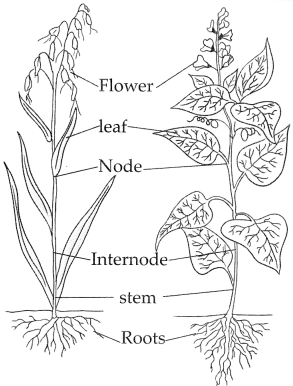
Solution & Step-by-Step Answer:
ThisplantcomeunderDivisionlllPhanerogams Division II Angiosperms
Solution & Step-by-Step Answer:
The seeds are formed within fruits thus these seeds are covered
Solution & Step-by-Step Answer:
The plants whose seeds can be divided into two equal halves or dicotyledons are called dicotyledonous plants and those whose seeds cannot be divided into equal parts are called monocotyledonous plants.
Solution & Step-by-Step Answer:
These plants bear parallel or reticulated venations on the leaves.
Solution & Step-by-Step Answer:
The root systems of these types of plant are tap roots or fibrouš roots.
Complete the paragraph
Solution & Step-by-Step Answer:
Thallophyta plants grow mainly in water. This group of plants, which do not have specific parts like root-stem-leaves-flowers but are autotrophic due to the presence of chlorophyll, is called algae. Algae show great diversity. They may be unicellular or multicellular, and microscopic or large. Examples of algae are Spirogyra, Ulothrix, Ulva, Sargassum, etc. Some of these are found in fresh water while some are found in saline water. These plants usually have a soft and fibre-like body. Various types of fungi like yeasts and moulds which do not have chlorophyll are also included in this group.
Solution & Step-by-Step Answer:
Bryophyta group of plants is called the ‘amphibians’ of the plant kingdom because they grow in moist soil but need water for reproduction. These plants are thalloid, multicellular and autotrophic. They reproduce by spore formation. The structure of the plant body of bryophytes is flat, ribbon-like long, without true roots, stem and leaves. Instead, they have stem-like or leaf-like parts and root-like rhizoids. They do not have specific tissues for conduction of food and water. Examples are Moss (Funaria), Marchantia, Anthoceros, Riccia, etc.
Solution & Step-by-Step Answer:
Plants from Pteridophyta group have well developed roots, stem and leaves and separate tissues for conduction of food and water. But, they do not bear flowers and fruits. They reproduce with the help of spores formed along the back or posterior surface of their leaves. Examples are ferns like Nephrolepis, Marsilea, Pteris, Adiantum, Equisetum, Selaginella, Lycopodium, etc. These plants reproduce asexually by spore-formation and sexually by zygote formation. They have a well-developed conducting system.
Solution & Step-by-Step Answer:
Phanerogams plants which have special structures for reproduction and produce seeds. In these plants, after the process of reproduction, seeds are formed which contain the embryo and stored food. During germination of the seed, the stored food is used for the initial growth of the embryo. Depending upon whether seeds are enclosed in a fruit or not, phanerogams are classified into gymnosperms and angiosperms.
Solution & Step-by-Step Answer:
Gymnosperms are mostly evergreen, perennial • and woody. Their stems are without branches. The leaves form a crown. These plants bear male and female flowers on different sporophylls of the same plant. Seeds of these plants do not have natural coverings, i.e. these plants do not form fruits and are therefore called gymnosperms. (gymnos: naked, sperms: seeds). Examples Cycas, Picea (Christmas tree), Thuja (Morpankhi), Pinus (Deodar), etc.
Solution & Step-by-Step Answer:
The flowers of Angiosperms plants bear are their reproductive orgAnswer: Flowers develop into fruits and seeds are formed within fruits. Thus, these seeds are covered; hence, they are called angiosperms (angios: cover, sperms: seeds). The plants whose seeds can be divided into two equal halves or dicotyledons are called dicotyledonous plants and those whose seeds cannot be divided into equal parts are called monocotyledonous plants.
Answer the questions in detail:
Solution & Step-by-Step Answer:
Solution & Step-by-Step Answer:
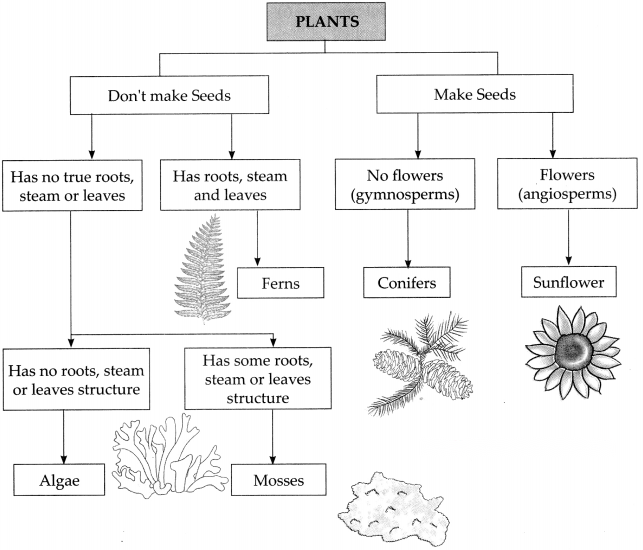
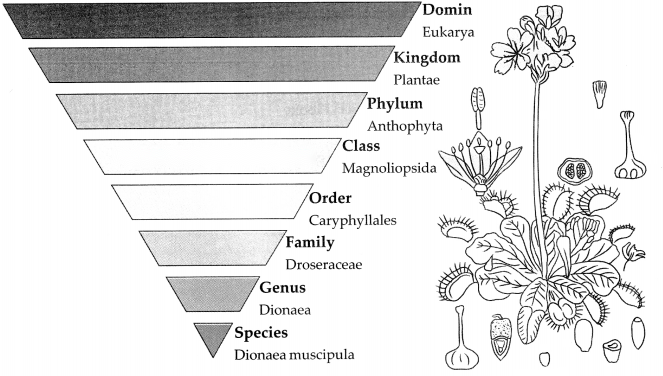
Make concept diagram
Solution & Step-by-Step Answer:
Solution & Step-by-Step Answer:
Solution & Step-by-Step Answer: