Maharashtra State Board Class 9 Science Solutions Chapter 5 Acids, Bases and Salts
Class 9 Science Chapter 5 Acids, Bases and Salts Textbook Questions and Answers
1. Identify the odd one out and justify.
(a) Chloride, nitrate, hydride, ammonium
Answer:
Ammonium is the odd one out as it is a basic radical and rest all are acidic radicals. Generally, basic radicals are formed by the removal of electrons from the atom of metals such as Na+, Cu2+. But there are some exceptions, such as NH4+.
(b) Hydrogen chloride, sodium hydroxide, calcium oxide, ammonia
Answer:
Hydrogen chloride is the odd one out. It is acidic and rest all are basic.
(c) Acetic acid, carbonic acid, hydrochloric acid, nitric acid
Answer:
Carbonic acid is the odd one out. It is a dibasic acid and rest are all monobasic acids.
(d) Ammonium chloride, sodium chloride, potassium nitrate, sodium sulphate
Answer:
Ammonium chloride is the odd one out, as it is made up of a strong acid and weak base and rest all are formed from strong acid and strong base.
(e) Sodium nitrate, sodium carbonate, sodium sulphate, sodium chloride
Answer:
Sodium carbonate is the odd one out, as it is made up of a weak acid and strong base, and rest all are formed from strong acid and strong base.
(f) Calcium oxide, magnesium oxide, zinc oxide, sodium oxide.
Answer:
Zinc oxide is the odd one out, as it is an amphoteric oxide, and rest all are basic oxides.
(g) Crystalline blue vitriol, crystalline common salt, crystalline ferrous sulphate, crystalline sodium carbonate.
Answer:
Crystalline common salt is the odd one out, as it does not contain water of crystallisation. It is an ionic compound and ionic compounds are crystalline in nature and rest all have their crystalline structure because of their water of crystallization.
(h) Sodium chloride, potassium hydroxide, acetic acid, sodium acetate.
Answer:
Acetic acid is the odd one out. It is an acid, the rest are all salts.
2. Write down the changes that will be seen in each instance and explain the reason behind it.
(a) 50ml water is added to 50ml solution of copper sulphate.
Answer:
(b) Two drops of the indicator phenolphthalein were added to 10ml solution of sodium hydroxide.
Answer:
(c) Two or three filings of copper were added to 10ml dilute nitric acid and stirred.
Answer:
When copper metal reacts with dilute nitric acid, the metal does not displace hydrogen from the acid like reaction with other metals. Instead the reaction produces nitric oxide, (NO).

(d) A litmus paper was dropped into 2ml dilute HCl. Then 2ml concentrated NaOH was added to it and stirred.
Answer:
Blue litmus Paper:
Red litmus paper:
(e) Magnesium oxide was added to dilute HCl and magnesium oxide was a added to dilute NaOH.
Answer:
(i) Magnesium oxide + dil HCl.
This is a neutralization reaction. Magnesium oxide is an insoluble base, it reacts with dilute HCl to produce a soluble salt MgCl2and water H2O.
(ii) Magnesium oxide + NaOH.
No chemical reaction takes place between magnesium oxide and sodium hydroxide.
(f) Zinc oxide was added to dilute HCl and zinc oxide was added to dilute NaOH.
Answer:
(g) Dilute HCl was added to limestone.
Answer:
(h) Pieces of blue vitriol were heated in a test tube. On cooling, water was added to it.
Answer:
(i) Dilute H2SO4was taken in an electrolytic cell and electric current was passed through it.
Answer:
[H+ ions gains electrons and are converted to hydrogen gas]
Cathode reaction:
Anode reaction:
3. Classify the following oxides into three types and name the types.
CaO, MgO, CO2, SO3, Na2O, ZnO, Al2O3, Fe2O3Answer:
There are three types of oxides : Basic oxides, Acidic oxides and Amphoteric oxides.
Basic oxides | Acidic oxides | Amphoteric oxides |
CaO | CO2 | ZnO |
MgO | SO3 | Al2O3 |
Na2O | ||
Fe2O3 |
Generally metal oxides are basic in nature.
Exception : Al2O3and ZnO are amphoteric oxides.
Generally non-metal oxides are acidic in nature.
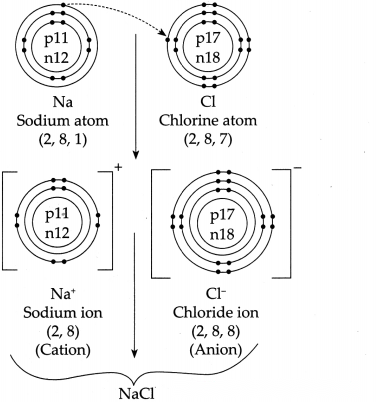
4. Explain by drawing a figure of the electronic configuration.
a. Formation of sodium chloride from sodium and chlorine.
Answer:
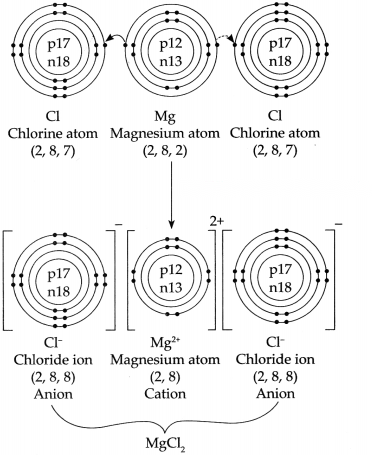
b. Formation of a magnesium chloride from magnesium and chlorine.
Answer:
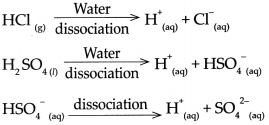
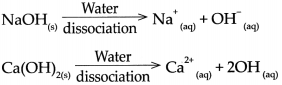
5. Show the dissociation of the following compounds on dissolving in water, with the help of chemical equation and write whether the proportion of dissociation is small or large.
Hydrochloric acid, Sodium chloride, Potassium hydroxide, Ammonia, Acetic acid, Magnesium chloride, Copper sulphate.
Answer:
(a) Hydrochloric acid (HCl)
(b) Sodium chloride (NaC1)
(c) Potassium hydroxide (KOH)
(d) Ammonia (NH3)
(i)
(ii) Ammonia dissolves in water to form NH4OH (ammonium hydroxide). NH4OH does not dissociate completely as it is a weak base. The aqueous solution contains a small proportion of OH–ions and the concerned basic radical along with a large proportion of undissociated molecules of the base i.e. NH4OH.
(iii) The proportion of dissociation is small.
(e) Acetic acid (CH3COOH)
(f) Magnesium chloride (MgCl2)
(g) Copper sulphate (CuSO4)
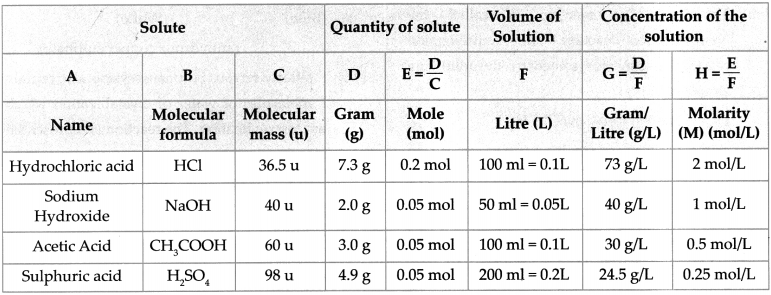
6. Write down the concentration of each of the following solutions in g/L and mol/L.
a. 7.3g HCl in 100ml solution
b. 2g NaOH in 50ml solution
c. 3g CH3COOH in 100ml solution
d. 4.9g H2SO4in 200ml solution
Answer:
To find : The concentration in g/L.
Solution:
7. Obtain a sample of rainwater. Add to it a few drops of universal indicator. Meausre its pH. Describe the nature of the sample of rainwater and explain the effect if it has on the living world.
Answer:
8. Answer the following questions.
a. Classify the acids according to their basicity and give one example of each type.
Answer:
b. What is meant by neutralization? Give two examples from everyday life of the neutralization reaction.
Answer:
Examples in daily life:
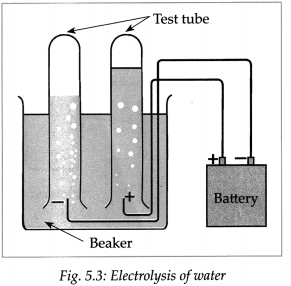
c. Explain what is meant by electrolysis of water. Write the electrode reactions and explain them.
Answer:
Electrolysis of water:
9. Give a reason for the following.
a. Hydronium ions are always in the form H3O+.
Answer:
b. Buttermilk spoils if kept in a copper or brass container.
Answer:
10. Write the chemical equations for the following activities.
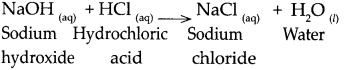
(a) NaOH solution was added to HCl solution.
Answer:
When NaOH reacts with HCl, it gives NaCl and water.
(b) Zinc dust was added to dilute H2SO4.
Answer:
When zinc reacts with dilute sulphuric acid, it forms zinc sulphate and hydrogen gas is liberted.

(c) Dilute nitric acid was added to calcium oxide.
Answer:
When dilute nitric acid reacts with calcium oxide, it forms calcium nitrate and water.

(e) Carbon dioxide gas was passed through KOH solution.
(f) Dilute HCl was poured on baking soda.
11. State the differences.
a. Acids and bases
Answer:
Acids | Bases |
(i) A substance which liberates H+ions when dissolved in water is an acid | A substance which liberates OH–ions when dissolved in water is called a base. |
b. Cation and anion
Answer:
Cations | Anions |
(i) Cations are ions with a net positive charge. | Anions are ions with a net negative charge. |
(ii) Cations are generally formed by metals. When metals donate electrons, they have excess of protons, hence they form cations. | Anions are generally formed by non-metals. When non-metals accept electrons, they have excess of electrons, hence they form anions. |
(iii) Cations are attracted towards the cathode which are negatively charged electrodes. | Anions are attracted towards the anode which are positively charged electrodes. |
(iv) e.g.: Na+, Ca2+, Mg2+, K+etc. | e.g.: O2, S2-, Cl–, Br–etc. |
c. the Negative electrode and the positive electrode.
Answer:
Negative Electrode | Positive Electrode |
(i) Negatively charged electrodes are called as a cathode. | Positively charged electrodes are called as Anode. |
(ii) Positively charged cations move towards the cathode or negative electrode. | Negatively charged anions move towards the anode or positive electrode. |
(iii) Cathode accepts electrons from cations | Anode gives electrons to anions |
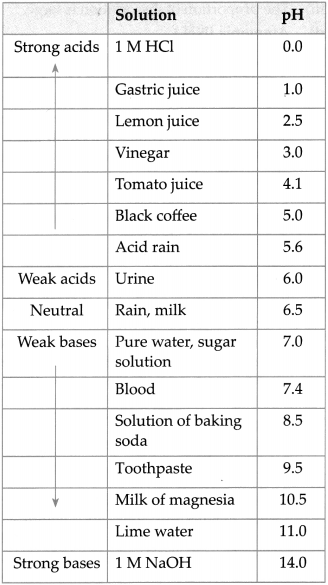
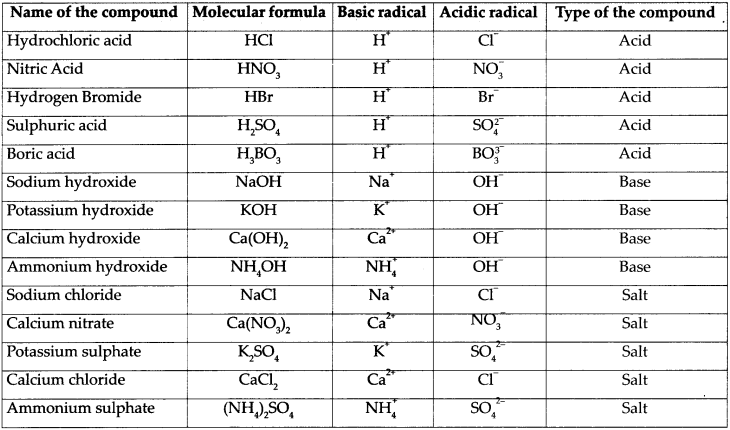
12. Classify aqueous solutions of the following substances according to their pH into three groups : 7, more than 7, less than 7.
Common salt, sodium acetate, hydrochloric acid, carbon dioxide, potassium bromide, calcium hydroxide, ammonium chloride, vinegar, sodium carbonate, ammonia, sulphur dioxide.
Answer:
pH = 7 | pH > 7 | pH < 7 |
(a) common salt. | sodium acetate. | sulphur dioxide. |
(b) potassium bromide. | sodium carbonate | hydrochloric acid. |
(c) | ammonia. | carbon-dioxide. |
(d) | calcium hydroxide. | ammonium chloride. |
(e) | vinegar |
Class 9 Science Chapter 5 Acids, Bases and Salts Intext Questions and Answers
Basic Substance: Turns Red Litmus Blue | Acidic Substance: Turns Blue Litmus Red | Neutral Substance: No change in the colour of litmus |
Baking Soda | Lemon | water |
Lime | Tamarind | |
Milk of Magnesia | Buttermilk | |
Vinegar | ||
Orange | ||
Milk | ||
Tomato | ||
Alum |
Indicator | Colour in Acidic Solution | Colour in basic Solution |
Litmus | Red | Blue |
Turmeric | Yellow | Red |
Jamun | Red | Blue-Green |
Methyl orange | Red | Yellow |
Phenolphthalein | Colourless | Pink |
Answer the following questions:
(a) With which solutions did the bulb glow?
Solutions with which bulb glows: Aqueous solution of NaCl, CuSO4, H2SO4and NaOH.
(b) Which solutions are electrical conductors?
Answer:
Solutions which are electrical conductors:
NaCl, CuSO4, H2SO4and NaOH.
Question 2
Maharashtra Board Solution
During electrolysis of copper sulphate, if electric current is passed through the electrolytic cell for a long time, what change would be seen at the anode?
Solution & Step-by-Step Answer:
Question 3
Maharashtra Board Solution
Would water be a good conductor of electricity?
Solution & Step-by-Step Answer:
Pure water is not a good conductor of electricity.
Answer the following questions:
Question 1
Maharashtra Board Solution
(i) With which solutions did the bulb glow? (ii) Which solutions are electrical conductors?
Solution & Step-by-Step Answer:
(i) The bulbs glows when the wire are immersed in NaCl solution. (ii)
Question 2
Maharashtra Board Solution
What would be the definition of an acid and a base with reference to the neutralization reaction?
Solution & Step-by-Step Answer:
Question 3
Maharashtra Board Solution
Dissolve 2g salt in 500ml pure water. Take 250 ml of this solution in a 500ml capacity beaker. Connect two electrical wires to the positive and negative terminals of a power supply. Remove the insulating cladding from about 2cm portions at the other ends of the wires. These are the two electrodes. Fill two test tubes upto the brim with the prepared dilute salt
Solution & Step-by-Step Answer:
Invert them on the electrodes without allowing any air to enter. Start the electric current under 6V potential difference from the power supply. Observe what happens in the test tubes after some time. (a) Did you see the gas bubbles forming near the electrodes in the test tubes? (b) Are these gases heavier or lighter than water? (c) Are the volumes of the gases collected over the solution in the two test tubes the same or different? (d) Test the solutions in the two test tubes with litmus paper, what do you see? (e) Repeat the activity by using dilute H2SO4 as well as dilute NaOH as the electrolyte. Answer: (a) Yes, gas bubbles can be seen forming near the electrodes in the test tube. (b) These gases are lighter than water. (c) The volumes of gases collected over the solution in the two test tubes are different. (d) The solution in the cathode turns red litmus blue while solution in anode turns blue litmus red. (e) When the above experiment is repeated with dil H2SO4 and dil NaOH, Hydrogen gas is liberated at cathodes and oxygen gas is liberated at anode.
Answer the following questions:
Question 1
Maharashtra Board Solution
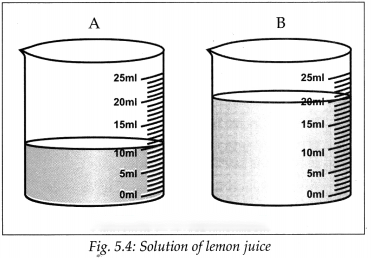
Cut a lemon into two equal parts. Take the juice of each part into two separate beakers. Pour 10 ml of drinking water in one beaker and 20 ml in the second. Stir the solutions in both the beakers and taste them. Is there any difference in the tastes of the solutions in the two beakers? What is that difference?
Solution & Step-by-Step Answer:
Question 2
Maharashtra Board Solution
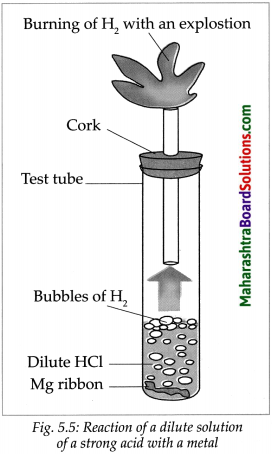
Take a big test tube. Choose a rubber stopper in which a gas tube can be fitted. Take a few pieces of magnesium ribbon in the test tube and add some dilute HCl to it. Take a lighted candle near the end of the gas tube and observe. What did you observe?
Solution & Step-by-Step Answer:
Question 3
Maharashtra Board Solution
Take some water in a test tube and add a little red oxide (the primer used before painting iron articles) to it. Now add a small quantity of dilute HCl to it, shake the test tube and observe. (a) Does the red oxide dissolve in water? (b) What change takes place in the particles of red oxide on adding dilute HCl?
Solution & Step-by-Step Answer:
(a) The chemical formula of red oxide is Fe2O3. It is insoluble in water. (b) The water-insoluble red oxide reacts with HCl to produce a water-soluble salt FeCl3.
Question 4
Maharashtra Board Solution
Fit a bent tube in a rubber cork. Take some lime water in a test tube and keep it handy. Take some baking soda in another test tube and add some lemon juice to it. Immediately fit the bent tube over it. Insert its other end into the lime water. Note down your observations of both the test tubes. Repeat the procedure using washing soda, vinegar and dilute HC1 properly. What do you see?
Solution & Step-by-Step Answer:
Class 9 Science Chapter 5 Acids, Bases and Salts Additional Important Questions and Answers Select the correct option
Question 1
Maharashtra Board Solution
…………………. acid is present in lemon. (a) malic acid (b) tartaric acid (c) citric acid (d) butyric acid
Solution & Step-by-Step Answer:
(c) Citric acid
Question 2
Maharashtra Board Solution
Tamarind contains …………………. acid. (a) Lactic acid (b) tartaric acid (c) matlic acid (d) butyric acid
Solution & Step-by-Step Answer:
(b) tartaric
Question 3
Maharashtra Board Solution
Butter milk contains …………………. acid. (a) butyric acid (b) Lactic acid (c) matlic acid (d) citric acid
Solution & Step-by-Step Answer:
(a) Butyricacid
Question 4
Maharashtra Board Solution
If the basic radical is H+ the type of compound is …………………. (a) neutral (b) base (c) acid (d) alkali
Solution & Step-by-Step Answer:
(c) Acid
Question 5
Maharashtra Board Solution
The name of compound NH3 is …………………. (a) nitric acid (b) ammonium (c) nitride (d) ammonia
Solution & Step-by-Step Answer:
(b) ammonia
Question 6
Maharashtra Board Solution
The bases which are soluble in water are called as …………………. (a) indicators (b) acids (c) alkalis (d) salts
Solution & Step-by-Step Answer:
(c) alkalis
Question 7
Maharashtra Board Solution
H3PO4 is a …………………. acid. (a) monobasic (b) tribasic (c) tetrabasic (d) dibasic
Solution & Step-by-Step Answer:
(b) tribasic
Question 8
Maharashtra Board Solution
According to pH scale pure water has a pH of …………………. (a) 6 (b) 7 (c) 5 (d) 8
Solution & Step-by-Step Answer:
(b) 7
Question 9
Maharashtra Board Solution
With reference to neutralization, metallic oxides are ………………… in nature. (a) basic (b) neutral (c) acidic (d) saline
Solution & Step-by-Step Answer:
(a) basic
Question 10
Maharashtra Board Solution
Molecular formula of blue vitriol is …………………. (a) CuSO3 5H2O (b) CuSO4 4H2O (c) CUSO3 4H2O (d) CUSO4 5H2O
Solution & Step-by-Step Answer:
(d) CUSO4 5H2O
Question 11
Maharashtra Board Solution
Molecular formula of crystalline alum is …………………. (a) KSO4, AISO4, 24H2O (b) K2SO4, ALSO4, 24H2O (c) K2SO4, AL2(SO4)3, 24H2O (d) KSO4, Al2(SO4)3, 24H2O
Solution & Step-by-Step Answer:
(c) K2SO4, AL2(SO4)3, 24H2O
Question 12
Maharashtra Board Solution
Molecular formula for sodium oxide is …………………. (a) Na2O (b) NaO2 (c) NaO (d) Na2O2
Solution & Step-by-Step Answer:
(a) Na2O
Question 13
Maharashtra Board Solution
H2CO3 is …………………. acid. (a) monobasic (b) dibasic (c) tribasic (d) tetrabasic
Solution & Step-by-Step Answer:
(b) dibasic
Question 14
Maharashtra Board Solution
Molecular formula of Red oxide is …………………. (a) Fe2O3 (b) CuO (c) Fe3O4 (d) Na2O
Solution & Step-by-Step Answer:
(a) Fe2O3
Question 15
Maharashtra Board Solution
The positive terminal electrode is called as …………………. (a) anode (b) cathode (c) anion (d) cation
Solution & Step-by-Step Answer:
(a) anode
Question 16
Maharashtra Board Solution
…………………. produced in stomach helps in digestion. (a) Hydrochloric acid (b) Oxalic acid (c) Sulphuric acid (d) Nitric acid?
Solution & Step-by-Step Answer:
(a) Hydrochloric acid
Question 17
Maharashtra Board Solution
The solution turns blue litmus red, its pH is likely to be …………………. (a) 7 (b) 4 (c) 14 (d) 9
Solution & Step-by-Step Answer:
(b) 4
Question 18
Maharashtra Board Solution
An ionic compound NaCl is formed by …………………. (a) Na+ and Cl– (b) Na+ and Cl+ (c) Na– and Cl– (d) Na– and Cl+
Solution & Step-by-Step Answer:
(a) Na+ and Cl–
Question 19
Maharashtra Board Solution
pH of strong acid is …………………. (a) 0 (b) 7 (c) 8 (d) 14
Solution & Step-by-Step Answer:
(a) 0
Question 20
Maharashtra Board Solution
HCl + NaOH → NaCl + H2O is a …………………. reaction. (a) neutralization (b) crystallisation (c) electrolysis (d) dissociation
Solution & Step-by-Step Answer:
(a) neutralization
Question 21
Maharashtra Board Solution
Adding water to acid is an …………………. reaction. (a) endothermic (b) exothermic (c) neutralisation (d) crystallisation
Solution & Step-by-Step Answer:
(b) exothermic
Find the odd one out: (a) Rose Petal, Turmeric, Phenolphthalein, Indigo. (b) Lime water, Vinegar, Acetic acid, Tartaric acid. (c) NaHCO3, HCl, H2SO4, HNO3 (d) Oxalic acid, Nitric acid, Citric acid, acetic acid. (e) Crystalline, Liquid, Gases, Solid. (f) Ca(OH)2, Mg (OH)2, NaOH, NH4OH. Name the following:
Question 1
Maharashtra Board Solution
Name the three types of ionic compounds.
Solution & Step-by-Step Answer:
The three types of ionic compounds are acids, bases and salts.
Question 2
Maharashtra Board Solution
Name the two constituents of molecule of an ionic compound.
Solution & Step-by-Step Answer:
Question 3
Maharashtra Board Solution
Name any three acids with their molecular formula.
Solution & Step-by-Step Answer:
Question 4
Maharashtra Board Solution
Name any three bases with their molecular formula.
Solution & Step-by-Step Answer:
Question 5
Maharashtra Board Solution
Name any three salts with their molecular formula.
Solution & Step-by-Step Answer:
Question 6
Maharashtra Board Solution
Name any two strong acids.
Solution & Step-by-Step Answer:
Question 7
Maharashtra Board Solution
Name any two weak acids.
Solution & Step-by-Step Answer:
Question 8
Maharashtra Board Solution
Name any two strong bases.
Solution & Step-by-Step Answer:
Question 9
Maharashtra Board Solution
Name a weak base.
Solution & Step-by-Step Answer:
Ammonium hydroxide – NH4OH
Question 10
Maharashtra Board Solution
Name any two alkalis.
Solution & Step-by-Step Answer:
Question 11
Maharashtra Board Solution
Name any two acids with their basicity 1 (monobasic)
Solution & Step-by-Step Answer:
Question 12
Maharashtra Board Solution
Name any two acids with their basicity 2 (dibasic)
Solution & Step-by-Step Answer:
Question 13
Maharashtra Board Solution
Name any two acids with their basicity 3 (tribasic)
Solution & Step-by-Step Answer:
Question 14
Maharashtra Board Solution
Name any two bases with their acidity 1 (monoacidic)
Solution & Step-by-Step Answer:
Question 15
Maharashtra Board Solution
Name any two bases with their acidity 2 (diacidic)
Solution & Step-by-Step Answer:
Question 16
Maharashtra Board Solution
Name any two bases with their acidity 3 (triacidic)
Solution & Step-by-Step Answer:
Question 17
Maharashtra Board Solution
Name the two units to express the concentration of the
Solution & Step-by-Step Answer:
Answer:
Match the columns:
Question 1
Maharashtra Board Solution
|

Column ‘A’ | Column ‘B’ |
(1) HNO3(2) H3PO4(3) CH3COOH | (a) Acetic acid |
(1-d),
(2- c),
(3 – a),
(4 – b)
Question 2
Maharashtra Board Solution
Solution & Step-by-Step Answer:
(1-d),
(2- c), (3 – a), (4 – b)
Question 3
Maharashtra Board Solution
|
Column ‘A’ Solution | Column ‘B’ pH | ||
(1) | Milk | (a) | 0 |
(2) | Milk of Magnesia | (b) | 14 |
(3) | 1 M HCl | (c) | 10.5 |
(4) | 1 M NaOH | (d) | 6.5 |
(1-d),
(2- c),
(3 – a),
(4 – b)
Question 4
Maharashtra Board Solution
Solution & Step-by-Step Answer:
(1 – b),
(2 – c), (3 – d), (4 – a)
Question 5
Maharashtra Board Solution
|
Column ‘A’ | Column ‘B’ |
(1) Crystalline blue vitriol | (a) FeS04-7H20 |
(1-c),
(2- a),
(3 – d),
(4 – b)
State whether the following statements are true or false and if false. Correct the false statement:
(1) The separation of H and CI in HCI is in absence of water.
(2)
(3) H2SO4is a strong acid.
(4) NaC1 is an ionic compound.
(5) Turmeric is synthetic indicator.
(6) Metal + Dilute acid forms salt and water.
(7) Copper oxide is called red primer.
(8) Oxide of non-metal + Acid → Salt + Water.
(9) Zinc oxide reacts with sodium hydroxide to form sodium zincate.
(10) Al2O3is an amphoteric oxide.
(11) Blue vitriol ZnSO4. 7H2O.
(12) Molecular formula for crystalline Ferrous sulphate is Fe5O4. 5H2O.
(13) NaCl in water does not conduct electricity.
(14) Phenolphthalein is colourless in base.
Answer:
(1) False. The separation of H+and Cl–in HC1 is in presence of water.
(2) True
(3) True
(4) True
(5) False. Turmeric is a natural indicator.
(6) False. Metal + Dilute acid forms salt and hydrogen gas.
(7) False. Iron oxide is called red primer.
(8) False. Oxide of izan-metal + Base → Salt + Wafer.
(9) True
(10) True
(11) False. Blue Vitriol is CuSO4. 5H2O.
(12) False. Molecular formula for crystalline Ferrous sulphate is FeSO4. 7H2O.
(13) False. NaCl in water conducts electricity.
(14) False, Phenolphthalein is colourless in acid and pink in base.
Define the following:
Question 1
Maharashtra Board Solution
Acid
Solution & Step-by-Step Answer:
An acid is a substance which on dissolving in water gives rise to H ion as the only cation. For example, HC1, H2 SO4, H2CO3.
Question 2
Maharashtra Board Solution
Base
Solution & Step-by-Step Answer:
A base is a substance which on dissolving in water gives rise to the OW ion as the only anion. For, NaOH, Ca(OH)2
Question 3
Maharashtra Board Solution
Strong Acid
Solution & Step-by-Step Answer:
On dissolving in water, a strong acid dissociates almost completely, and the resulting aqueous solution contains mainly H ions and the concerned acidic radical. e.g. HC1, HBr, HNO3, H2SO4.
Question 4
Maharashtra Board Solution
Weak Acid
Solution & Step-by-Step Answer:
On dissolving in water a weak acid does not dissociate completely, and the resulting aqueous solution contains H+ ion and the concerned acidic radical in small proportion along with large proportion of the undissociated molecules of the acid, e.g., H2CO3 (Carbonic acid), CH3COOH (Acetic acid)
Question 5
Maharashtra Board Solution
Strong Base
Solution & Step-by-Step Answer:
On dissolving in water, a strong base dissociates almost completely and the resulting aqueous solution contains mainly OH ions and the concerned basic radicals, e.g. NaOH, KOH, Ca(OH)2, Na2O.
Question 6
Maharashtra Board Solution
Weak Base
Solution & Step-by-Step Answer:
On dissolving in water, a weak base does not dissociate completely and the resulting aqueous solution contains a small proportion of OH ions and the concerned basic radical along with a large proportion of undissociated molecules of the base. e.g. NH4 OH.
Question 7
Maharashtra Board Solution
Alkali
Solution & Step-by-Step Answer:
The bases which are highly soluble in water are called alkali, e.g. NaOH, KOH, NH3. Here, NaOH and KOH are strong alkalis while NH3 is a weak alkali.
Question 8
Maharashtra Board Solution
Basicity of acids
Solution & Step-by-Step Answer:
The number of H+ ions obtainable by the dissociation of one molecule of an acid is called its basicity.
Question 9
Maharashtra Board Solution
Acidity of bases
Solution & Step-by-Step Answer:
The number of OH ions obtainable by the dissociation of one molecule of a base is called its acidity.
Question 10
Maharashtra Board Solution
Concentration of solute in the
Solution & Step-by-Step Answer:
Answer: The proportion of a solute in a solution is called the concentration of the solute in the solution.
Question 11
Maharashtra Board Solution
Concentrated
Solution & Step-by-Step Answer:
Answer: When the concentration of a solute in its solution is high, it is a concentrated solution.
Question 12
Maharashtra Board Solution
Dilute solution
Solution & Step-by-Step Answer:
When the concentration of a solute in its solution is low, it is a dilute solution.
Question 13
Maharashtra Board Solution
Neutralization
Solution & Step-by-Step Answer:
A reaction in which an acid reacts with a base to form salt and water is called a neutalization reaction. NaOH + HC1 → NaCl + H2O Base + Acid → Salt + Water
Question 14
Maharashtra Board Solution
Cathode
Solution & Step-by-Step Answer:
The electrode connected to the negative terminal of a battery by means of a conducting wire is called a cathode.
Question 15
Maharashtra Board Solution
Anode
Solution & Step-by-Step Answer:
The electrode connected to the positive terminal of a battery by means of a conducting wire is called an anode.
Question 16
Maharashtra Board Solution
Cations
Solution & Step-by-Step Answer:
Cations are positively charged ions which are attracted towards negative electrode (cathode) when electricity is passed into a solution of an ionic compound.
Question 17
Maharashtra Board Solution
Anions
Solution & Step-by-Step Answer:
Anions are negatively charged ions which are attracted towards the positive electrode (anode) when electricity is passed into a solution of an ionic compound.
Question 18
Maharashtra Board Solution
Electrolytic cell
Solution & Step-by-Step Answer:
An assembly that consists of a container with an electrolyte and the electrodes dipped in it, is called an electrolytic cell.
Question 19
Maharashtra Board Solution
Molarity of a solution
Solution & Step-by-Step Answer:
The number of moles of the solute dissolved in one litre of the solution is called the molarity of that solution. The molarity of a solute is indicated by writing its molecular formula inside a square bracket for example [NaCl] = 1
Question 20
Maharashtra Board Solution
Acid – base indicators
Solution & Step-by-Step Answer:
Some natural and synthetic dyes show two different colours in acidic and basic solution, and such dyes are acid base indicators.
Explain the following chemical reactions with the help of balanced equations:
Question 1
Maharashtra Board Solution
Magnesium reacts with dilute hydrochloric acid.
Solution & Step-by-Step Answer:
When magnesium reacts with dilute hydrochloric acid, it forms magnesium chloride and hydrogen gas is liberated.
Question 2
Maharashtra Board Solution
When copper reacts with nitric acid.
Solution & Step-by-Step Answer:
When copper reacts with nitric acid, it forms copper nitrate and hydrogen gas is liberated.
Question 3
Maharashtra Board Solution
When ferric oxide reacts with diluted hydrochloric acid.
Solution & Step-by-Step Answer:
When Ferric oxide reacts with diluted hydrochloric acid, it forms ferric chloride and water.
Question 4
Maharashtra Board Solution
When calcium oxide reacts with dilute hydrochloric acid.
Solution & Step-by-Step Answer:
When calcium oxide reacts with dilute hydrochloric acid, it forms calcium chloride and water.
Question 5
Maharashtra Board Solution
When Magnesium oxide reacts with dilute hydrochloric acid.
Solution & Step-by-Step Answer:
When magnesium oxide reacts with dilute hydrochloric acid, it forms magnesium chloride and water.
Question 6
Maharashtra Board Solution
When zinc oxide reacts with dilute hydrochloric acid.
Solution & Step-by-Step Answer:
When zinc oxide reacts with dilute hydrochloric acid, it forms zinc chloride and water.
Question 7
Maharashtra Board Solution
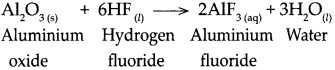
When aluminium oxide reacts with hydrogen fluoride
Solution & Step-by-Step Answer:
When aluminium oxide reacts with hydrogen fluoride, it forms Aluminium fluoride arid water.
Question 8
Maharashtra Board Solution
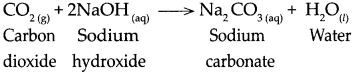
When carbon dioxide reacts with sodium hydroxide.
Solution & Step-by-Step Answer:
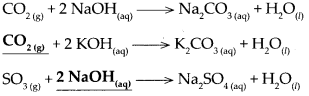
When carbon dioxide reacts with Sodium hydroxide, it forms Sodium carbonate and water.
Question 9
Maharashtra Board Solution
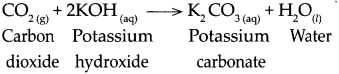
When carbon dioxide reacts with potassium hydroxide.
Solution & Step-by-Step Answer:
When carbon dioxide reacts with potassium hydroxide, it forms potassium carbonate and water.
Question 10
Maharashtra Board Solution
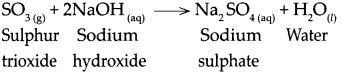
When sulphur trioxide reacts with sodium hydroxide.
Solution & Step-by-Step Answer:
When sulphur trioxide reacts with sodium hydroxide, it forms sodium sulphate and water.
Question 11
Maharashtra Board Solution
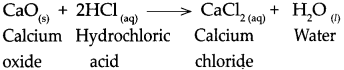
When calcium hydroxide reacts with carbon dioxide.
Solution & Step-by-Step Answer:
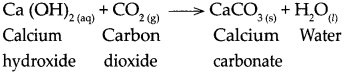
When calcium hydroxide reacts with carbon dioxide, it forms calcium carbonate and water.
Question 12
Maharashtra Board Solution
When sodium carbonate reacts with hydrochloric acid.
Solution & Step-by-Step Answer:
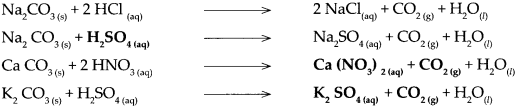
When sodium carbonate reacts with hydrochloric acid, it forms sodium chloride, carbon dioxide and water.
Question 13
Maharashtra Board Solution
When sodium carbonate reacts with sulphuric acid.
Solution & Step-by-Step Answer:
When sodium carbonate reacts with sulphuric acid, it forms sodium sulphate, carbon dioxide and water.
Question 14
Maharashtra Board Solution
When calcium carbonate reacts with nitric acid.
Solution & Step-by-Step Answer:
When calcium carbonate reacts with nitric acid, it forms calcium nitrate, carbon dioxide and water.
Question 15
Maharashtra Board Solution
When potassium carbonate reacts with sulphuric acid.
Solution & Step-by-Step Answer:
When potassium carbonate reacts with sulphuric acid, it forms potassium sulphate, carbon dioxide and water.
Question 16
Maharashtra Board Solution
When sodium bicarbonate reacts with hydrochloric acid. OR Dilute HC1 was poured on baking soda
Solution & Step-by-Step Answer:
When sodium bicarbonate reacts with hydrochloric acid, it forms sodium chloride, carbon dioxide and water.
Question 17
Maharashtra Board Solution
When potassium bicarbonate reacts with nitric acid.
Solution & Step-by-Step Answer:
When potassium bicarbonate reacts with nitric acid, it forms potassium nitrate, carbon dioxide and water.
Question 18
Maharashtra Board Solution
When sodium bicarbonate reacts with acetic acid.
Solution & Step-by-Step Answer:
When sodium bicarbonate reacts with acetic acid, it forms sodium acetate, carbon dioxide and water.
Question 19
Maharashtra Board Solution
When copper sulphate is heated.
Solution & Step-by-Step Answer:
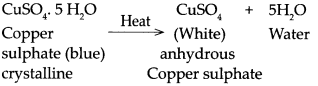
When copper sulphate is heated it loses it’s water of crystallization to form white anhydrous copper sulphate.
Question 20
Maharashtra Board Solution
When Ferrous sulphate is heated.
Solution & Step-by-Step Answer:
When ferrous sulphate is heated it loses its water of crystallization to form white anhydrous ferrous sulphate.
Q.2.
Maharashtra Board Solution
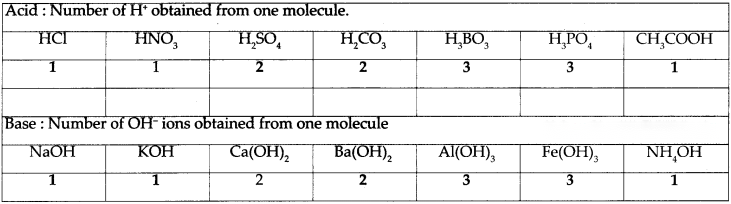
(B)-3. Complete the following table. |
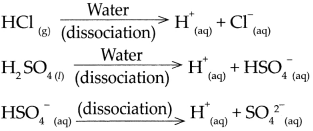
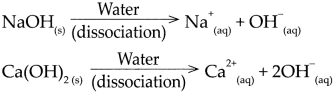














Question 1
Maharashtra Board Solution
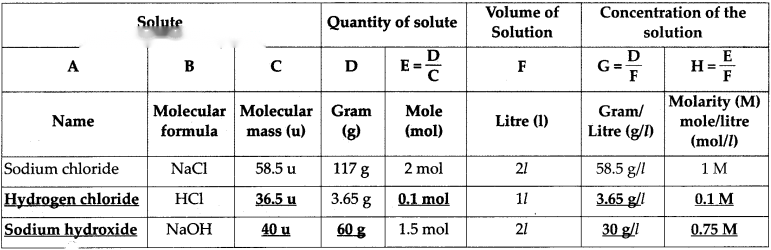
Complete the following table.
Solution & Step-by-Step Answer:
block bg-white dark:bg-slate-900/80 border-l-4 border-emerald-500 rounded-r-xl p-5 my-3 shadow-xs border border-slate-200/60 dark:border-slate-800">
Solution & Step-by-Step Answer:
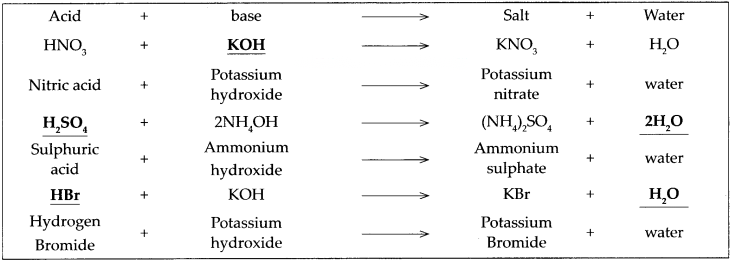
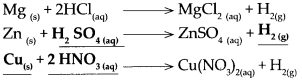
Complete the following reactions.
Question 1
Maharashtra Board Solution
Solution & Step-by-Step Answer:
Question 2
Maharashtra Board Solution
Metal + Dilute acid → Salt + Hydrogen
Solution & Step-by-Step Answer:
Question 3
Maharashtra Board Solution
Metal oxide + Dilute acid → SaIt + Water
Solution & Step-by-Step Answer:
Question 4
Maharashtra Board Solution
Oxide of non-metal + base → salt + water
Solution & Step-by-Step Answer:
Question 5
Maharashtra Board Solution
Carbonate salt of metal + dilute acid → Another salt of metal + Carbon dioxide + water
Solution & Step-by-Step Answer:
Question 6
Maharashtra Board Solution
Bicarbonate salt of metal + dilute acid → Another salt of metal + carbon dioxide + water
Solution & Step-by-Step Answer:
Give scientific reasons:
Question 1
Maharashtra Board Solution
Ionic compound NaCl has very high stability.
Solution & Step-by-Step Answer:
Question 2
Maharashtra Board Solution
Ionic compound dissociates while forming an aqueous
Solution & Step-by-Step Answer:
Answer:
Question 3
Maharashtra Board Solution
Blue coloured copper sulphate crystals become colourless on heating.
Solution & Step-by-Step Answer:
Question 4
Maharashtra Board Solution
During electrolysis of water, a few drops of sulphuric acid are added to it.
Solution & Step-by-Step Answer:
Question 5
Maharashtra Board Solution
Glucose is a non-electrolyte.
Solution & Step-by-Step Answer:
Question 6
Maharashtra Board Solution
Pure water is a poor conductor of electricity but aqueous solution of sodium chloride conducts electricity.
Solution & Step-by-Step Answer:
Question 7
Maharashtra Board Solution
When carbon dioxide gas is passed through freshly prepared lime water, the limewater turns milky.
Solution & Step-by-Step Answer:
Q.3.1.
Maharashtra Board Solution
Answer the following: |




Question 1
Maharashtra Board Solution
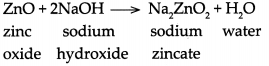
Write down chemical equations for (a) Zinc oxide reacts with sodium hydroxide (b) Aluminium oxide reacts with sodium hydroxide.
Solution & Step-by-Step Answer:
block bg-white dark:bg-slate-900/80 border-l-4 border-emerald-500 rounded-r-xl p-5 my-3 shadow-xs border border-slate-200/60 dark:border-slate-800">
Solution & Step-by-Step Answer:
(a) When zinc oxide reacts with sodium hydroxide, it forms sodium zincate and water
(b) When Aluminium oxide reacts with sodium hydroxide, it forms sodium aluminate and water.
Question 2
Maharashtra Board Solution
Can we call Al2O3 and ZnO acidic oxides on the basis of above reactions.
Solution & Step-by-Step Answer:
Question 3
Maharashtra Board Solution
Define ‘amphoteric oxides’ and give two examples.
Solution & Step-by-Step Answer:
Question 4
Maharashtra Board Solution
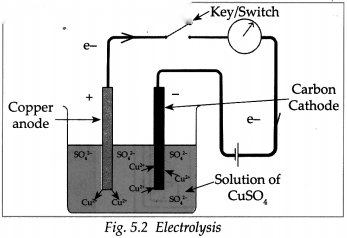
Take a solution of 1g copper sulphate in 50ml water in a 100 ml capacity beaker. Use a thick plate of copper as anode and a carbon rod as cathode. Arrange the apparatus as shown in the figure and pass an electric current through the circuit for some time. Do you see any changes?
Solution & Step-by-Step Answer:
Q.3.5.
Maharashtra Board Solution
Answer in brief: |

Question 1
Maharashtra Board Solution
What are acids, bases and salts?
Solution & Step-by-Step Answer:
block bg-white dark:bg-slate-900/80 border-l-4 border-emerald-500 rounded-r-xl p-5 my-3 shadow-xs border border-slate-200/60 dark:border-slate-800">
Solution & Step-by-Step Answer:
Question 2
Maharashtra Board Solution
What is an ionic bond?
Solution & Step-by-Step Answer:
Question 3
Maharashtra Board Solution
Give examples to show that proportions of H+ and OH– ions in aqueous solution determines the properties of those solutions.
Solution & Step-by-Step Answer:
The examples to show that proportions of H+ and OH– ions in aqueous solution determines the properties of those solutions are :
Question 4
Maharashtra Board Solution
What is pH scale?
Solution & Step-by-Step Answer:
Question 5
Maharashtra Board Solution
Give the pH of following solutions.
Solution & Step-by-Step Answer:
Question 6
Maharashtra Board Solution
What is universal indicator? Which is the most accurate method of measuring the pH of a solution?
Solution & Step-by-Step Answer:
Answer in detail:
Question 1
Maharashtra Board Solution
Explain the Arrhenius theory of acids and bases.
Solution & Step-by-Step Answer:
The Swedish scientist Arrhenius put forth a theory of acids and bases in the year 1887. This theory gives definitions of acids and bases as follows: Acid : An acid is a substance which on dissolving in water gives rise to H ion as the only cation. For example, HCl, H2SO4, H2CO3
Base: Abase is a substance which on dissolving in water gives rise to the OH ion as the only anion, For example, NaOH, Ca(OH)2
Question 2
Maharashtra Board Solution
Write a short note on Neutralization.
Solution & Step-by-Step Answer:
Question 3
Maharashtra Board Solution
Explain the water of Crystallization.
Solution & Step-by-Step Answer:
Question 4
Maharashtra Board Solution
Explain the conduction of electricity through solutions of ionic compounds
Solution & Step-by-Step Answer:
|