Maharashtra State Board Class 8 Science Solutions Chapter 8 Pollution
Class 8 Science Chapter 8 Pollution Textbook Questions and Answers
1. Following are some statements about pollution. Which type of pollution do those express:
Question a.
Fog seems to be appearing in Delhi during day hours.
Answer:
Air pollution-Smog
(The sentence should have the word Smog and not fog. Smog is fog with smoke. Only fog cannot be polluting, but the smog is.)
Question b.
Many times, vomiting and dysentery occurs after eating ‘panpuri’.
Answer:
Water pollution-Contaminated food and water due to bacteria or virus
Question c.
Problem of sneezing occurs sometimes during visit to garden.
Answer:
Air pollution due to pollens
Question d.
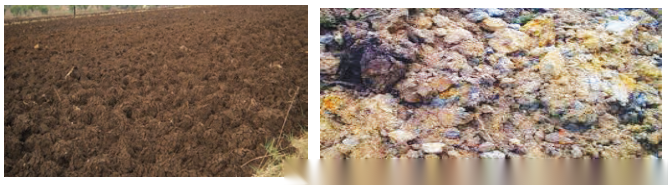
Crop does not grow up in some areas.
Answer:
Soil pollution
Question e.
People living in the busy squares face the problems like short breathing and other respiratory problems.
Answer:
Air pollution due to traffic
2. Read the passage and identify the sentences expressing types of pollution.
Question a.
Nilesh is a student of Std. VII and lives in urban area. It takes about an hour to go to the school by bus. He faces the heavy traffic of two wheelers, four wheelers, rickshaws, buses while going to school. He is facing the problem of asthma since last few days, Doctors recommended him to stay away from urban area. Since then, his mother sent him to the village of his maternal uncle, Nilesh saw the heaps of garbage at many places in village. Foul smell of human and animal wastes was present at many places. Blackish water with foul smell was flowing in a stream. He developed some abdominal disease within few days.
Answer:
3. Match the pairs from ‘A’ and ‘B’ columns and explain the effect of pollution on human health.
Question a.
Column ‘A’ | Column ‘B’ |
1. Water containing cobalt | a. Mental retardation |
2. Methane gas | b. Paralysis |
3. Water containing lead | c. Inflammation of lungs |
4. Sulphur dioxide | d. Skin cancer |
5. Nitrogen dioxide | e. Irritation of eyes |
Answer:
Column ‘A’ | Column ‘B’ |
1. Water containing cobalt | b. Paralysis |
2. Methane gas | d. Skin cancer |
3. Water containing lead | a. Mental retardation |
4. Sulphur dioxide | e. Irritation of eyes |
5. Nitrogen dioxide | c. Inflammation of lungs |
4. True or false.
Question a.
Water does not get polluted by washing the clothes in running water of river.
Answer:
False. (Even if washing of soiled clothes is done in running water, it will cause pollution as the dirt and the waste materials will be added to water. This certainly will cause water pollution.)
Question b.
More the use of electric appliances, more will be the pollution.
Answer:
True. (Most of the electricity is generated in India by burning coal. The power generation plants thus cause lots of air pollution. More the electricity is used by using more appliances, there will be more pollution. However, only power generation through solar energy cannot cause pollution.)
5. Answer the following:
Question a.
What is pollution?
Answer:
Contamination of natural environment that can harmfully affect the environment is called pollution.
Question b.
What are Pollutants?
Answer:
The products which affect the normal functioning of ecosystem and have an adverse effect on plants, animals and humans are called pollutants.
Question c.
What is acid rain?
Answer:
1. When rainwater contains harmful amounts of nitric and sulphuric acids, it is called acid rain.
2. Burning of fossil fuels such as coal, wood, petroleum, etc. releases nitrogen oxide and sulphur oxide into the atmospheric air.
3. Since these oxides are soluble in water, they dissolve in rainwater. Nitrogen and sulphur oxides dissolved in large quantities of water vapour form acids like nitric acid, nitrous acid, sulphurous acid and sulphuric acid.
4. These acids mix with mist, drops of rainwater and snow. They change their composition and fall back on the ground in the form of acid rain.
5. Effects of acid rain are as follows:
Question d.
What is greenhouse effect?
Answer:
Question e.
Which are visible pollutants known to you?
Answer:
1. The polluting substances that are seen easily with the naked eyes can be called as visible pollutants. E.g. Solid wastes, plastic articles, plastic bags, the suspended things in the water, metal refuse, etc.
Question f.
Which are invisible pollutants?
Answer:
The pollutants which are completely dissolved in water or mixed in the air, cannot be seen and hence they can be called invisible pollutants. Since they are not seen, we remain unaware about the presence of these pollutants. E.g. the insecticides spread f on the crops. Aerosols, many hazardous gases in the air, toxic compounds that are totally soluble in water, etc.
6. Answer the following.
Question a.
Give two examples of each of water, soil and air pollution from your residential area.
Answer:
Air pollution:
Water pollution:
Soil pollution :
Question b.
How does the pollution occur due to vehicles? Give the names of vehicles causing least pollution.
Answer:
These two types of vehicles are eco-friendly. The cars that run on C.N.G. are also said to be lesser polluting.
Question c.
What are natural reasons causes for water pollution?
Answer:
The natural causes of the water pollution:
1. If organic pollutants are added to the water there is an overgrowth of weeds such as Eichhornia. The growth of algae also makes the water unsuitable for consumption. These aquatic plants release oxygen during daytime but by night they require oxygen thus depleting the dissolved oxygen level. The natural characters of water are then changed.
2. The decomposing matter when added to the water make it polluted and stinking.
3. Due to deposition of sludge or eroded soil, the rivers change their path and divert from original flow. The currents are also changed. Deposition of sludge makes the water polluted.
4. Due to soil erosion, surrounding the water bodies, the microbes, bacteria, protozoans and the worms and larvae of nematodes enter the water causing severe biological pollution. Many inorganic pollutants are also added to the water. The fungand bacteria present in the water make it non-potable. Such water spreads water-borne diseases.
Question d.
Suggest four preventive measures for air pollution.
Answer:
The following methods are adopted to control air pollution from the industries:
Question e.
Explain relation between greenhouse effect and global warming.
Answer:
Because of greenhouse effect, there is increase in the global temperature. The heat on the earth remains trapped due to envelope of greenhouse gases. The percentage of carbon dioxide and methane is constantly increasing and hence there is increase in the temperature too. Thus the greenhouse effect is directly related to the global warming.
Effects of this relation between greenhouse effect and global warming are as follows:
Question f.
Construct two slogans each on air, water and soil pollution.
Answer:
Air pollution:
Water pollution:
Soil Pollution:
7. Classify the following pollutants into natural and manmade categories.
Question
Classify the following pollutants into natural and manmade categories.
Sewage, dust, pollen grains, chemical fertilizers, vehicular smoke, algae, pesticides, waste of animals and birds.
Answer:
Man-made | Natural |
1. Sewage | 1. Dust (Natural) |
2. Dust (Construction related) | 2. Pollen grains |
3. Chemical fertilizers | 3. Algae |
4. Vehicular smoke | 4. Waste (Excreta) of animals and |
5. Pesticides |
Project:
Question 2
Maharashtra Board Solution
Visit the square having heavy traffic in your area and report the pollution at different times of day and find out the duration of maximum pollution. |
Class 8 Science Chapter 8 Pollution Additional Important Questions and
Rewrite the sentences after filling the blanks:
Question 1
Maharashtra Board Solution
Natural pollutants are destroyed in due course of time by …………..
Solution & Step-by-Step Answer:
block bg-white dark:bg-slate-900/80 border-l-4 border-emerald-500 rounded-r-xl p-5 my-3 shadow-xs border border-slate-200/60 dark:border-slate-800">
Solution & Step-by-Step Answer:
Natural pollutants are destroyed in due course of time by nature’s rule.
Question 2
Maharashtra Board Solution
Air pollutants with ……….. cause colour change in paints, oil paintings, nylon, etc.
Solution & Step-by-Step Answer:
Air pollutants with sulphur cause colour change in paints, oil paintings, nylon, etc.
Question 3
Maharashtra Board Solution
Boards indicating the …………. are displayed in busy squares in metro cities.
Solution & Step-by-Step Answer:
Boards indicating the air quality index are displayed in busy squares in metro cities.
Question 4
Maharashtra Board Solution
Soil ………… decreases due to pollution.
Solution & Step-by-Step Answer:
Soil fertility decreases due to pollution.
Question 5
Maharashtra Board Solution
Problem of …………… pollution increases due to soil pollution.
Solution & Step-by-Step Answer:
Problem of water pollution increases due to soil pollution.
State whether the following statements are True or False. Explain your statement:
Question 1
Maharashtra Board Solution
Polluted water is responsible for diseases such as cholera, hepatitis, typhoid, skin diseases and diseases of the alimentary canal.
Solution & Step-by-Step Answer:
True. (The water sources if they are contaminated with biological pollutants such as bacteria, viruses or protozoans, can cause variety of water-borne diseases.)
Question 2
Maharashtra Board Solution
When water is mixed with natural or artificial unwanted material, the dissolved oxygen level of such water increases.
Solution & Step-by-Step Answer:
False. (When water is mixed with natural or artificial unwanted material, the dissolved oxygen level of such water decreases. This causes harm to the resident animals. However when aquatic weeds and algae outgrow in number it causes rise in oxygen only during day time.)
Question 3
Maharashtra Board Solution
Though any amount of pollutants are added to the soil, the toxic substances do not leach into water.
Solution & Step-by-Step Answer:
False. (The toxic substances added to the soil can leach in the groundwater and cause water pollution.)
Identify the odd term:
Question 1
Maharashtra Board Solution
Industrialization, Population explosion, Mining, Vehicular transport, Dust storms.
Solution & Step-by-Step Answer:
Dust storms (All others are man-made causes environmental degradation.)
Question 2
Maharashtra Board Solution
Poisoning, asthma, Silicosis, respiratory diseases.
Solution & Step-by-Step Answer:
Silicosis (All others are effects of methane.)
Question 3
Maharashtra Board Solution
Irritation of eyes, respiratory tract, excess mucus, mental weakness
Solution & Step-by-Step Answer:
Mental weakness (All other are effects of sulphur dioxide.)
Question 4
Maharashtra Board Solution
Volcanic eruption, Earthquake, Atomic explosion, Forest fires.
Solution & Step-by-Step Answer:
Atomic explosion (All others are natural causes of air pollution.)
Question 5
Maharashtra Board Solution
Uranium, Sulphur, Thorium, Plutonium.
Solution & Step-by-Step Answer:
Sulphur (All others are elements which are used in the production of atomic energy.)
Consider the relation between the items in the first pair and write the correlation for second pair:
Question 1
Maharashtra Board Solution
Industrialization: Sulphur compounds : :…………………. : Lead compounds
Solution & Step-by-Step Answer:
Use of fuels/Transportation
Question 2
Maharashtra Board Solution
City where smoke and soot caused it to be called black city : Petersburg : : Indian city where worst ever industrial accident has occurred : ……………….
Solution & Step-by-Step Answer:
Bhopal
Question 3
Maharashtra Board Solution
Arsenic and Cadmium : Inorganic water pollutants : : Weedicides and insecticides : ………….
Solution & Step-by-Step Answer:
Organic water pollutants.
Write definitions:
Question 1
Maharashtra Board Solution
Air pollution.
Solution & Step-by-Step Answer:
Contamination of air by toxic gaseous and particulate pollutants in concentration which is harmful to human beings and his surroundings is called air pollution.
Question 2
Maharashtra Board Solution
Water pollution.
Solution & Step-by-Step Answer:
When toxic and unwanted substances enter, dissolve or remain suspended in the water bodies deteriorating the quality of water and affecting the aquatic ecosystem, then it is known as water pollution.
Question 3
Maharashtra Board Solution
Soil pollution.
Solution & Step-by-Step Answer:
Soil pollution is the phenomenon caused due to natural or man-made causes, which occurs when there are changes in its physical, biological and chemical properties of the soil leading to decreased fertility due to either natural or man-made reasons.
Distinguish between the following:
Question 1
Maharashtra Board Solution
Degradable and Non-degradable pollutants: |
Degradable pollutants | Non-degradable pollutants |
1. Degradable pollutants can degrade on their own after some time. | 1. non-degradable pollutants cannot degrade on their own. |
2. Degradable pollutants are usually acted upon by microorganisms to reduce them to inorganic substances. | 2. non-degradable pollutants are not acted upon by microorganisms and hence are not reduced to inorganic substances. |
3. Degradable pollutants are not accumulated in nature. | 3. non-degradable pollutants accumulate in nature and remain there for a long period of time. |
4. Degradable pollutants emit foul odour when they are being decomposed. | 4. non-degradable pollutants may not emit foul odour as they are not decomposed. |
5. Vegetables and fruits, food refuse, organic matter, etc. form degradable pollutants. | 5. Metals, plastic, glass, etc. form non-degradable pollutants. |
Question 2
Maharashtra Board Solution
Industrial waste and Domestic waste: |
Industrial waste | Domestic waste |
1. Most of the industrial waste contains non-degradable pollutants. | 1. Most of the domestic waste contains bio-degradable pollutants. |
2. Industrial wastes are produced during industrial and manufacturing processes. | 2. Domestic wastes are produced in every home due to day to day activities. |
3. Pollution monitoring and controlling bodies like MPCB keep a watch on the proportion of industrial wastes. | 3. Pollution monitoring and controlling bodies like MPCB do not keep a watch on the proportion of domestic wastes. It is the individual responsibility of every citizen to reduce the amount of domestic waste that they produce. |
4. Fly ash from thermal power plants, heavy metals, chemicals, etc. form the industrial wastes. | 4. Garbage, domestic refuse, and discarded solid materials containing food waste, paper, cardboard, peels of fruits, vegetable matter, etc. form the domestic wastes. |
Give scientific reasons:
Question 1. Domestic sewage is harmful for all forms of life.
Solution & Step-by-Step Answer:
block bg-white dark:bg-slate-900/80 border-l-4 border-emerald-500 rounded-r-xl p-5 my-3 shadow-xs border border-slate-200/60 dark:border-slate-800">
Solution & Step-by-Step Answer:
Question 2
Maharashtra Board Solution
Use public transport instead of private vehicles.
Solution & Step-by-Step Answer:
Question 3
Maharashtra Board Solution
Due to agriculture, there can be a lot of air pollution.
Solution & Step-by-Step Answer:
Question 4
Maharashtra Board Solution
A hole has been observed in the ozone layer in the stratosphere near Antarctica.
Solution & Step-by-Step Answer:
Therefore, a hole has been observed in the ozone layer in the stratosphere above Antarctica. Answer the following.
Question 1
Maharashtra Board Solution
What do you mean by ozone layer depletion? What are the causes of ozone layer depletion?
Solution & Step-by-Step Answer:
1. The ozone layer is present at the top of the stratosphere. The stratosphere is the second layer of the atmosphere which is present 48 km above the earth’s surface. 2. Ozone layer is protective layer for living organisms of the earth, as it absorbs harmful UV rays from the sun. When this layer is reduced or destroyed, it is called ozone layer depletion.
3. Causes of the ozone layer depletion:
Question 2
Maharashtra Board Solution
What adverse effect does ozone depletion have?
Solution & Step-by-Step Answer:
Question 3
Maharashtra Board Solution
Describe the effects of air pollution on animals and plants.
Solution & Step-by-Step Answer:
1. Effects of air pollution on animals:
2. Effects of air pollution on plants:
Question 4
Maharashtra Board Solution
What are man-made reasons for water pollution?
Solution & Step-by-Step Answer:
The effluents and other substances released by man into the surrounding water bodies together can be called man-made reasons for water pollution. 1. Domestic sewage: The excreta, urine and other domestic-use water is added to the water bodies in many cities and villages. In big metro-cities, the sewage is partially treated but these management practices are not enough.
2. Industrial effluent: Different industries and factories release effluents which may contain toxic and harmful components, such as various pigments, bleaching chemicals, leather pieces, fibres, mercury, lead, etc. 3. Oil pollution: Oil spillages are seen in the seas due to leakage of crude oil. The crude oil is hazardous as it contains cancer causing hydrocarbons. 4. Fertilizers and pesticides: These compounds when used in farm, may get washed off to nearby water body. The chemical fertilizer containing N, P, K cause water pollution. Pesticides such as endrin, chlorine, carbonate containing pesticides, etc. are mixed with water. They cause contamination of the aquatic animals. 5. The wrong behaviour of human beings causes water pollution. The addition of wastes, defecation near coasts, washing clothes, decomposing hemp and flax in water, disposal of ashes, floral offerings to god, dumping ashes all such activities result into water pollution. 6. The warm water released into the water body through thermal power plants cause thermal pollution.
Question 5
Maharashtra Board Solution
What are the effects of water pollution on human beings?
Solution & Step-by-Step Answer:
The water-borne diseases that are caused by different bacteria and viruses cause infections to human beings through contaminated water. Some bacterial and viral diseases are spread through epidemics. Cholera, hepatitis, enteritis, diarrhoea, typhoid are such diseases that can cause severe infections to man. Polluted water also cause skin diseases and deformities of bones, Some pollutants accumulated in vital organs cause their ailments. Liver, kidneys, brain, etc. are affected in this way. Person may develop hypertension too due to pollutants.
Question 6
Maharashtra Board Solution
What are the effects of water pollution on the ecosystem?
Solution & Step-by-Step Answer:
Biological effects:
Abiotic effects:
Question 7
Maharashtra Board Solution
Describe the effects of air pollution on the environment.
Solution & Step-by-Step Answer:
Air pollution can cause the following serious effects on the environment:
Question 8
Maharashtra Board Solution
Describe the effects of soil pollution.
Solution & Step-by-Step Answer:
Effect of soil pollution:
Question 9
Maharashtra Board Solution
How do biodegradable and non- biodegradable wastes cause land pollution?
Solution & Step-by-Step Answer:
Question 10
Maharashtra Board Solution
How do you protect soil from being polluted?
Solution & Step-by-Step Answer:
Question 11
Maharashtra Board Solution
What are the different laws to prevent pollution?
Solution & Step-by-Step Answer:
The different laws to prevent pollution are as follows:
Question 12
Maharashtra Board Solution
Who implements the laws related to pollution?
Solution & Step-by-Step Answer:
The Central Pollution Control Board (CPCB) and Maharashtra Pollution Control Board (MPCB) check whether the organizations like factories, industrial estates, Municipalities, Zilla Parishads, Panchayat Samities and Gram Panchayats follow all the laws related to control of pollution.
Use your brain power!
Question 1
Maharashtra Board Solution
Which types of pollutants are observed?
Solution & Step-by-Step Answer:
Pollutants are of many varied types. They can be classified according to their sources, according to which ecosystem they are polluting, and according to their characteristics.
Question 2
Maharashtra Board Solution
Whether the pollutants are degradable or non-degradable?
Solution & Step-by-Step Answer:
Some pollutants are biodegradable while some are non-biodegradable. The pollutants that spread in the air are in the form of gases or particulate matter. Though they are non-degradable, they constantly make chemical reactions with each other.
The pollutants thrown in water and on land are of both the types. Pollutant like plastic is totally non-biodegradable. The biodegradable substances can be decomposed by various bacteria and fungand are converted back into elemental form. The pollutants added in S the water are also of two types. The heavy metals and colours are non-degradable. Think about it:
Question 1
Maharashtra Board Solution
If natural materials are pollutants, why do we not perceive their adverse effects during their use? When such materials are referred as pollutants?
Solution & Step-by-Step Answer:
The natural pollutants are active only for a short duration. Due to natural reasons their activity is limited, and they are lost after a specific time. Their sources are not continuous and their spread too is not regular as in case of man-made pollutants which are emitted steadily.
Thus, we can avoid these substances. We also use them in limited quantity. Therefore, the natural substances, though may be polluting in nature, we are unable to perceive its toxicity. However, if we use them in abundance and create an imbalance, then its effect can be experienced as a great hazard.
Question 2
Maharashtra Board Solution
What are the reasons other than those mentioned on the textbook page no. 55 mentioned responsible for air pollution?
Solution & Step-by-Step Answer:
1. The automobile vehicles like two-wheelers and four-wheelers are increasing tremendously in numbers. This uncontrolled number of vehicles and their heavy traffic is causing air pollution to very high level in megacities. 2. Construction industries, demolition of the old buildings, digging the roads, are such activities which are adding to the particulate air pollution of the cities. 3. The bursting of firecrackers on the occasion of festivals and ceremonies, the spread of gulal during processions are also actions which result into unwanted air pollution. 4. Aeroplane traffic, rocket launching, industrial farming are the modern sources of air pollution.
Question 3
Maharashtra Board Solution
Whether the vehicles with two- stroke engine cause more pollution than four stroke engine?
Solution & Step-by-Step Answer:
Yes, they do. Scooters and motor cycles are more dominant source of air pollution as they emit soot and organic particles. In urban areas this proportion is high. These particles are toxic and they create heavy air pollution.
The two-wheelers have two-stroke engines. Such engines are far less efficient in burning the fuel that is used in the vehicles. The exhaust systems are also less effective at removing pollutants. On the contrary most of the four-wheelers have catalytic converters. Therefore, the exhaust fumes from scooters contain higher levels of the chemicals found in the fuel and oil they use. The vehicles with two-stroke engine such as two wheelers emit significantly more primary organic aerosols and volatile organic compounds from incomplete burning of the fuel. They also produce significant secondary organic aerosols as gases released from the exhaust react with the air and microscopic particles of soot. These pollutants increase the risk of heart and lung disease. Older two-stroke vehicles produced reactive oxygen molecules that are known to be potentially harmful for lung health. In recent times there is excessive use of two-wheelers which is deteriorating the air quality to great extent.
Question 4
Maharashtra Board Solution
Give 5 examples of each of domestic waste, biological waste and agricultural waste and write in your own words about soil pollution due to those wastes.
Solution & Step-by-Step Answer:
Domestic waste:
Biological waste: Agricultural waste: Diagram based questions:
Question 1
Maharashtra Board Solution
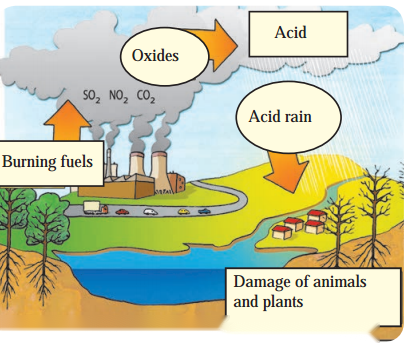
Given below is a diagram showing hazardous polluting event. Explain what is this and what are its effects shown in the diagram.
Solution & Step-by-Step Answer:
The above picture depicts the formation and effects of acid rain. The toxic gases such as SO2, CO2 and NO2 are released through the chimneys of factories. These oxides are released in air. They get dissolved in the rainwater and reach back the earth’s surface in the form of acids. The plants, animals and houses are being damaged due to this acid rain.
Question 2
Maharashtra Board Solution
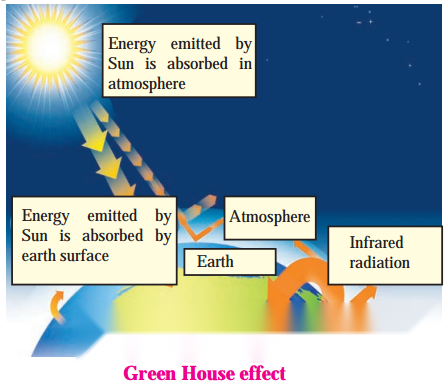
Draw a well labelled diagram to show greenhouse effect.
Solution & Step-by-Step Answer:
Activity based questions:
Question 1
Maharashtra Board Solution
Discuss the issues like ‘dry waste-wet waste’ and ‘toilet in each home’ and write information in your own words. |
MCQs based on practical:
Question 1
Maharashtra Board Solution
Which fertilizers when used in excessive amounts cause soil pollution that spreads to neighbouring water bodies and cause water pollution too? (a) Chemical (b) Organic (c) Artificial (d) Compost
Solution & Step-by-Step Answer:
block bg-white dark:bg-slate-900/80 border-l-4 border-emerald-500 rounded-r-xl p-5 my-3 shadow-xs border border-slate-200/60 dark:border-slate-800">
Solution & Step-by-Step Answer:
(a) Chemical
Question 2
Maharashtra Board Solution
What is the type of pollutants that are present in the industrial effluents that is released in the rivers and sea? (a) Inorganic (b) Organic (c) Biological (d) Biomedical
Solution & Step-by-Step Answer:
(a) Inorganic
Question 3
Maharashtra Board Solution
What grows in excess when eutrophication of the water bodies take place? (a) Plants (b) Algae (c) Fishes (d) Fungi
Solution & Step-by-Step Answer:
(b) Algae
Question 4
Maharashtra Board Solution
Which of the following is seen in the polluted water body? (1) flowers used in pooja (2) fruits (3) fishes (4) aquatic insects (5) plastic bags (6) turtles (7) thick growth of algae (8) light blue colour of water (9) cattle wading in water (10) broken idols (a) (1) (3) (5) (6) (9) (10) (b) (1) (2) (5) (7) (9) (10) (c) (1) (3) (6) (8) (9) (10) (d) (1) (2) (4) (7) (8) (9)
Solution & Step-by-Step Answer:
(b) (1) (2) (5) (7) (9) (10)
Question 5
Maharashtra Board Solution
Which is the easiest method to identify the polluted water? (a) To taste the water (b) To check the depth of water (c) To observe colour and odour of the water (d) To swim in the water
Solution & Step-by-Step Answer:
(c) To observe colour and odour of the water
Formative Evaluation:
|