Maharashtra State Board Class 8 History Solutions Chapter 3 Effects of British Rule
Class 8 History Chapter 3 Effects of British Rule Textbook Questions and Answers
1. Rewrite the statements by choosing the appropriate options:
Solution & Step-by-Step Answer:
(b) Dutch
Solution & Step-by-Step Answer:
(d) Bajirao II
Solution & Step-by-Step Answer:
(c) Jamshedpur
2. Explain the following concept:
Solution & Step-by-Step Answer:
Solution & Step-by-Step Answer:
Solution & Step-by-Step Answer:
3. Explain the following statements with reasons:
Solution & Step-by-Step Answer:
The British made number of changes in the existing system to increase the revenue.
In this way, the farmers became bankrupt in India.
Solution & Step-by-Step Answer:
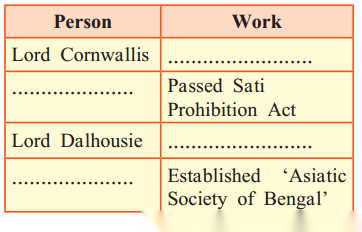
4. Complete the following table:
Question.
Answer:
Do You Know?
Work done by Chhatrapati Pratapsingh :

Project:
Prepare detailed information with pictures about the development by British in administration, education, transport and communication in India.
Class 8 History Chapter 3 Effects of British Rule Additional Important Questions and Answers
Rewrite the statements by choosing the appropriate options:
Solution & Step-by-Step Answer:
(d) Mumbai
Solution & Step-by-Step Answer:
(c) Salbai
Solution & Step-by-Step Answer:
(d) Satara
Solution & Step-by-Step Answer:
(b) Lord Macaulay
Solution & Step-by-Step Answer:
(c) Kawasjee Nanabhoy Davar
Solution & Step-by-Step Answer:
(b) Rishra
Solution & Step-by-Step Answer:
(b) districts
Solution & Step-by-Step Answer:
(a) Commercialisation
Solution & Step-by-Step Answer:
(d) Chhatrapati Pratapsingh
Solution & Step-by-Step Answer:
(a) Max Mueller
Name the following:
Solution & Step-by-Step Answer:
Lord Wellesley
Solution & Step-by-Step Answer:
Lord Warren Hastings
Solution & Step-by-Step Answer:
Robert Clive
Solution & Step-by-Step Answer:
Lord Macaulay
Solution & Step-by-Step Answer:
Rango Bapuji Gupte.
Answer the following questions in one sentence each:
Solution & Step-by-Step Answer:
The officers in the administrative services were appointed through competitive examination known as Indian Civil Services (ICS).
Solution & Step-by-Step Answer:
The British introduced the principle of ‘equality before law’ in the administration of justice all over British India.
Solution & Step-by-Step Answer:
The growth of new industries in India was hindered by the lack of British support, capital and experience of management.
Solution & Step-by-Step Answer:
The British Government gave more encouragement to cash crops like cotton, indigo, tobacco, tea, etc.
Solution & Step-by-Step Answer:
The universities were established in Mumbai, Kolkata and Madras (Chennai) in 1857.
Solution & Step-by-Step Answer:
The development of modern means of transport and communication helped to improve communication between the people and strengthened their sense of unity between Indians.
Solution & Step-by-Step Answer:
The new era in the 19th century Europe was shaped on the values humanitarianism, democracy, nationalism and liberalism.
Do as Directed:
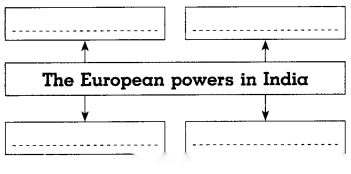
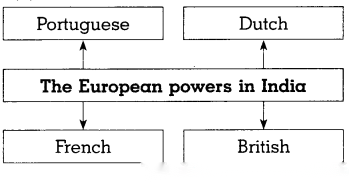
1. Complete the concept map:
Solution & Step-by-Step Answer:
Solution & Step-by-Step Answer:
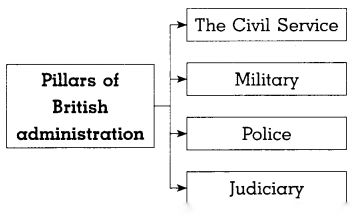
Solution & Step-by-Step Answer:
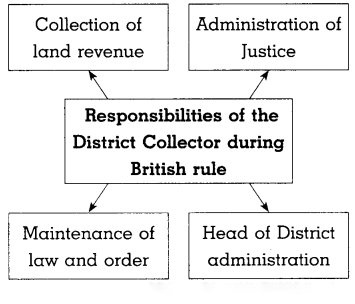
Solution & Step-by-Step Answer:
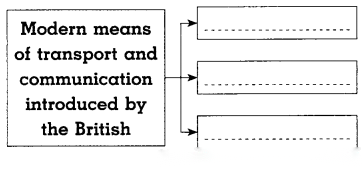
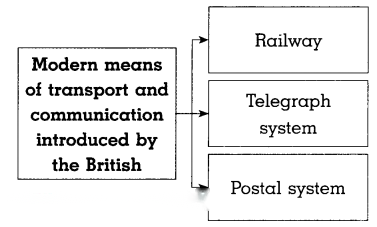
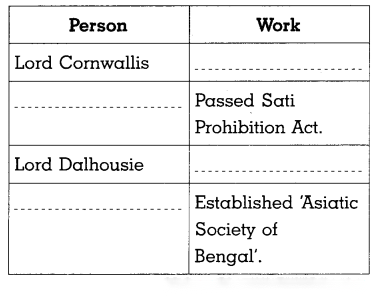
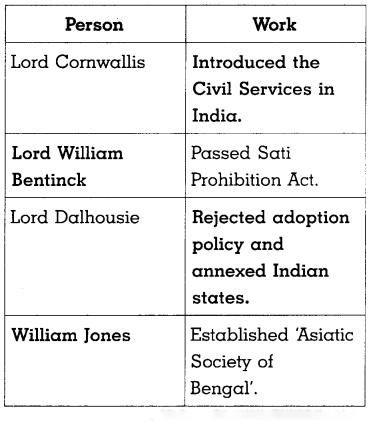
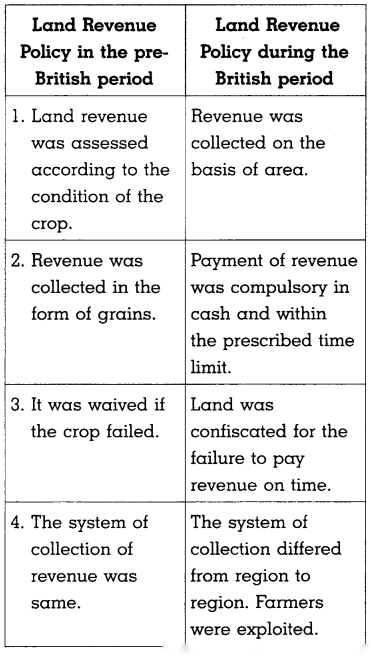
2. Complete the following table:
Solution & Step-by-Step Answer:
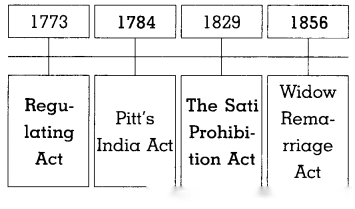
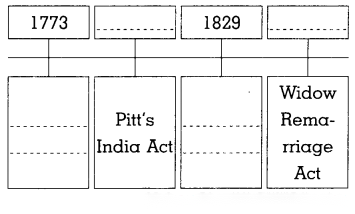
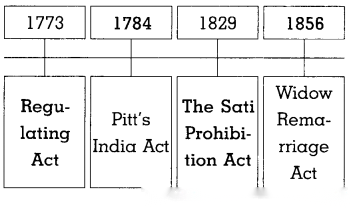
3. Complete the timeline:
Solution & Step-by-Step Answer:
Explain the following concept:
Solution & Step-by-Step Answer:
1. The British East India Company in order to consolidate rule introduced new system of governance in India known as Dual Government. 2. It was introduced by Robert Clive in Bengal in 1765 wherein the East India Company took over the revenue collection. The maintenance of law and order was the responsibility of the Nawab of Bengal.
Answer the following in 25-30 words:
Solution & Step-by-Step Answer:
Lord Wellesley signed Subsidiary Alliance with many Indian rulers in 1798. Its conditions were :
Solution & Step-by-Step Answer:
According to Regulating Act of 1773:
Solution & Step-by-Step Answer:
1. The Pitt’s India Act of 1784 established a permanent Board of Control to regulate and manage administration of Company in India.
2. The Board was authorized to issue directives to the Company regarding the governance of India.
Solution & Step-by-Step Answer:
Solution & Step-by-Step Answer:
Solution & Step-by-Step Answer:
The defects in the British Judicial System were as follows :
Solution & Step-by-Step Answer:
Solution & Step-by-Step Answer:
Explain the following statements with reasons:
Solution & Step-by-Step Answer:
1. Marathas had a strong hold on the areas in and around Mumbai which was prime centre of British in western India. 2. British tried to acquire nearby territories but the Marathas checked their expansion. 3. It was only after the death of Peshwa Madhavrao, that they got entry in Maratha politics. Raghunathrao in his greed for Peshwaship sought their help. This led to the entry of the British in Maratha politics.
Solution & Step-by-Step Answer:
Solution & Step-by-Step Answer:
Answer the following in detail:
Solution & Step-by-Step Answer:
Solution & Step-by-Step Answer:
Chhatrapati Pratapsingh did the following public work :
Solution & Step-by-Step Answer:
Solution & Step-by-Step Answer:
There were many benefits of British administrative system in India.
Solution & Step-by-Step Answer:
The positive effects were :
The negative effects were :