Maharashtra State Board Class 8 Civics Solutions Chapter 2 The Indian Parliament
Class 8 Civics Chapter 2 The Indian Parliament System Textbook Questions and Answers
1. Complete the following sentences by choosing the correct option.
2. Find and write.
3. Explain the following statements with reasons:
4. Answer the following in 25 to 30 words:
5. Explain the step involved in the lawmaking process.
Can you find out?
For the purpose of elections, the State is divided into territorial constituencies. The constituent States in India get seats on the basis of their population. For e.g.
Understand It:
(The gist of the conversation held between Mazy, Radhika, Ran veer and others.)
Rights regarding passing of Bills:
Can you tell?
Certain laws which become out-of-date (obsolete) are abolished. Can you give examples of such obsolete laws? For example, Privy purses.
Know this too:
Project:
The President nominates 12 members to the Rajya Sabha. Collect information on what are the criteria for their selection.
Class 8 Civics Chapter 2 The Indian Parliament Additional Important Questions and Answers
Complete the following sentences by choosing the correct option:
Find and write:
Complete the following Concept maps:
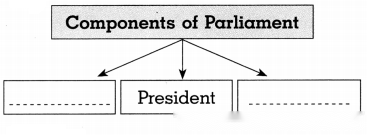
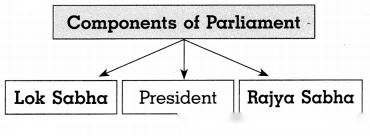
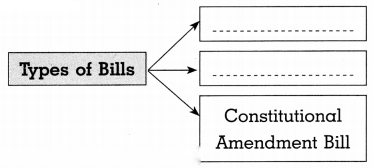
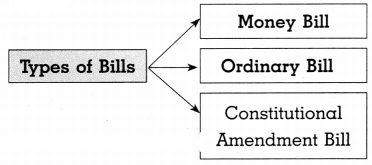
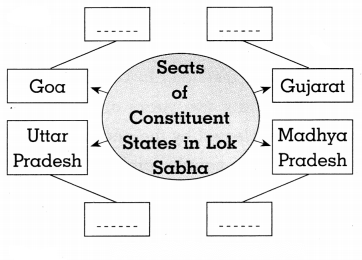
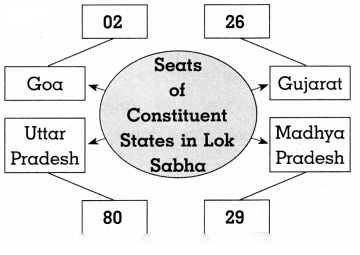
Write short notes on:
Answer the following in 25 to 30 words :
Explain the following statements with reasons:
Hence, though Lok Sabha is the lower House, it is more powerful than Rajya Sabha.
Answer the following questions in details:
2. Second reading :
3. Committee Stage :
4. Third reading :
5. Approval of the other House :
6. Assent by the President :
Points | Lok Sabha | Rajya Sabha |
1. Number of members | Maximum 552 members | Total 250 members. |
2. Age limit | 25 years | 30 years |
3. Election | Directly elected by the people | 238 members elected from the constituent states and Union Territories. 12 members appointed by the President. |
4. Tenure | 5 years | Permanent House. Tenure of every member is 6 years. |
2. Such personalities are very active and totally devoted to their respective fields. Hence, they have no time for contesting the elections.
3. They keep themselves away from election procedures like campaigning, conducting meetings, etc. So their election to the Parliament is not possible.
4. But, to derive benefit from their profound knowledge and experience for making of laws, their presence in the Parliament is essential.
Therefore, I feel that the Constitution has granted the President, the right to appoint twelve members to the Rajya Sabha.