Maharashtra State Board Class 7 Geography Solutions Chapter 7 Soils
Class 7 Geography Chapter 7 Soils Textbook Questions and Answers
1. Complete the following table.
Factor/Process | Role in the formation of soil |
(1) Parent rock | ……………. |
(2) Regional climate | …………… |
(3) Organic material | ………….. |
(4) Microorganisms | …………….. |
Answer:
Factor/Process | Role in the formation of soil |
(1) Parent rock | The rock gets weathered depending on the hardness of the rock and the climate of the region. It turns into powdery material which further turns into soil. |
(2) Regional climate | When the rock is exposed to a different climates, the same type of rock gives rise to different types of soil. |
(3) Organic material | The organic material gets mixed into weathered powdery material and turn it into soil. |
(4) Microorganisms | Microorganisms help in decomposing the dead remains of organic materials and get mixed into the soil to form humus. |
2. Why do the following occur?
3. Give information on:
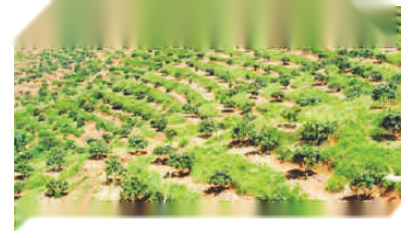
(i) Afforestation / Planting trees: Planting trees can control the velocity of wind. This helps reducing erosion by wind. The plant roots hold the soil and also reduces the erosion of soil.
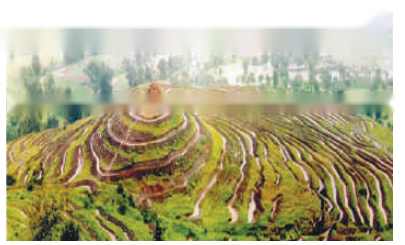
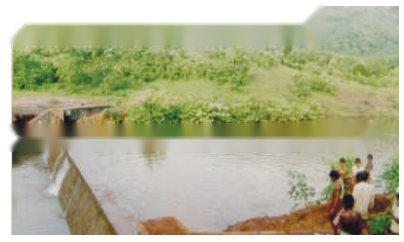
(ii) Continuous contour trenches: Construction of continuous contour trenches at different height checks the velocity of water running along the slopes & hence reduces soil erosion. The water arrested in these trenches percolates into the ground.
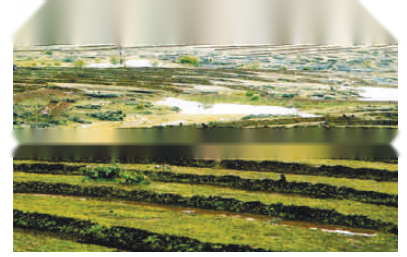
(iii) Implementation of watershed Development program: The Government of Maharashtra has implemented the watershed development programme under which constructing embankment along slopes in rural areas, introducing CCTs along steep slopes etc. are undertaken. This led to the success of the scheme ‘Arrest water, let it percolate’. This has resulted in raising the ground water levels & reducing the erosion of soil.
(iv) Implementation of Jalayukt Shivar: Under the scheme of Jalayukt Shivar, works like construction of farm bunds, arresting waters of small streams, connecting the streams etc. are being carried out on a large scale.
(ii) The type of soil, soil fertility, pH status of the soil, etc. are determined in soil testing.
(iii) Based on the testing, an analysis of the soil is done & information about the suitability of a soil for a particular crop is provided.
4. Complete the following table with reference to soil.
Action | Effect | Result (W.R.T. fertility) |
Construction of embankments. | ||
Wind speed decreased. | ||
Farm land is kept fallow for some period. | Helps to maintain the pH balance and increase the proportion of humus. | Increases the fertility of soil. |
Regular use of organic manures, vermicompost and compost. | ||
Check the velocity of water running along the slopes. | ||
Litter is burnt in the farm. | ||
Decomposed vegetal litters, roots of plants and remains of animals. | ||
Salt content in the soil increases. | ||
Leads to the lowering of humus content in the soil. |
Answer:
Action | Effect | Result (W.R.T. fertility) |
Construction of embankments. | Protects soil from being washed away. | Protects fertility of soil. |
Planting trees. | Wind speed decreased. | Protects fertility of soil |
Farm land is kept fallow for some period. | Helps to maintain the pH balance and increase the proportion of humus. | Increases the fertility of soil. |
Regular use of organic manures, vermicompost[1]and compost. | Humus content increased. | Increases the fertility of soil. |
Trenches are dug across a slope. | Check the velocity of water running along the slopes. | Protects fertility of soil |
Litter is burnt in the farm. | Decreases the amount of organic material in soil. | Decreases the fertility of soil. |
Decomposed vegetal litters, roots of plants and remains of animals. | Proves favourable for micro organism. | Increases the fertility of soil. |
Excessive Irrigation | Salt content in the soil increases. | Decreases the fertility of soil |
Chemical fertilizers used excessively. | Leads to the lowering of humus content in the soil. | Decreases the fertility of soil |
Activity:
Class 7 Geography Chapter 7 Soils InText Questions and Answers
Think about it:
Try this:
Class 7 Geography Chapter 7 SoilsAdditional Important Questions and Answers
Fill in the blanks:
Complete the following sentences:
Give one word for the following:
Who am I?
Question 6
Maharashtra Board Solution
I am found at the mouth of the river in the western coastal strip.
Solution & Step-by-Step Answer:
block bg-white dark:bg-slate-900/80 border-l-4 border-emerald-500 rounded-r-xl p-5 my-3 shadow-xs border border-slate-200/60 dark:border-slate-800">
Solution & Step-by-Step Answer:
Alluvial soil of the coastal strip
Question 7
Maharashtra Board Solution
I am mainly found in areas of extreme rainfall but not very useful for agriculture.
Solution & Step-by-Step Answer:
Yellow brown soil
Question 8
Maharashtra Board Solution
I am a method of soil conservation which controls the velocity of wind.
Solution & Step-by-Step Answer:
Afforestation / planting trees
Match the columns:
Question 1
Maharashtra Board Solution
|
Column I | Column II |
(1) Coarse soil | (a) Alluvium deposition |
(2) Regur soil | (b) Eastern part of Bhandara |
(3) Laterite soil | (c) Ajanta, Balaghat, Mahaden hills |
(4) Alluvial soil | (d) Coastal belt of konkan |
(5) Yellow-brown soil | (e) Weathering of basalt rock |
1 – c
2 – e
3 – d
4 – a
5 – b
Answer the following questions in short:
Question 1
Maharashtra Board Solution
What do you mean by ‘Soil’?
Solution & Step-by-Step Answer:
(i) The uppermost layer of the earth’s crust is called ‘Soil’. (ii) It contains the organic as well as mineral matter necessary for the growth of plants.
Question 2
Maharashtra Board Solution
What are the factors necessary for the soil formation?
Solution & Step-by-Step Answer:
Soil is formed by:
Question 3
Maharashtra Board Solution
What is leaching ?
Solution & Step-by-Step Answer:
(i) Leaching is a process is which the salts & other soluble material are washed out of the rock through percolation of water. (ii) This process is dominant in the areas of high rainfall & humid climate.
Question 4
Maharashtra Board Solution
What is Humus?
Solution & Step-by-Step Answer:
(i) The decaying of organic material such as dead leaves, stems, root of the plant, vegetal litters, decomposed remains of animals get mixed into the soil. (ii) This results in the formation of “Humus” thus retaining the fertility of soil. (iii) If the proportion of humus in the soil is greater, the soil becomes fertile.
Question 5
Maharashtra Board Solution
What leads to the degradation of soils?
Solution & Step-by-Step Answer:
(i) For getting higher production, different types of chemical fertilizers, insecticides are used profusely. (ii) This leads to the degradation of soils.
Question 6
Maharashtra Board Solution
What led to record agricultural production? Ans, (i) To get richer harvests man made efforts to increase the fertility of soils. (ii) In the process, use of different fertilizers became a practice which led to record agricultural production.
|
Question 7
Maharashtra Board Solution
What is soil erosion?
Solution & Step-by-Step Answer:
block bg-white dark:bg-slate-900/80 border-l-4 border-emerald-500 rounded-r-xl p-5 my-3 shadow-xs border border-slate-200/60 dark:border-slate-800">
Solution & Step-by-Step Answer:
(i) When a layer of soil (top layer of soil) get removed due to wind or water it is called soil erosion. (ii) Running water, climate and diversity in physiography are the reasons of soil erosion.
Question 8
Maharashtra Board Solution
What helps to maintain the pH balance of the soil?
Solution & Step-by-Step Answer:
(i) Organic manures, vermicompost, compost are used regularly. (ii) It helps in maintaining the pH balance and retaining the fertility of the soil.
Why do the following occur:
Question 1
Maharashtra Board Solution
Rice is the staple diet of the people from Konkan.
Solution & Step-by-Step Answer:
(i) Hot & humid climate, heavy rainfall & fertile alluvial soil are favourable for rice cultivation. (ii) This soil has good water holding capacity. Since these conditions are found in the konkan region, rice is grown on a large scale here. (iii) So rice is the staple diet of the people from Konkan.
Question 2
Maharashtra Board Solution
Soil Erosion. (i) A layer of soil gets removed due to wind or water. (ii) Running water, climate and diversity in physiography are the reasons of soil erosion. |
Question 3
Maharashtra Board Solution
Soil degradation.
Solution & Step-by-Step Answer:
block bg-white dark:bg-slate-900/80 border-l-4 border-emerald-500 rounded-r-xl p-5 my-3 shadow-xs border border-slate-200/60 dark:border-slate-800">
Solution & Step-by-Step Answer:
(i) To obtain a higher agricultural yield, chemical fertilizers, insecticides, weedicides, etc. are used. (ii) The excessive spraying of chemicals and use of chemical fertilizers leads to soil degradation.
Give geographical reasons:
Question 1
Maharashtra Board Solution
Planting trees is necessary to conserve the soil.
Solution & Step-by-Step Answer:
(i) A layer of soil gets removed due to wind or water which leads to soil erosion. (ii) Planting trees controls the velocity of the wind, thus reducing the erosion of soil by wind. (iii) The roots of the plants hold the soil which also prevents soil erosion.
Question 2
Maharashtra Board Solution
Continuous contour trenches are constructed along the slopes.
Solution & Step-by-Step Answer:
(i) Construction of continuous contour trenches (CCTs) at different heights checks the velocity of water running along the slopes. (ii) This reduces soil erosion.
Question 3
Maharashtra Board Solution
It is advisable to use organic manures, vermicompost and compost regularly.
Solution & Step-by-Step Answer:
(i) Use of organic manures, vermicompost, compost helps maintain the pH balance. (ii) It also increases the proportion of humus thus retaining the fertility of soil. (iii) Hence, it is advisable to use organic manures, vermicompost & compost regularly.
Question 4
Maharashtra Board Solution
There emerged competition among the people to discover fertile lands and settle there.
Solution & Step-by-Step Answer:
(i) Man started producing greater amount of food crops for the growing population. (ii) He realized that crop production and prosperity in agriculture depends on the fertility of soil and the optimum availability of water. Hence, there emerged competition among the people to discover fertile lands & settle there.
Question 5
Maharashtra Board Solution
There was a rise of Indus civilization.
Solution & Step-by-Step Answer:
(i) When man realized that the fertile soils along the river beds give higher yields. (ii) He settled in the valleys and started living there in groups. (iii) This led to the rise of Indus civilization.
Question 6
Maharashtra Board Solution
Countries like Saudi Arabia, Qatar, Oman, etc., fulfil their requirements by importing food from other countries.
Solution & Step-by-Step Answer:
(i) In countries like Saudi Arabia, Qatar, Oman etc. the soils are not arable so there is need to fulfil their food requirement. (ii) Hence, countries like Saudi Arabia, Qatar, Oman import food from other countries.
Question 7
Maharashtra Board Solution
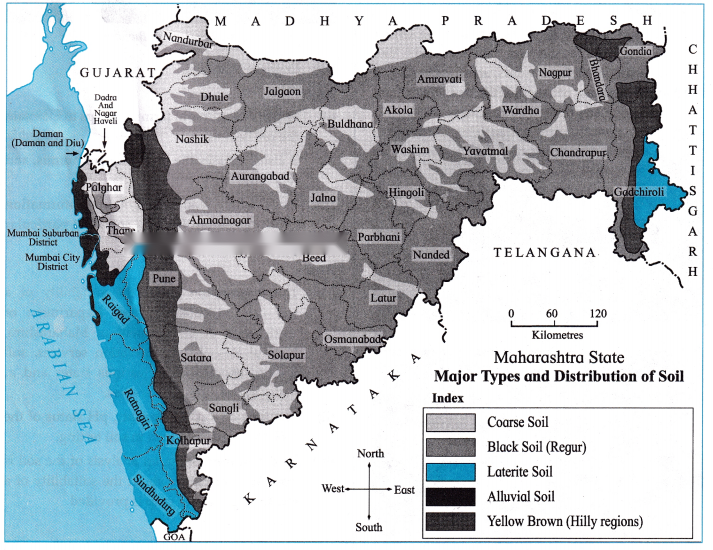
Lets find the names of the soils we have learnt and which regions they are found?
Solution & Step-by-Step Answer:
Make Friends with maps!
Question 2
Maharashtra Board Solution
In which areas are laterite soils found?
Solution & Step-by-Step Answer:
Laterite soil is found in Raigad, Ratnagiri,Sindhudurg and some parts of Gadchiroli and Nashik.
Question 3
Maharashtra Board Solution
Which soil is found in parts of the Sahyadri ranges?
Solution & Step-by-Step Answer:
Yellow Brown soil is found in parts of the Sahyadri ranges.
Question 4
Maharashtra Board Solution
In which region is alluvial soil found?
Solution & Step-by-Step Answer:
Alluvial soil is found in Mumbai Suburban District, Mumbai city district some parts of Thane & Palghar district.
Question 5
Maharashtra Board Solution
Which soil is found in the river valleys of Maharashtra?
Solution & Step-by-Step Answer:
Fertile Alluvial Soil is found in the river valleys of Maharashtra.
|