Maharashtra State Board Class 7 English Solutions Chapter 1.1 Past, Present, Future
Class 7 English Chapter 1.1 Past, Present, Future Textbook Questions and Answers
1. Read the poem aloud using proper rhythm and intonation.
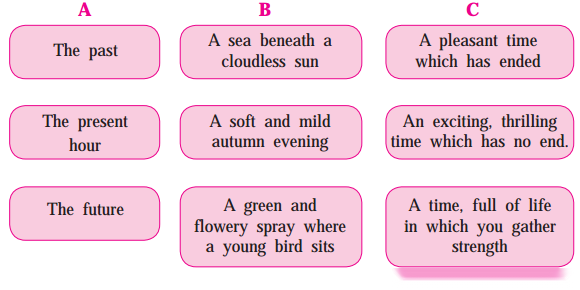
2. Link the items in the three columns properly.
Question 1
Maharashtra Board Solution
Link the items in the three columns properly.
Solution & Step-by-Step Answer:
block bg-white dark:bg-slate-900/80 border-l-4 border-emerald-500 rounded-r-xl p-5 my-3 shadow-xs border border-slate-200/60 dark:border-slate-800">
Solution & Step-by-Step Answer:
3. Find the meaning of the following words.
Question 1
Maharashtra Board Solution
Find the meaning of the following words. thee, mournfully, spray, mighty
Solution & Step-by-Step Answer:
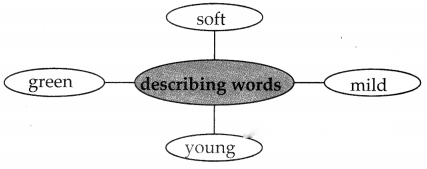
4. WrIte the adjectives that are used to describe the following.
Question 1
Maharashtra Board Solution
Write the adjectives that are used to describe the following.
Solution & Step-by-Step Answer:
5. Write one line about each of the following with the help of the poem.
Question 1
Maharashtra Board Solution
Wind in the autumn evening
Solution & Step-by-Step Answer:
It sighs expressing sadness.
Question 2
Maharashtra Board Solution
Young bird on the spray.
Solution & Step-by-Step Answer:
Sits on the flowery branch gathering all its physical and mental strength to explore the blue sky.
Question 3
Maharashtra Board Solution
The Sea.
Solution & Step-by-Step Answer:
Vast is the sea beneath the cloudless sun and as it stretches endlessly, it displays might, glorious and dazzling beauty.
6. Language Study: Question ii. Question iii. Class 7 English Chapter 1.1 Past, Present, Future Additional Important Questions and Answers Answer the following questions:
Question 1
Maharashtra Board Solution
What is the central idea of the poem?
Solution & Step-by-Step Answer:
The central idea of the poem is the child’s definition of different periods of time which is presented in the form of a dialogue between the poetess and the child.
Question 2
Maharashtra Board Solution
What does the past stand for according to the child?
Solution & Step-by-Step Answer:
According to the child, the past was a pleasant time but they are moments which cannot be revisited as they would never return back.
Question 3
Maharashtra Board Solution
How does the child define the present time?
Solution & Step-by-Step Answer:
For the child, the present is a time where he/she prepares for the future which is unknown, but also exciting so it is the time to gather strength.
Question 4
Maharashtra Board Solution
How is the present moment viewed with optimism by the child?
Solution & Step-by-Step Answer:
The child compares the present time to a green and flowery branch on which a bird is all set to take off and explore the unlimited possibilities which awaits it. This tells us that the present is something which is viewed with optimism by the child as he believes that once we gather strength, nothing is impossible.
Question 5
Maharashtra Board Solution
How do you define time?
Solution & Step-by-Step Answer:
According to me, time is the most precious gift we possess. It is up to us to make utmost use of it. We should plan and prioritise to make use of most of the time in hand. How true is the Estonian proverb! “Wasting time is robbing oneself”
Reading Skills and Poetic Device Read the following extract and do the activities. Simple Factual Questions:
Question 1
Maharashtra Board Solution
Fill in the blanks with any four describing words from the extract.
Solution & Step-by-Step Answer:
Question 2
Maharashtra Board Solution
Choose the correct alternative and complete the sentence: For the child in the poem the past was i. a pleasant time. ii. an unpleasant experience.
Solution & Step-by-Step Answer:
For the child in the poem the past was a pleasant time.
Complex Factual Questions:
Question 1
Maharashtra Board Solution
What is the theme of the poem?
Solution & Step-by-Step Answer:
The theme of the poem is about time and the child’s definition about the different periods of time.
Question 2
Maharashtra Board Solution
How is this poem presented?
Solution & Step-by-Step Answer:
This poem is presented as a dialogue between the poetess and a happy child.
Question 3
Maharashtra Board Solution
What is the one characteristic of the past? Which is emphasised in the poem?
Solution & Step-by-Step Answer:
One characteristic of the past which is emphasised in the poem is that we can never go back to it.
Question 4
Maharashtra Board Solution
How should we make use of the present time?
Solution & Step-by-Step Answer:
We should make use of the present time by using it to gather strength and courage to face the future.
Poetic Device: Rewrite the Metaphors as Similes:
Question 1
Maharashtra Board Solution
The past is an autumn evening soft and mild.
Solution & Step-by-Step Answer:
The past is like an autumn evening soft and mild.
Question 2
Maharashtra Board Solution
The present is a green and flowery spray.
Solution & Step-by-Step Answer:
The present is like a green and flowery spray.
Question 3
Maharashtra Board Solution
The future is a sea beneath a cloudless sun.
Solution & Step-by-Step Answer:
The future is like a sea beneath a cloudless sun.
Question 4
Maharashtra Board Solution
Give the rhyme scheme of the first stanza.
Solution & Step-by-Step Answer:
The rhyme scheme of the first stanza is (a b a c).
Question 5
Maharashtra Board Solution
i. Name and explain the figures of speech. With a wind that sighs mournfully
Solution & Step-by-Step Answer:
Personification – Wind is given human qualities,
Question ii. Formative Assessment
Past, Present, Future Introduction: Past, Present, Future written by Emily Bronte is a dialogue between the poetess and a happy child. They discuss what each period of time means to the child, a child with the ability to see beauty and optimism around it. Past, Present, Future Summary in English The poetess Emily Bronte begins the poem by asking a happy child what the past is like to him/ her. In response the child compares the past as an autumn evening which is soft and mild with a sad wind sighing in the background. In response to the query about the present hour the child compares it to the pleasant green and flowery branch wherein a young bird gathers courage and power to mount and fly above the blue sky. In other words the child finds the present filled with hope, courage and aspiration to scale great heights; the time to gather strength. On being asked about the future the child compares it with a sea under a cloudless sun, a sea which is mighty, glorious, dazzling and never ending. Through these words the child implies about the thrilling and never ending possibilities which awaits for him/her. Glossary: |