Latest Maharashtra State Board (SSC & HSC) 2026-27 Syllabus Digest & Solutions Updated!
Class 10 (SSC Board)Science & Technology2026-27 Syllabus

Chapter 2 Life Processes in Living Organisms Part – 1 Solutions

Complete Maharashtra State Board Balbharati & Yuvakbharati textbook solutions for Chapter 2 Life Processes in Living Organisms Part – 1. Step-by-step solved exercises, numerical problems, and digest answers.

93 Solved Questions17 Diagrams5743 words

Maharashtra State Board Class 10 Science Solutions Part 2 Chapter 2 Life Processes in Living Organisms Part – 1

Question 1 Maharashtra Board Solution
Fill in the blanks and explain the statements. a. After complete oxidation of a glucose molecules, ……….. number of ATP molecules are formed.
Solution & Step-by-Step Answer:
After complete oxidation of a glucose molecules, 38 number of ATP molecules are formed.

b. At the end of glycolysis, ……………… molecules are obtained.
Answer:
At the end of glycolysis, pyruvate molecules are obtained.

c. Genetic recombination occurs in ………… phase of prophuse of meiosis-I.
Answer:
Genetic recombination occurs in pachytene phase of prophase of meiosis-I.

d. All chromosomes are arranged parallel to equatorial plane of cell in …………. phase of mitosis.
Answer:
All chromosomes are arranged parallel to equutorial plane of cell in metaphase phase of mitosis.

e. For formation of plasma membrane, phospholipid molecules are necessary.
Answer:
For formation of plasma membrane, …………… molecules are necessary.

f. Our muscle cells perform ……………… type of respiration during exercise.
Answer:
Our muscle cells perform anaerobic type of respiration during exercise.

Question 2 Maharashtra Board Solution
Write definitions. a. Nutrition.
Solution & Step-by-Step Answer:
Nutrition: The process of taking nutrients in the body and utilizing them by an organism is known as nutrition.

b. Nutrients.
Answer:
Nutrients: The substances like carbohydrates, proteins, lipids, vitamins, minerals etc. which are components of the food are called nutrients.

c. Proteins.
Answer:
Proteins: Protein is a macromolecule which is formed by many amino acids which are joined by peptide bonds.

d. Cellular respiration.
Answer:
Cellular respiration: Oxidation of glucose and other food components which takes place inside the cell in presence or absence of oxygen, is known as cellular respiration.

e. Aerobic respiration.
Answer:
Aerobic respiration: Cellular respiration taking place in presence of oxygen is known as aerobic respiration.

f. Glycolysis.
Answer:
Glycolysis: The process occurring in the cell where a molecule of glucose is oxidized in step by step process forming two molecules of each of pyruvic acid, ATP, NADH2and water, is called glycolysis.

Question 3 Maharashtra Board Solution
Distinguish between a. Glycolysis and TCA cycle
Solution & Step-by-Step Answer:
Glycolysis:

TCA cycle:

b. Mitosis and meiosis.
Answer:
Mitosis:

meiosis:

c. Aerobic and anaerobic respiration.
Answer:
Aerobic respiration:

Anaerobic respiration:

Question 4 Maharashtra Board Solution
Give scientific reasons. a. Oxygen is necessary for complete oxidation of glucose.
Solution & Step-by-Step Answer:

b. Fibres are one of the important nutrients. (Board’s Model Activity Sheet)
Answer:

c. Cell division is one of the important properties of cells and organisms.
Answer:

d. Sometimes, higher plants and animals too perform anaerobic respiration.
Answer:

e. Krebs cycle is also known as citric acid cycle.
Answer:

Question 5 Maharashtra Board Solution
Answer in detail. a. Explain the glycolysis in detail.
Solution & Step-by-Step Answer:

b. With the help of suitable diagrams, explain the mitosis in detail.
Answer:
(1) There are two stages of mitosis. These are
(a) Karyokinesis or nuclear division and
(b) Cytokinesis or cytoplasmic division. Karyokinesis takes place in further four phases, viz prophase, metaphase, anaphase and telophase.


(a) Karyokinesis:
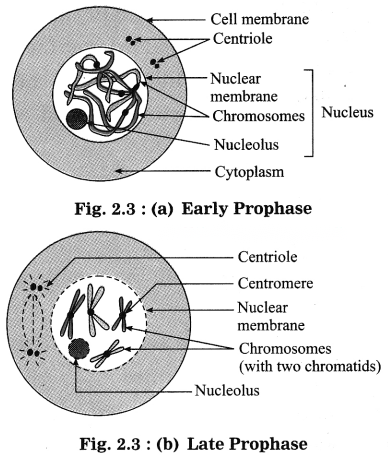
(i) Prophase: During prophase, condensation of chromosomes starts. The thin and thread like chromosomes start thickening. They are seen with their pair of sister chromatids. In animal cells the centrioles are seen to duplicate and move to opposite poles of the cell. Nuclear membrane and nucleolus disappear.
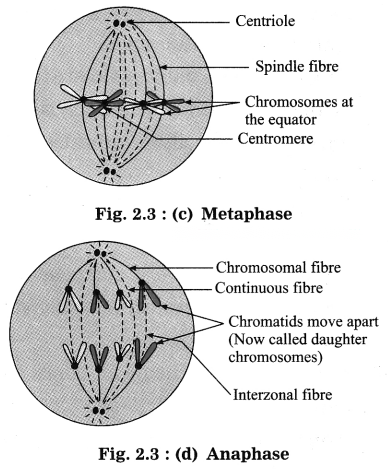
(ii) Metaphase: Chromosomes complete their condensation and each one is seen with its sister chromatids. The chromosomes are seen in equatorial plane of the cell. The spindle fibres are formed from polar region, where centrioles are present, and they attach themselves to the centromere of each chromosome. Nuclear membrane now disappears completely.

(iii) Anaphase: The centromeres of the chromosomes now divide forming two daughter chromosomes. The spindle fibres pull apart the chromosomes from equatorial region to the opposite poles. Chromosomes moving to the poles appear like bunch of bananas. One set of chromosomes reach each pole by the end of the anaphase.

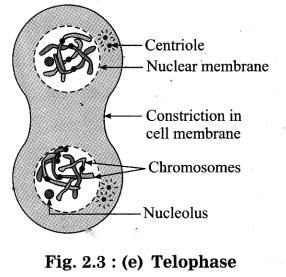
(iv) Telophase: Telophase is reverse of events that occurred in prophase. The thickened chromosomes decondense. They again assume the thin and thread like appearance. Nuclear membrane and nucleolus appear again. The spindle fibres are completely lost. The cell looks as if it has two nuclei in one cytoplasm.

(b) Cytokinesis: In animal cells a notch develops in the middle of the cell. This notch goes on deepening down and later the cytoplasm divides into two. In plant cells, cell plate formation takes place and then cytokinesis takes place.

c. With the help of suitable diagrams, explain the five stages of prophase-I of meiosis.
Answer:


Prophase-I: Prophase – I of meiosis is much longer phase of the meiosis.
It is subdivided into 5 substages, namely leptotene, zygotene, pachytene, diplotene, and diakinesis.
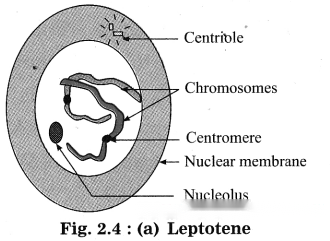
(1) Leptotene: Initially the chromosomes start condensation and they become compact during leptotene.
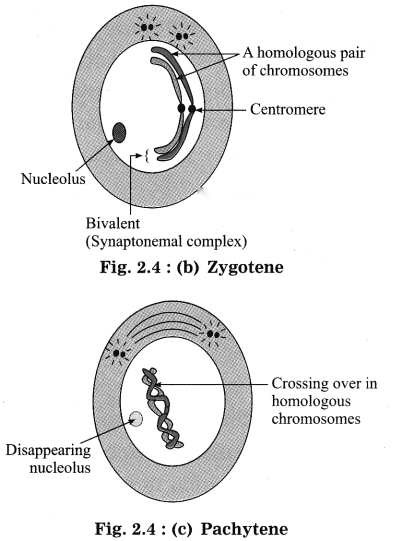
(2) Zygotene: In zygotene, homologous chromosomes start pairing. This pairing is called synapsis. The structure called synaptonemal complex develops to hold chromosomes in place during this pairing. Each chromosome’s chromatid arm divides and forms structure called bivalent or tetrad.

(3) Pachytene: During pachytene stage, crossing over of non-sister chromatids of homologous chromosomes takes place. Genetic recombination is produced due to such exchange. The homologous chromosomes still remain paired together at the sites of crossing over.

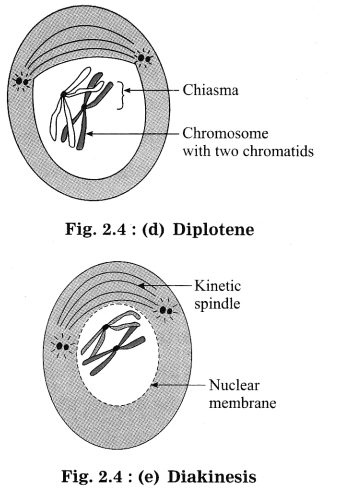
(4) Diplotene: During diplotene, synaptonemal complex dissolves and the homologous chromosomes of the bivalents separate except at the point of crossing over. Thus, it looks like X-shaped structures called the chiasmata.

(5) Diakinesis: The last phase of prophase is for termination of chiasmata. The spindle fibres originate, and the cross-over homologous chromosomes are now separated. The nucleQlus disappears, and the nuclear envelope breaks down.

d. How do all the life processes contribute to the growth and development of the body?
Answer:

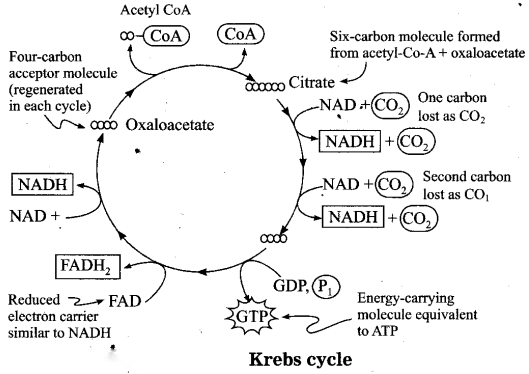
e. Explain the Krebs cycle with reaction.
Answer:
Question 5 Maharashtra Board Solution
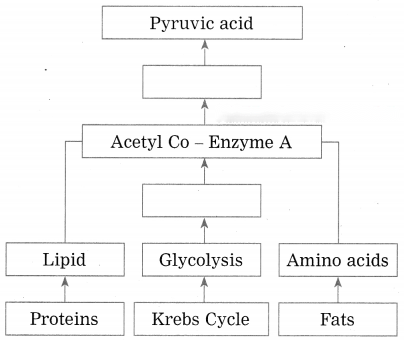
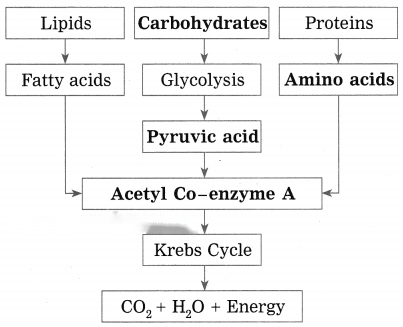
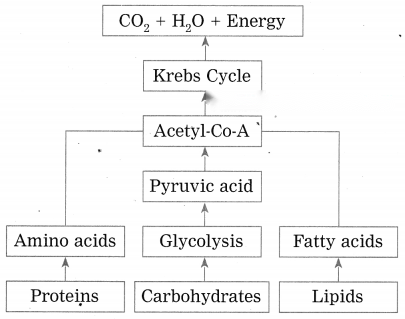
How energy is formed from oxidation of carbohydrates, fats and proteins? Correct the dagram below.
Solution & Step-by-Step Answer:
(1) First of all the dietary carbohydrates are digested in the digestive system with the help of various enzymes and converted into glucose. Similarly, proteins are converted into amino acids and fats are broken down into fatty aid and glycerol (alcohol).

(2) Oxidation of carbohydrates takes place during cellular respiration. Glucose is oxidized by three steps during aerobic respiration, viz. glycolysis, tricarboxylic acid cycle or Krebs cycle and electron transfer chain.

(3) From one molecule of glucose two molecules of each pyruvic acid, ATP, NADH2and water are formed during glycolysis. Pyruvic acid which is formed in this process is converted into Acetyl-Coenzyme-A along with release of two molecules each of NADH2and CO2.

(4) In the next step, i.e. in TCA cycle, molecules of Acetyl-Co-A enter the mitochondria and a cyclic chain of reactions take place. Acetyl part of Acetyl- Co-A is completely oxidized through this cyclical process. The molecules CO2, H2O, NADH2, FADH2are released in this process.

(5) In third step, i.e. in ETC reaction, NADH2and FADH2formed during first two steps are used for obtaining ATP molecules. 3 molecules of ATP are obtained from each NADH2molecule and 2 molecules of ATP from each FADH2.

(6) Thus, one molecule of glucose upon complete oxidation in presence of oxygen yields 38 molecules of ATP. This is how from carbohydrates, energy is obtained.

(7) If carbohydrates are insufficient in diet, then proteins or lipids are used for energy production. Fatty acids derived from fats and amino acids derived from proteins are converted into Acetyl- Co-A. Acetyl-Co-A once again can yield energy through TCA cycle.

Corrected diagram:
Project:
With the help of information collected from internet, prepare the slides of various stages of mitosis and observe under the compound microscope.

Can you recall? (Text Book Page No. 12)

Question 1 Maharashtra Board Solution
How are the food stuffs and their nutrient contents useful for body?
Solution & Step-by-Step Answer:
The food stuffs are digested and converted into soluble nutrients. These nutrients are carried by blood to every cell of the body. The oxygen inhaled at the time of respiration is also carried to every cell. In the body cells, this oxygen carries out oxidation of nutrients and thus energy is produced. The energy helps the body to carry out all its functions. The nutrients help in the growth and development of the body.
Question 2 Maharashtra Board Solution
What is the importance of balanced diet for body?
Solution & Step-by-Step Answer:
Balanced diet has carbohydrates, proteins, fats, vitamins and minerals in the right proportion. Each nutrient carries a specific important function. In balanced diet all these nutrients are in right proportion. Since balanced diet is required for energy and nutrition, it is very important to maintain our health.
Question 3 Maharashtra Board Solution
Which different functions are performed by muscles in body?
Solution & Step-by-Step Answer:
There are three 4ypes of muscles in our body. The voluntary muscles bring about all the movements according to our will. Involuntary muscles bring about all vital activities of the body. The visceral organs are under the control of involuntary muscles. The cardiac muscles control the movements of heart. Carbohydrates and proteins are stored in muscles.
Question 4 Maharashtra Board Solution
What is the importance of digestive juices in digestive system?
Solution & Step-by-Step Answer:
Digestive juice contains different enzymes. Enzymes act as catalysts and bring about the chemical reactions at faster pace. The digestive juices of stomach make pH of digestive tract acidic while that of intestinal juice make it alkaline.
Question 5 Maharashtra Board Solution
Which system is in action for removal of waste materials produced in human body?
Solution & Step-by-Step Answer:
Excretory system helps in the removal of nitrogenous waste materials produced in the human body.
Question 6 Maharashtra Board Solution
What is the role of circulatory system in energy production?
Solution & Step-by-Step Answer:
Due to circulatory system, glucose from digestive system and oxygen from respiratory system is transported to every cell. Red blood cells carry the oxygen as the blood is pumped by the heart. In every cell with the help of oxygen, glucose molecules yield the energy by the process of oxidation.
Question 7 Maharashtra Board Solution
How are the various processes occurring in the human body controlled? In how many ways?
Solution & Step-by-Step Answer:
The nervous system and the endocrine system brings about control by nervous and chemical coordination in the body. Due to such coordination different functions of the body are carried out in sequential and controlled manner.

Use your barain power:

Question 1 Maharashtra Board Solution
Many players are seen consuming some food stuffs during breaks of the game. Why may be the players consuming these food stuffs? (Text Book Page No. 12)
Solution & Step-by-Step Answer:
Question 2 Maharashtra Board Solution
Many times, we experience dryness in mouth. (Text Book Page No. 17)
Solution & Step-by-Step Answer:
Question 3 Maharashtra Board Solution
Oral rehydration solution (Salt-sugar- water) is frequently given to persons experiencing loose motions. (Text Book Page No. 17)
Solution & Step-by-Step Answer:
Question 4 Maharashtra Board Solution
We sweat during summer and heavy exercise. (Text Book Page No. 17)
Solution & Step-by-Step Answer:
Question 5 Maharashtra Board Solution
What do you mean by diploid (2n) cell? (Text Book Page No. 20)
Solution & Step-by-Step Answer:
Question 6 Maharashtra Board Solution
What do you mean by haploid (n) cell? (Text Book Page No. 20)
Solution & Step-by-Step Answer:
Question 7 Maharashtra Board Solution
What do you mean by homologous chromosomes? (Text Book Page No. 20)
Solution & Step-by-Step Answer:
Question 8 Maharashtra Board Solution
Whether the gametes are diploid or haploid? Why? (Text Book Page No. 20)
Solution & Step-by-Step Answer:
The cells that give rise to gametes are diploid (2n). But by meiosis they give rise to gametes which are haploid (n). Two haploid gametes undergo fertilization and the zygote formed becomes once again diploid (2n).
Question 9 Maharashtra Board Solution
How are the haploid cells formed? (Text Book Page No. 20)
Solution & Step-by-Step Answer:
Diploid cells undergo meiosis, which is a reduction division. In this way haploid cells are formed.
Question 10 Maharashtra Board Solution
What is the importance of haploid cells? (Text Book Page No. 20)
Solution & Step-by-Step Answer:

Internet is my friend. (Text Book Page No. 17)

Collect information.
(a) What are symptoms of diseases like night blindness, rickets, beriberi, neuritis, pellagra, anaemia, scurvy?
Answer:

Disease

Symptoms

Night blindness

Near sightedness, or blurred vision when looking at faraway objectsCataracts, or clouding of the eye’s lens.Inability to see in dark.Sometimes blindness.

Rickets

Weak and soft bonesStunted growthIn severe cases, skeletal deformities.

Beriberi

Decreased muscle function, particularly in the lower legs.Tingling or loss of feeling in the feet and hands.PainMental confusion, difficulty in speakingVomitingInvoluntary eye movement, paralysis.

Neuritis

Numbness in hands and feetTingling sensation, sharp, jabbing, throbbing, freezing or burning pain.Extreme sensitivity to touch.Lack of coordination and falling.

Pellagra

Delusions or mental confusion.Diarrhoea and nauseaInflammed mucous membrane.Scaly skin sores.

Anaemia

Fatigue and loss of energyUnusually rapid heartbeat, particularly with exerciseShortness of breath and headache, particularly with exerciseDifficulty in concentratingDizziness, Pale skinLeg cramps, Insomnia

Scurvy

Anaemia, debility, exhaustion,Spontaneous bleedingPain in the limbs, and especially the legs, swelling in some parts of the bodyUlceration of the gums and loss of teeth.

(b) What do you mean by coenzymes?
Answer:
Co-enzyme is a non-protein compound that is necessary for the functioning of an enzyme. It is bound to the enzyme as a catalyst. This increases the rate of reaction. Co-enzymes always act along the enzymes. They cannot work independently. But the same molecule of coenzyme can be used again and again.

Many co-enzymes are vitamins or derived from vitamins. When vitamin intake is too low, then an organism also lacks the co-enzymes that catalyse reactions. Water-soluble vitamins, which include all B complex vitamins and vitamin C, lead to the production of co-enzymes. Two of the most important and widespread vitamin-derived coenzymes are Nicotinamide Adenine Dinucleotide (NAD) and co-enzyme A.

(c) Find the full forms of FAD, FMN, NAD, NADP.
Answer:

FAD

Flavin Adenine Dinucleotide

FMN

Flavin Mono Nucleotide

NAD

Nicotinamide Adenine Dinucleotide

NADP

Nicotinamide Adenine Dinucleotide Phosphate

(d) How much quantity of each vitamin is required every day?
Answer:

Vitamin

Daily requirement

A

700 and 900 μ grams

B Complex

100 mg/day for adults.

C

75 mg

D

5 μg

E

10 mg

K

80 μg

Choose the correct alternative and write its alphabet against the sub-question number:

Question 1 Maharashtra Board Solution
The process of glycolysis occurs in ………. (a) cytoplasm (b) mitochondria (c) nucleus (d) cell membrane
Solution & Step-by-Step Answer:
The process of glycolysis occurs in cytoplasm.
Question 2 Maharashtra Board Solution
ATP is called ………. of the cell. (a) energy currency (b) combustion fuel (c) storage of glucose (d) protein depot
Solution & Step-by-Step Answer:
ATP is called protein depot of the cell.
Question 3 Maharashtra Board Solution
Excess of carbohydrates are stored in liver and muscles in the form of …………. (a) sugar (b) glucose (c) glycogen (d) protein
Solution & Step-by-Step Answer:
Excess of carbohydrates are stored in liver and muscles in the form of glycogen.
Question 4 Maharashtra Board Solution
Chemically vitamin B2 is …………. (a) Riboflavin (b) Nicotinamide (c) Cyanacobalomine (d) Pantothetic acid
Solution & Step-by-Step Answer:
Chemically vitamin B2 is Riboflavin
Question 5 Maharashtra Board Solution
Somatic and stem cells undergo type of ………… division. (March 2019) (a) meiosis (b) mitosis (c) budding (d) cloning
Solution & Step-by-Step Answer:
Somatic and stem cells undergo type of mitosis division.
Question 6 Maharashtra Board Solution
We get ……….. energy from carbohydrates. (a) 9 kcal/gm (b) 9 cal/gm (c) 4 cal/gm (d) 4 kcal/gm
Solution & Step-by-Step Answer:
We get 4 cal/gm energy from carbohydrates.
Question 7 Maharashtra Board Solution
Which of the following vitamins is necessary for synthesis of NADH2? (a) Vitamin B2 (b) Vitamin B3 (c) Vitamin (d) Vitamin K
Solution & Step-by-Step Answer:
(b) Vitamin B3

Write whether the following statements are true or false:

Question 1 Maharashtra Board Solution
Glucose is oxidized step by step in the cells during the process of respiration at the body level.
Solution & Step-by-Step Answer:
False. (Glucose is oxidized step by step in the cells during the process of cellular respiration.)
Question 2 Maharashtra Board Solution
In aerobic respiration, glucose is oxidized in three steps.
Solution & Step-by-Step Answer:
True
Question 3 Maharashtra Board Solution
Glycolysis is also called Embden-Meyerhof-Paarnas pathway.
Solution & Step-by-Step Answer:
True
Question 4 Maharashtra Board Solution
Molecules of pyruvic acid formed in this glycolysis are converted into molecules of acetyl-co-enzyme A.
Solution & Step-by-Step Answer:
True
Question 5 Maharashtra Board Solution
Excess of ATP molecules obtained from proteins are not stored in the body.
Solution & Step-by-Step Answer:
False. (Excess of ammo acids obtained from proteins are not stored in the body.)
Question 6 Maharashtra Board Solution
Proteins of animal origin are called ‘first class’ proteins.
Solution & Step-by-Step Answer:
True
Question 7 Maharashtra Board Solution
The disease related with the deficient synthesis of insulin is heart disease.
Solution & Step-by-Step Answer:
False. (The disease related with the deficient synthesis of insulin is diabetes.)

Match the columns:

Protein

Part of the body (July 2019)

(1) Haemoglobin

(a) muscles

(2) Ossein

(b) skin

(c) bones

(d) blood

Answer:
(1) Haemoglobin – blood
(2) Ossein – bones.

Protein

Part of the body

(1) Keratin

(a) muscles

(2) Myosin

(b) skin

(c) bones

(d) blood

Answer:
(1) Keratin – skin
(2) Myosin – muscles.

Find the odd one out:

Question 1 Maharashtra Board Solution
Progesterone, Estrogen, Testosterone, Insulin
Solution & Step-by-Step Answer:
Insulin. (All the others are hormones produced with the help of fatty acids.)
Question 2 Maharashtra Board Solution
Actin, Ossein, Myosin, Melanin
Solution & Step-by-Step Answer:
Melanin. (All the others are proteins concerned with locomotion of the body.)
Question 3 Maharashtra Board Solution
Lipids, Carbohydrates, Fatty acids, Proteins
Solution & Step-by-Step Answer:
Fatty acids. (All the others are food constituents; fatty acid is soluble nutrient.)
Question 4 Maharashtra Board Solution
Alcohol, Vinegar, Pyruvic acid, Lactic acid.
Solution & Step-by-Step Answer:
Pyruvic acid. (All the others are chemical substances formed by the process of fermentation.)
Question 5 Maharashtra Board Solution
Tricarboxylic acid cycle, Citric acid cycle, Krebs cycle, EMP pathway.
Solution & Step-by-Step Answer:
EMP pathway. (All the other terms are synonymous to each other.)

Considering the relationship in the first pair, complete the second pair by using a word or group of words:

Question 1 Maharashtra Board Solution
Process that occurs in the cytoplasm : Glycolysis :: Process that occurs in the mitochondria ………
Solution & Step-by-Step Answer:
Krebs cycle
Question 2 Maharashtra Board Solution
Skin : Keratin :: Blood : …………
Solution & Step-by-Step Answer:
Haemoglobin
Question 3 Maharashtra Board Solution
Energy obtained from protein : 4 kcal :: Energy obtained from fats / lipids : …………
Solution & Step-by-Step Answer:
9 Kcal
Question 4 Maharashtra Board Solution
Breakdown of glucose molecule : Glycolysis :: Formation of glucose from proteins : …………….
Solution & Step-by-Step Answer:
Gluconeogenesis
Question 5 Maharashtra Board Solution
Condensation of chromosomes : Prophase :: Formation of spindle fibres : …………
Solution & Step-by-Step Answer:
Metaphase
Question 6 Maharashtra Board Solution
Division of nucleus : Karyokinesis :: Division of cytoplasm :: ………..
Solution & Step-by-Step Answer:
Cytokinesis.

Write definitions:

Question 1 Maharashtra Board Solution
Gluconeogenesis.
Solution & Step-by-Step Answer:
Gluconeogenesis: Formation of glucose through non-carbohydrate sources such a protein is called gluconeogenesis.
Question 2 Maharashtra Board Solution
Fermentation.
Solution & Step-by-Step Answer:
Fermentation: Conversion of pyruvic acid produced in the process of glycolysis into other organic acids or alcohol with the help of some enzymes is called fermentation.

Name the following:

Question 1 Maharashtra Board Solution
Products formed after complete oxidation of acetyl part present in the molecule of acetyl-coenzyme-A.
Solution & Step-by-Step Answer:
Molecules of CO2, H2O, NADH2, FADH2 and ATP.
Question 2 Maharashtra Board Solution
Place where electron transfer chain reaction take place.
Solution & Step-by-Step Answer:
Mitochondria present in the cytoplasm of the cell.
Question 3 Maharashtra Board Solution
Two co-enzymes involved in cellular respiration.
Solution & Step-by-Step Answer:
NAD → Nicotinamide Adenine Dinucleotide and FAD Flavin Adenine Dinucleotide.
Question 4 Maharashtra Board Solution
Scientist who discovered the TCA cycle.
Solution & Step-by-Step Answer:
Sir Hans Krebs.
Question 5 Maharashtra Board Solution
Steps of anaerobic respiration.
Solution & Step-by-Step Answer:
Glycolysis and fermentation.
Question 6 Maharashtra Board Solution
Most abundantly found protein nature.
Solution & Step-by-Step Answer:
An enzyme RUBISCO present in plant chloroplasts.

Give scientific reasons:

Question 1 Maharashtra Board Solution
We feel exhausted after exercising.
Solution & Step-by-Step Answer:

Answer the following questions in detail:

Question 1 Maharashtra Board Solution
Write the forms to which the following food materials are converted after digestion: (a) Milk (b) Potato (c) Oil (d) Chapati.
Solution & Step-by-Step Answer:
(a) Milk: Proteins (casein) are converted into amino acids. Lactose sugar is converted into glucose. Lipids are converted into fatty acids and glycerol. (b) Potato: Carbohydrates (starch) are converted into glucose. (c) Oil: Lipids are converted into fatty acids and glycerol. (d) Chapati: Carbohydrates (starch) are converted into glucose.
Question 2 Maharashtra Board Solution
On which two levels does respiration take place in living organisms?
Solution & Step-by-Step Answer:
Question 3 Maharashtra Board Solution
Answer the following questions: (July 2019) (a) Write main types of vitamins.
Solution & Step-by-Step Answer:
A, B, C, D, E and K are main types of vitamins.

(b) Name water soluble vitamins.
Answer:
Water soluble vitamins are B and C.

(c) Name fat soluble vitamins.
Answer:
Fat soluble vitamins are A, D, E and K.

Question 4 Maharashtra Board Solution
Answer the following questions: (a) Why some living organisms have to perform anaerobic respiration?
Solution & Step-by-Step Answer:
Some bacteria and lower organisms do not live in the presence of oxygen. In order to survive, they have to perform anaerobic respiration. Sometimes, muscle cells and erythrocytes also perform anaerobic respiration when there is lack of enough oxygen.

(b) Give two examples of such living organisms.
Answer:
Yeast and bacteria.

(c) What are the two steps of anaerobic respiration?
Answer:
Glycolysis and fermentation are the two steps of anaerobic respiration.

Question 5 Maharashtra Board Solution
Which is the energy currency of the cell? Explain it in detail.
Solution & Step-by-Step Answer:
Question 6 Maharashtra Board Solution
How is energy obtained during starvation or hunger?
Solution & Step-by-Step Answer:
Question 7 Maharashtra Board Solution
Why glycolysis is also called EMP pathway?
Solution & Step-by-Step Answer:
Process of glycolysis was discovered by Gustav Embden, Otto Meyerhof, and Jacob Pamas along with their colleagues. They performed experiments on muscles to understand glycolysis. Hence, in their honour, glycolysis is also edited Embden-Meyerhof-Parnas pathway or EMP pathway.
Question 8 Maharashtra Board Solution
How are proteins obtained? What are the components of the proteins?
Solution & Step-by-Step Answer:
Question 9 Maharashtra Board Solution
Where and in which forms the amino acids formed after digestion of food are used in the body?
Solution & Step-by-Step Answer:
(1) After digestion of proteins, amino acids are formed. These amino acids are used to synthesise proteins in different forms. e.g.
Question 10 Maharashtra Board Solution
What are fatty acids? What are the different uses of fatty acids ?
Solution & Step-by-Step Answer:
(1) The fatty acids are components of the lipids. When lipids are digested, it forms fatty acids and alcohol (glycerol). (2) There are certain chemical bonds between fatty acids and alcohol. (3) Fatty acids are very essential for the health. (4) After digestion, fatty acids are absorbed into the blood and transported to the cells. (5) Different types of cells produce their own substances from these fatty acids. E.g. (a) Plasma membrane is produced from phospholipids. (b) Hormones like testosterone, progesterone, estrogen, aldosterone are produced from fatty acids. (c) The axonal coverings around the neurons are also made from fatty acids.

Give explanations for the following statements:

Question 1 Maharashtra Board Solution
After complete oxidation of a glucose molecules, 38 number of ATP molecules are formed.
Solution & Step-by-Step Answer:
I. Glycolysis: No. of ATP molecules formed = 4 No. of ATP molecules used = 2 II. Krebs cycle : No. of ATP molecules formed = 2 III. ETC Reaction : NADH2: 10 NAD2 x 3 ATP = 30 ATP FADH2 : 2 FADH2 x 2 ATP = 4 ATP Total ATP molecules produced = (4+2+34) = 40 ATP ATP molecules used = 2 ATP Therefore, total ATP molecules = 38 ATP
Question 2 Maharashtra Board Solution
At the end of glycolysis, pyruvate molecules are obtained.
Solution & Step-by-Step Answer:
The process of glycolysis takes place m the cytoplasm of the cell. One molecule of glucose is gradually oxidized step by step forming two molecules of each pyruvic acid, ATP, NADH2 and water. Of these, pyruvate or pyruvic acid takes part in the further reactions.
Question 3 Maharashtra Board Solution
Genetic recombination occurs in pachytene phase of prophase of meiosis-I.
Solution & Step-by-Step Answer:
In prophase of meiosis I there are total 5 stages. Of these in pachytene the process of crossing over takes place between homologous chromosomes as chromosomes come near each other forming synapsis.
Question 4 Maharashtra Board Solution
All chromosomes are arranged parallel to equatorial plane of cell in metaphase of mitosis.
Solution & Step-by-Step Answer:
In mitosis, the metaphase is the stage when dividing chromosomes lie on the equatorial plane of the cell. They are later pulled by the spindle fibres to the opposite poles.
Question 5 Maharashtra Board Solution
For formation of plasma membrane, phospholipid molecules are necessary.
Solution & Step-by-Step Answer:
Upon the digestion of fats, fatty acids and glycerol are formed. The fatty acids can be converted into phospholipid which are essential molecules for development of plasma membrane.
Question 6 Maharashtra Board Solution
Our muscle cells perform anaerobic type of respiration during exercise.
Solution & Step-by-Step Answer:
When the proportion of oxygen is less, then the cells switch over to anaerobic respiration. When we are exercising there is increased demand of oxygen for muscle cells. If this is not fulfilled, they perform anaerobic respiration during exercise.
Question 7 Maharashtra Board Solution
Excess of carbohydrates are stored in liver and muscles in the form of glycogen.
Solution & Step-by-Step Answer:
The carbohydrates which are not used to produce energy cannot be stored in the body in the form of glucose. This glucose is therefore converted into complex compound called glycogen. Glycogen is stored in muscles and liver.

Complete the paragraph by choosing the appropriate words given in the brackets:

Question 1 Maharashtra Board Solution
(gamete, crossing over, haploid, Meiosis-II, meiosis-I, diploid) ……….. is just like mitosis. In this stage, the two haploid daughter cells formed in ……… undergo division by separation of recombined sister chromatids and four ……….. daughter cells are formed. Process of …………… production and spore formation occurs by meiosis. In this type of cell division, four haploid (n) daughter cells are formed from one ……….. cell. During this cell division, ………… occurs between, the homologous chromosomes.
Solution & Step-by-Step Answer:
Meiosis-II is just like mitosis. In this stage, the two haploid daughter cells formed in meiosis-I undergo division by separation of recombined sister chromatids and four haploid daughter cells are formed. Process of gamete production and spore formation occurs by meiosis. In this type of cell division, four haploid (n) daughter cells are formed from one diploid cell. During this cell division, crossing over occurs between the homologous chromosomes.
Question 2 Maharashtra Board Solution
(external, inhalation, alveolar, breathing, respiration, exhalation) Release of energy from the assimilated food is called …………. Inhalation and exhalation is called …….. When ……….. is done, air enters the lungs. The oxygen from this air enters the blood while carbon dioxide from the blood exits from the blood. Through exhalation, CO2 is given out. This gaseous exchange occurs through ……….. membrane. This is called ………….. respiration. The RBCs carry oxygen to every cell.
Solution & Step-by-Step Answer:
Release of energy from the assimilated food is called respiration. Inhalation and exhalation is called breathing. When inhalation is done, air enters the lungs. The oxygen from this air enters the blood while carbon dioxide from the blood exits from the blood. Through exhalation, CO2 is given out. This gaseous exchange occurs through alveolar membrane. This is called external respiration. The RBCs carry oxygen to every cell.

Read the paragraph and answer the questions given below:

1. Dietary fibre — found mainly in fruits, vegetables, whole grains and legumes — is probably best known for its ability to prevent or relieve constipation. But foods containing fibre can provide other health benefits as well, such as helping to maintain a healthy weight and lowering your risk of diabetes, heart disease and some types of cancer. Dietary fibre, also known as roughage or bulk, includes the parts of plant foods your body can’t digest or absorb. Unlike other food components, such as fats, proteins or carbohydrates — which your body breaks down and absorbs — fibre isn’t digested by your body. Instead, it passes relatively intact through your stomach, small intestine and colon and out of your body.

Questions and Answers :

Question 1 Maharashtra Board Solution
Which food items provide rich fibre content?
Solution & Step-by-Step Answer:
Fruits, vegetables, whole grains and legumes give rich amount of dietary fibre.
Question 2 Maharashtra Board Solution
Enlist the advantages of fibres in diet.
Solution & Step-by-Step Answer:
Fibres help to relieve constipation and help in maintaining a healthy weight and lowering risk of diabetes, heart disease and some types of cancer.
Question 3 Maharashtra Board Solution
Are fibres digested in the body?
Solution & Step-by-Step Answer:
No, fibres are not digested in the body but are passed on without any alteration.
Question 4 Maharashtra Board Solution
Which is the path through which fibres pass in the digestive tract?
Solution & Step-by-Step Answer:
Fibres pass through stomach, small intestine and colon.
Question 5 Maharashtra Board Solution
What is a roughage?
Solution & Step-by-Step Answer:
Roughage is the fibre content of the food which consists of plant matter which cannot be digested by the human enzymes, hence form undigested bulk matter in the faeces.

2. The substances formed by specific chemical bond between fatty acids and alcohol are called lipids. Digestion of lipids consumed by us is nothing but their conversion into fatty acids and alcohol. Fatty acids are absorbed and distributed everywhere within the body. From those fatty acids, different cells produce various substances necessary to themselves. Ex. the molecules called phospholipids which are essential for producing plasma membrane are formed from fatty acids. Besides, fatty acids are used for producing hormones like progesterone, estrogen, testosterone, aldosterone, etc. and the covering around the axons of nerve cells. We get 9 Kcal of energy per gram of lipids. Excess of lipids are stored in adipose connective tissue in the body.

Questions and Answers:

Question 1 Maharashtra Board Solution
Define lipids.
Solution & Step-by-Step Answer:
Lipids are molecules formed of fatty acids and glycerol (alcohol) which have specific bonds between them.
Question 2 Maharashtra Board Solution
What happens to fats that are eaten in excess?
Solution & Step-by-Step Answer:
When excess of fats are eaten, they are stored in adipose connective tissue.
Question 3 Maharashtra Board Solution
Which hormones regulating reproductive functions are produced from fatty acids?
Solution & Step-by-Step Answer:
Progesterone, estrogen and testosterone are the reproductive hormones produced from fatty acids.
Question 4 Maharashtra Board Solution
How is plasma membrane of the cells formed?
Solution & Step-by-Step Answer:
The digested fats are absorbed in the form of fatty acids. These are converted back to phospholipids from which plasma membrane of cells is formed.
Question 5 Maharashtra Board Solution
What happens to lipids when their digestion is completed? How much energy do they provide?
Solution & Step-by-Step Answer:
After complete digestion of lipids they are converted to fatty acids and glycerol. 1 gm of lipid provides 9 kcal of energy.

Diagram based questions:

Question 1 Maharashtra Board Solution
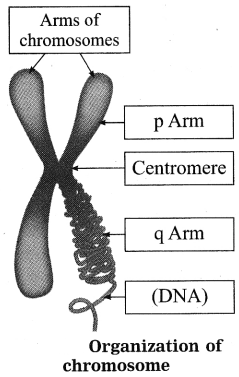
Draw a neat diagram of the structure of chromosome and label the parts: (a) Centromere (b) p-arm (March 2019)
Solution & Step-by-Step Answer:

Question 2 Maharashtra Board Solution
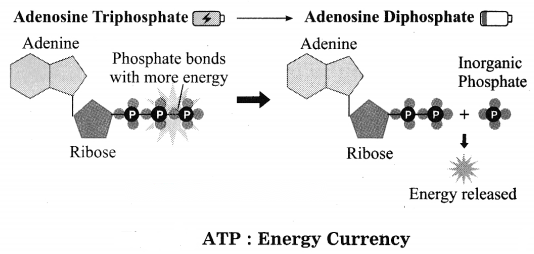
Sketch and label the diagram to show ATP – the energy currency of the cell.
Solution & Step-by-Step Answer:

Question 3 Maharashtra Board Solution
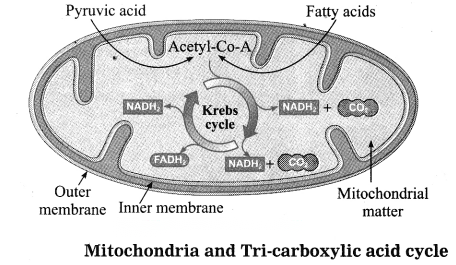
Mitochondria and Krebs cycle:
Solution & Step-by-Step Answer:

(a) Which co-enzymes are shown in the diagram?
Answer:
The co-enzymes NADH2and FADH2are shown in the above diagram.

(b) Which chemical reaction takes place in the mitochondria? Which molecules are produced in this reaction?
Answer:
The chemical reaction that takes place in the mitochondria is called Electronic Transport Chain reaction. The molecules of H2O, carbon dioxide and energy in the form of ATP are produced in this reaction.
Question 4 Maharashtra Board Solution
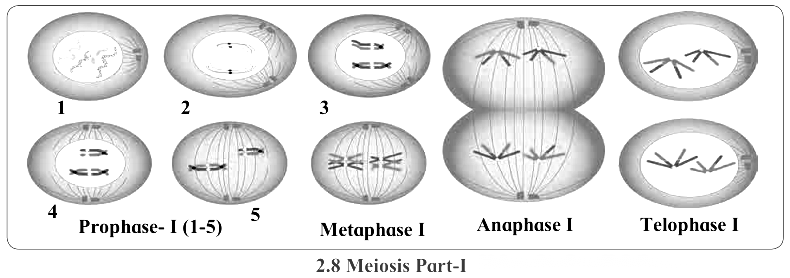
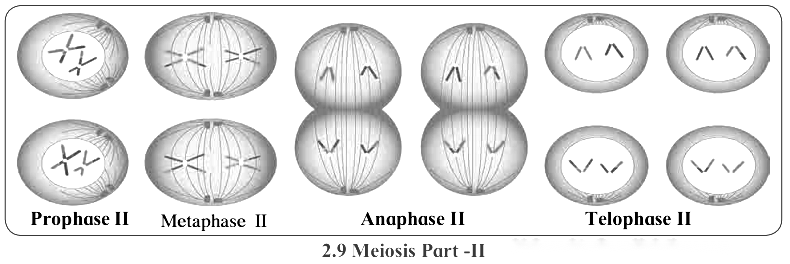
Observe the diagrams 2.8 and 2.9 given on the Textbook page no. 19 and answer the following questions. (a) Which peculiarity do you observe in the figure of Metaphase-I of meiosis ?
Solution & Step-by-Step Answer:
The chromosomes are seen lying on the equatorial plane in the metaphase-I of meiosis.

(b) What is the important difference between Telophase-I and Telophase-II of meiosis?
Answer:
In figure of Telophase-I the diploid chromosomes are seen in two daughter cells. In Telophase-II four daughter cells are seen with haploid chromosomes in them.

(c) Which figure shows phenomena of crossing over?
Answer:
The third figure of Prophase-I shows phenomena of crossing over.
Question 5 Maharashtra Board Solution
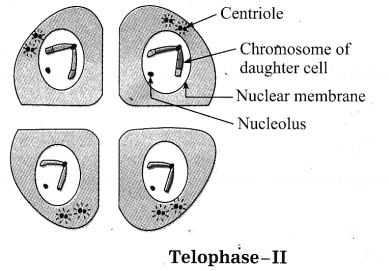
Label the diagram below? Which phase of cell division is seen in the above diagram?
Solution & Step-by-Step Answer:
The above figure shows Telophase-II of Meiosis-II.

Question 6 Maharashtra Board Solution
Observe and label the diagram: (Text Book Page No. 13)
Solution & Step-by-Step Answer:

Activity based questions:

Question 1 Maharashtra Board Solution
Complete the following chart and state which process of energy production it represents: (March 2019)
Solution & Step-by-Step Answer:
The chart shows process of energy production through aerobic respiration of carbohydrates, proteins and fats. (Answers to the blanks in chart are given in bold.)

Project:

Project 1.
Use of ICT: (Text Book Page No. 20)
Collect videos and photographs of different life processes in living organisms. Prepare a presentation and present it on the occasion of science exhibition.

Project 2.
Books are my friend: (Text Book Page No. 20)
Read different Encyclopaedias of technical terms in biology and anatomy and other reference books.