Maharashtra State Board Class 10 History Solutions Chapter 4 History of Indian Arts
(2) The …………….……. saw the rise of Mathura school.
(a) Kushana period
(b) Gupta period
(c) Rashtrakuta period
(d) Maurya period
Answer:
(a) Kushana period
(B) Identify and write the wrong pair in the following set.
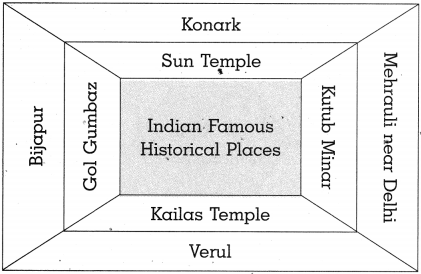
(1) Qutub Minar – Mehrauli
(2) Gol Gumbaz – Vijapur
(3) Chhatrapati Shivaji Maharaj Railway Terminus – Delhi
(4) Taj Mahal – Agra
Answer:
(3) Wrong Pair: Chhatrapati Shivaji Maharaj Railway Terminus – Delhi
(2) Hemadpanti style
Answer:
(3) Maratha style of painting
Answer:
(2) It is necessary to preserve the tradition like Chitrakathi, which is on the verge of extinction.
Answer:
Temple Architecture Naagara | Naagara | Draavida | Hemadpanti |
Characteristics | |||
Examples |
Styles of Temple Architecture | Nagara | Dravid | Hemadpanti |
Characteristics | (1) Series of miniature towers are arranged | (1) Temple towers resembled pyramid shape. | (1) The temple structure was star-shaped with outer walls having zigzag design. |
Examples | (1) Konark Sun Temple | (1) Meenakshi Temple at Madurai | (1) Gondeshwar temple at Sinnar
Question 5
Maharashtra Board Solution
Answer the following questions in detail. (1) Write in detail about folk styles of painting.
Solution & Step-by-Step Answer:
(2) Explain the characteristics of the Islamic architecture in India by giving examples. (3) What kind of professional opportunities are available in the field of arts? (4) Observe the illustration of Warli painting on p. 23 and write about:
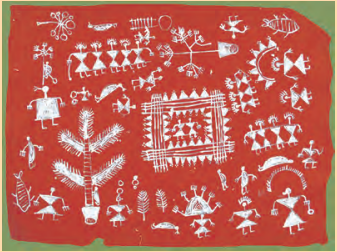
Name of the painting tradition: Nature’s description: Sketch of human activities: Designing features: Project Memory Map
Question 6
Maharashtra Board Solution
Complete the sentences by choosing a correct option: (a) Lalit Kala is also known as ……………………. (a) Folk art (b) Aangik Kala (c) Drik Kala (d) Nagara art
Solution & Step-by-Step Answer:
(b) Aangik Kala
(b) Jivya Somya Mashe, an artist in the Thane district played a great role in making the …………………… style of painting very popular. (c) The Chalukya King, Someshvara, mentioned in …………………… book the tradition of Chitrakathi. (d) The ancient Indian texts mentioned …………………………. styles of Classical Art. (e) During the reign, of Mughal Emperor …………………………., the Mughal miniature style showing a blend of Indian and Persian was developed. (f) Some of the drawings of Gangaram Tambat are preserved in …………………………. university. (g) …………………………. is the characteristic of European style of painting. (h) Replicas of Ajanta paintings was made by (i) The lion capital of the Ashoka pillar found at …………………………. is the national emblem of India. (j) The stupa at …………………………. in Indonesia is the largest stupa in the world. (k) The …………………………. school of art laid the foundation of Indian iconography. (l) The temple architecture developed in India around 4th century C.E. during the …………………………. period. (m) …………………………. is a blend of Nagara style of architecture of North India and Dravid style of South India. (n) The two main branches of the Indian classical music are …………………………. (o) The text of …………………………. written by Bharatmuni is supposed to be the earliest one discussing music and theatre. (p) Every year the …………………………. festival is held in Pune. (q) The ruler of Bijapur, Ibrahim Adilshah wrote …………………………. text in Persian language. (r) …………………………. is a prominent name among artists who created a new style of fusion of Indian and Western dance.
Question 7
Maharashtra Board Solution
Identify the wrong pair in the following and write it: (1) |
Architectural structure | Place |
(1) Kutub Minar | (a) Mehrauli |
(2) Gol Gumbaz | (b) Bijapur |
(3) Chhatrapati Shivaji Maharaj Railway Terminus | (c) Delhi |
(4) Taj Mahal | (d) Agra |
Wrong pair: Chhatrapati Shivaji Maharaj Railway Terminus – Delhi
(2)
Picture | Style | ||||||||||||||||||||
(1) Murals seen in the old wadas at Wai, Menavali | (a) Miniature style | ||||||||||||||||||||
(2) Bhimbetka | (b) Folk painting | ||||||||||||||||||||
(3) Pictures narrating Ramayana and Mahabharata story | (c) Chitrakathi | ||||||||||||||||||||
(4) Painting style in Thane district | (d) Warli painting Answer: (3)
Answer: (4)
Answer:
Question 3
Maharashtra Board Solution
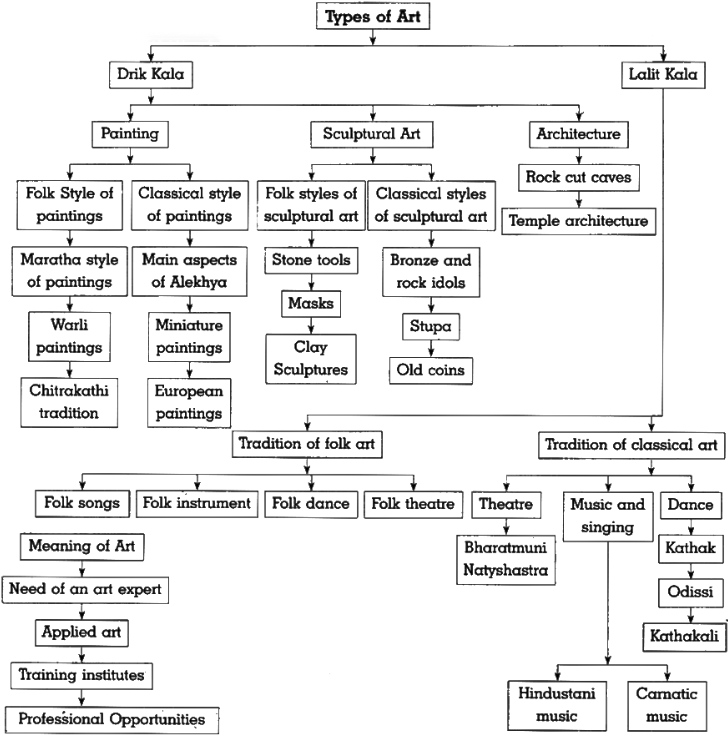
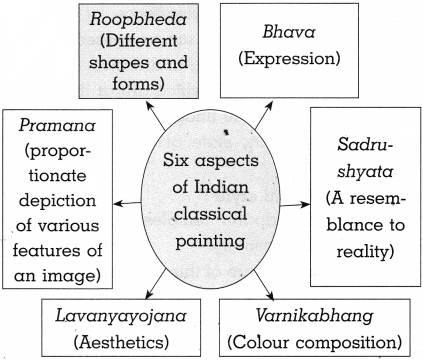
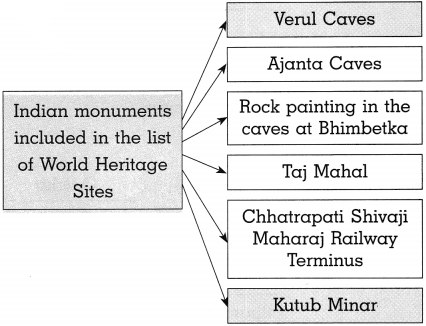
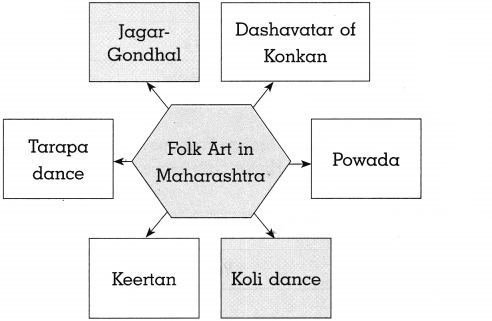
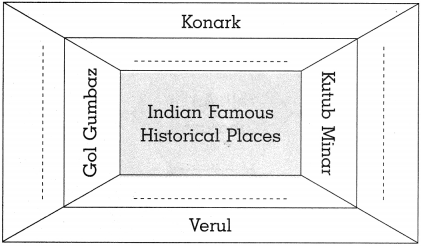
Do as directed: (A) Complete the following concept chart: (1)
Solution & Step-by-Step Answer:
(2)
(3)
(4)
(5)
(6)
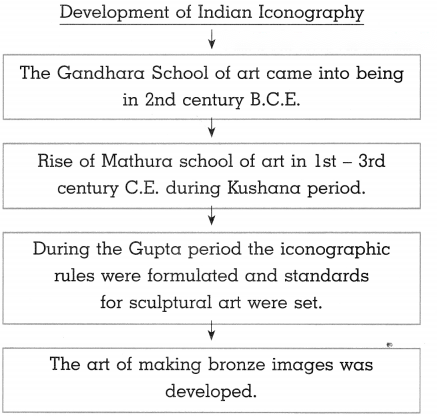
(B) Prepare a flow chart on the Development of Indian Iconography.
Question 8
Maharashtra Board Solution
Explain the following concepts: (a) Style in Art:
Solution & Step-by-Step Answer:
(b) Classical Style of Paintings:
Question 9
Maharashtra Board Solution
Write short notes: (a) Chitrakathi:
Solution & Step-by-Step Answer:
(b) Miniature Painting: (c) Western style of painting: (d) Gangaram Tambat: (e) Temple architecture: (f) Indo-Gothic Architecture: (g) Ttitab-e-Navras:
Question 10
Maharashtra Board Solution
Explain the following sentences with reasons: (a) Indian performing arts were enriched over time.
Solution & Step-by-Step Answer:
(b) The field of Applied Arts needs professionals. Hence, it is essential to have trained and skilled professionals at every stage.
Question 11
Maharashtra Board Solution
Answer the following question in 25-30 words: (a) Write about follk traditions of sculptural art.
Solution & Step-by-Step Answer:
(b) Write about Gandhara School of Art. (c) Write about development of Indian Iconography. (d) Give information about the rock-cut caves in India. (e) Elaborate on the development of temple architecture. (f) What efforts were taken in India to make dance and classical music easily accessible to common people? (g) Write about the work of Pandit Uday Shankar. Thus, the scope of Indian performing arts seems to be constantly expanding. (h) Which fields are related to applied arts ?
Question 12
Maharashtra Board Solution
Read the following passage and answer the questions: (a) In which states of India are the sites of rock paintings found?
Solution & Step-by-Step Answer:
The sites of rock paintings are found in the states of Madhya Pradesh, Uttar Pradesh, Bihar, Uttarakhand, Karnataka, Andhra Pradesh and Telangana.
(b) How old is the tradition of rock paintings? (c) What are the features of rock paintings?
Question 13
Maharashtra Board Solution
Answer the following questions in detail: |
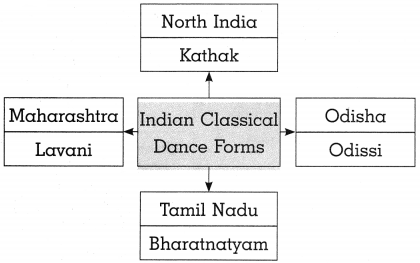
(a) Give information on Indian classical sculptural art.
The development of folk styles of sculptural art led to the formation of rules for classical sculptural art and it evolved.
(b) Differentiate between Classical and Folk: art.:
Answer:
Some differences are noted between Classical and Folk art. They are as follows: Classical Art Folk Art
Classical Art | Folk Art |
1. Classical art does not have such a long tradition. | 1. The tradition of folk art has continued from the prehistoric times. |
2. Classical art is not connected to everyday life. | 2. Folk art is an integral part of everyday life. |
3. It takes a very long time period to master classical art. | 3. The creation of folk art has taken place naturally because of people’s involvement. |
4. Classical art developed within the established frame of rules. | 4. Folk art developed as an integral part of the religious festivals and social life. |
5. As classical art follows set rules, different types of styles, methods and schools are developed. | 5. Folk art is not bound by any rules. Brain Teaser Across: Down: |