Maharashtra State Board Class 10 History Solutions Chapter 1 Historiography Development in the West
History Class 10 Chapter 1 Historiography Development In The West
(2) ………… wrote the book entitled ‘Archaeology of Knowledge’.
(a) Karl Marx
(b) Michel Foucault
(c) Lucien Febvre
(d) Voltaire
Answer:
(b) Michel Foucault
(B) Identify and write the wrong pair in the following set.
(1) Georg Wilhelm Friedrich Hegel – ‘Reason in History’
(2) Leopold von Ranké – ‘The theory and Practice of History’
(3) Herodotus – ‘The Histories’
(4) Karl Marx – ‘Discourse on the Method’
Answer:
(1) Right pair: Georg Wilhelm Friedrich Hegel – ‘Reason in History’
(2) Right pair: Leopold von Ranké – ‘The theory and Practice of History’
(3) Right pair: Herodotus – ‘The Histories’
(4) Wrong pair: Karl Marx – Discourse on the Method.
(2) Annales School
Answer:
(2) Foucault called his method, ‘the archaeology of knowledge’.
Answer:
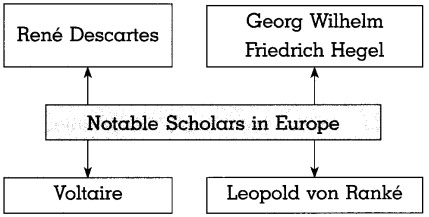
In the latter part of nineteenth century, German thinker, Karl Marx put forward ‘Class Theory’ in his book ‘Das Kapital’.
According to him:
(2) What are the four characteristics of modern historiography?
Answer:
The following are the four characteristics of modern historiography:
(3) What is feminist historiography?
Answer:
(4) Explain Leopold von Ranké’s perspective of history?
Answer:
Leopold’s view on ways to write history throws light on his perspective of history:
Historiography : Development In The West Questions And Answers Pdf Project
Obtain detailed information on your favourite subject and write its history. For example :
– History of Pen
– History of Printing technology
– History of Computers
Answer:
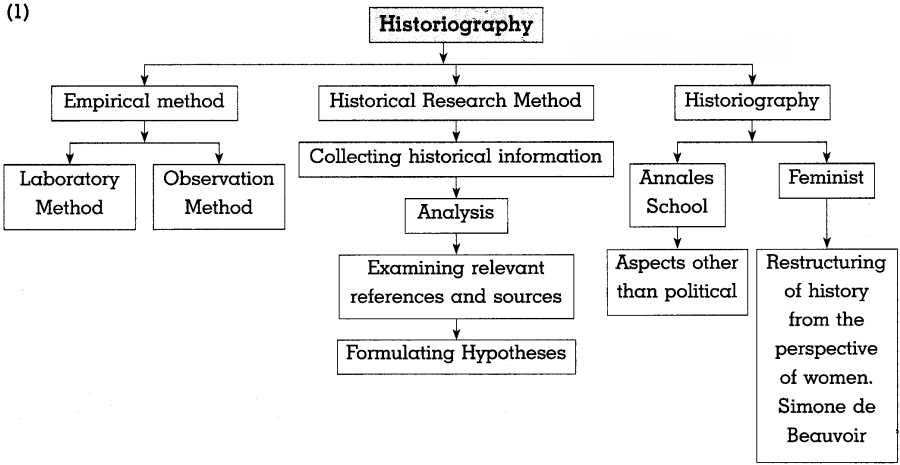
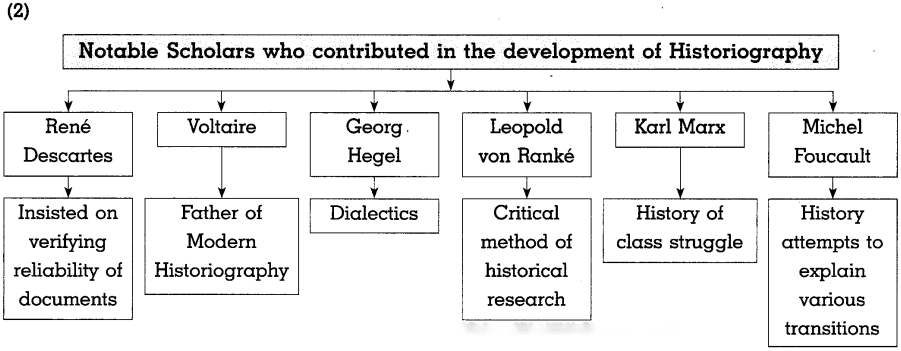
Memory Map
Question 6
Maharashtra Board Solution
Choose the correct option from the given options and complete the sentences:
(a) A scholar who writes critical historical narratives is known as ………………………….
Solution & Step-by-Step Answer:
(b) a historian
(b) The earliest inscription in the world is displayed at Louvre museum in …………………………. (c) The tradition of recording historical events can be traced back to ………………………… civilization in Mesopotamia. (d) The tradition of modern historiography has its roots in the writings of ………………….. historiAnswer: (e) ………………….., a Greek historian of the fifth century B.C.E., had used the term ‘History’ for the first time for his book entitled, ‘The Histories’. (f) In 1737 C.E., the ………………….. university in Germany had an independent department for history. (g) Historiography of the nineteenth century was greatly influenced by the thoughts of ………………….. (h) A new school of historiography arose in France known as ………………….. school. (i) The method of analysis which is based on opposites is known as ………………….. (j) ………………….. considered subjects like psychological disorders, science of medicine, prison administration for historical analysis. (k) After 1990, ………………….. were considered as an independent social class. (l) According to ………………….., historical realities should be presented in a logical manner. (m) According to ………………….., one should never accept anything as the truth till all the doubts are solved.
Question 7
Maharashtra Board Solution
Identify the wrong pair in the following and write it: (1) |
Thinker | Book |
(1) Georg Wilhelm Friedrich Hegel | (a) Reason in History |
(2) Leopold von Ranke | (b) The Theory and Practice of History |
(3) Herodotus | (c) The Histories |
(4) Karl Marx | (d) Discourse on the Method |
Wrong pair: Karl Marx – Discourse on the Method.
(2)
Historian | Country | ||||||||||
(1) Herodotus | Greece | ||||||||||
(2) Simone de Beauvoir | Germany | ||||||||||
(3) Michel Foucault | France | ||||||||||
(4) Rene Descartes | France Answer: (3)
Answer:
Question 8
Maharashtra Board Solution
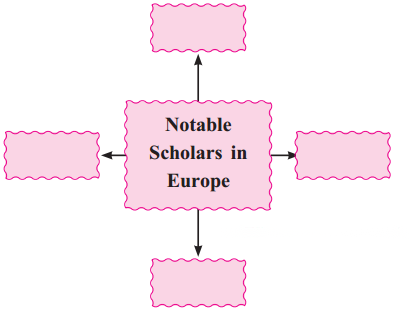
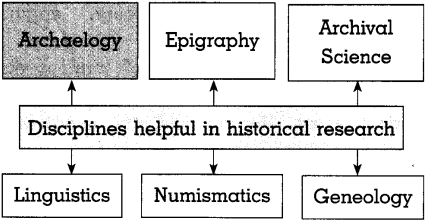
Complete the concept chart |

Answer:
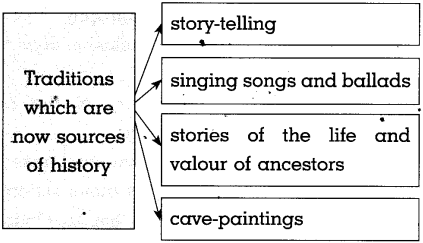
Question 9
Maharashtra Board Solution
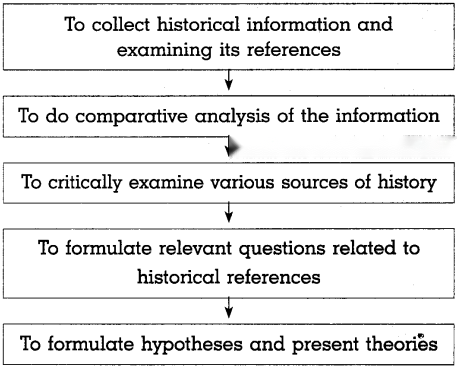
Prepare a flow chart on the given topic: Stages of historiography
Solution & Step-by-Step Answer:
Question 10
Maharashtra Board Solution
Write short notes: (1) Georg Wilhelm Friedrich Hegel:
Solution & Step-by-Step Answer:
(2) Karl Marx: (3) Michel Foucault: (4) Leopold von Ranke:
Question 11
Maharashtra Board Solution
Give reasons: (a) In historical research, it may not be possible to use the method of experiments and observation.
Solution & Step-by-Step Answer:
(b) Historiography in the 18th century gave importance to objectivity in history.
Question 12
Maharashtra Board Solution
Answer the following in 25-30 words: (a) What is Historiography?
Solution & Step-by-Step Answer:
(b) What did Rene Descartes insist upon? (c) Why is Voltaire said to be the founder of modern historiography? (d) What are the objectives of writing history? (e) What progress was achieved in historiography in the eighteenth century?
Question 13
Maharashtra Board Solution
Head the given passage carefully and answer the questions given below: (a) Who is called a Historian?
Solution & Step-by-Step Answer:
A scholar who writes critical historical narratives is called a Historian.
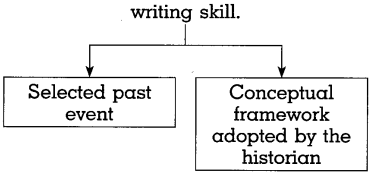
(b) Complete the concept chart.
(c) How did the people in ancient societies preserve the events in the past?
Question 14
Maharashtra Board Solution
Answer the following questions in detail: (a) Which experts do we need in order to prove the reliability of historical documents?
Solution & Step-by-Step Answer:
The following experts are required to prove the reliability of historical documents:
(b) Write Hegel’s view on history.
Question 15
Maharashtra Board Solution
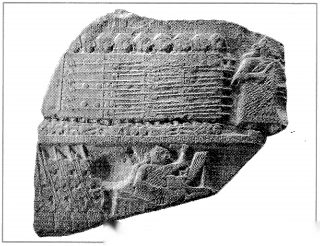
Observe the inscription in the picture and write information it:
Solution & Step-by-Step Answer:
Across: |