Maharashtra State Board Class 9 History Solutions Chapter 7 Science and Technology
Class 9 History Chapter 7 Science and Technology Textbook Questions and Answers
1.A Choose the right option and rewrite the sentence:
B. Identify the wrong pair:
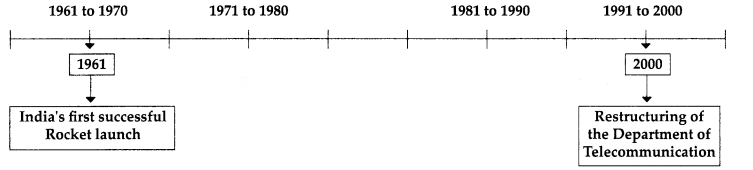
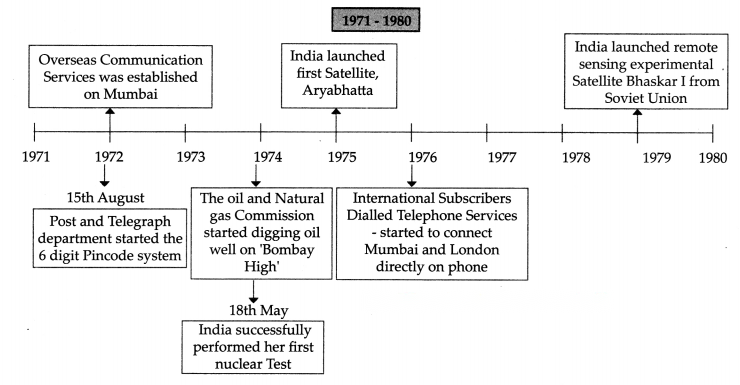
2A. Prepare a timeline of the progress of India in science and technology:
Question.1
Answer:

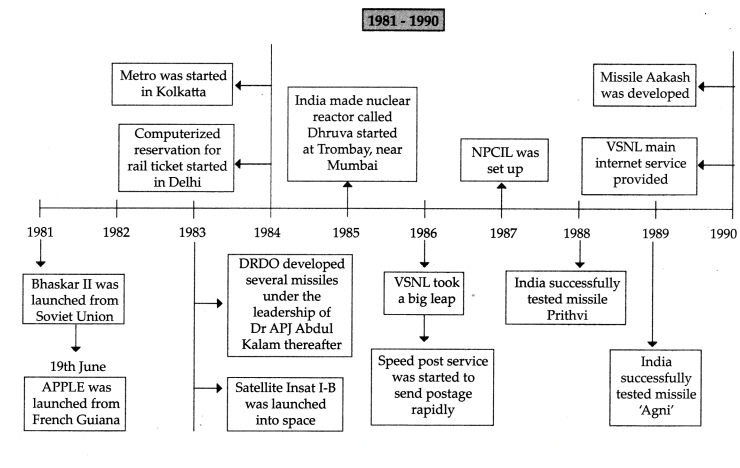
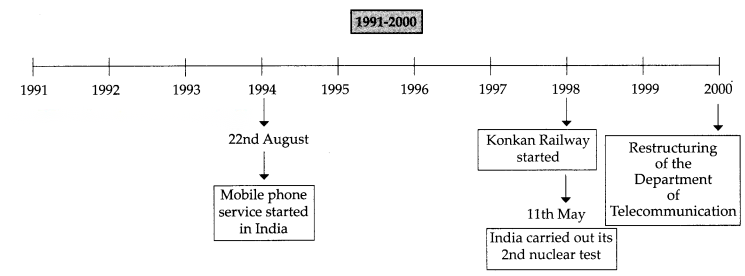
B. Explain the following concepts:
3. Explain the following with reasons:
(ii) The reason why India took this decision was China’s nuclear capability and Pakistan’s desperate efforts to acquire nuclear weapons with China’s help.
(iii) Dr Homi Sethna, the chairman of the Indian Atomic Energy Commission and Dr Raja Ramanna, Director of the Bhabha Atomic Research Centre played a major role in conducting this nuclear test.
(iv) Prime Minister Indira Gandhi took the decision of carrying out a ‘nuclear explosion’. Pokharan was chosen on the basis of the required criteria for the location of the nuclear tests : far away from human settlement and no ground water reserves.
4. Write the answers in 25 to 30 words:
(ii) The reason why India took this decision was China’s nuclear capability and Pakistan’s desperate efforts to acquire nuclear weapons with China’s help.
(iii) Dr Homi Sethna, the chairman of the Indian Atomic Energy Commission and Dr Raja Ramanna, Director of the Bhabha Atomic Research Centre played a major role in conducting this nuclear test.
(iv) Prime Minister Indira Gandhi took the decision of carrying out a ‘nuclear explosion’. Pokharan was chosen on the basis of the required criteria for the location of the nuclear tests: far away from human settlement and no groundwater reserve.
(ii) This remote sensing technology would be useful for India’s development by regarding water bodies, mineral deposits and forecasting weather.
(iii) The photographs taken with the help of this technology about the bowels of the Earth, environment and forests were important.
(iv) Another area in which the information from this satellite was useful was Oceanography
5. Write in brief:
(ii) (if APPLE (Ariane Passenger Payload Experiment):The first completely indigenously built satellite by ISRO in India, APPLE was launched on 19th June, 1981 from the French Guiana. ‘APPLE’ was beneficial in the field of education. The objective of providing emergency telecommunication services was successful.
(iii) Indian National Satellite (INSAT):In August 1983, the satellite INSAT 1-B was launched in space. Because of this satellite, a major revolution came about in the areas of telecommunication, television, radio, weather forecasting and space research in India. Due to INSAT, 207 Akashwani or Radio stations could be connected to each other. This mechanism was also useful for search and rescue of people caught in some disaster like a shipwreck or an air plane crash, for forecasting weather, to look for and follow cyclones or storms, in the fields of telemedicine and educational institutions. The tele-medicine service enabled the population from remote areas to get advice and treatment from expert doctors. Public Primary Health Centers in villages have been connected with super speciality hospitals through INSAT.
(iv) Satellite Communication Centre:In order to establish satellite communication with the help of an artificial satellite, a domestic satellite communication Earth station was established in 1967, at Jodhpur Tekra near Ahmedabad. This made it easy to train scientists and technicians in setting up and running an Earth Station within the country. In 1970, a centre was established at Aarvi near Pune, equipped for international telecommunication service. The technology adopted by railways has a big role in the history of modern India.
(ii) Integrated Guided Missile Development Programme (IGMDP) was conceived by and carried out under the leadership of Dr A.P.J. Abdul Kalam. Defence Research and Development organisation (DRDO) undertook the task of building the missiles.
(ii) To the left of the page on the site, a column is given to enter the destination and boarding point, along with the date on which the journey is supposed to be made. After filling this, the list of trains along with their numbers, berth system, schedules is shown. The Quota, i.e. general, ladies, senior citizen needs to be filled here.
(iii) Here, if the ladies quota is selected, the berth is booked in the compartment reserved exclusively for ladies. If senior citizen quota is selected, exemption in travel fees is given.
(iv) After this, berth preferences i.e. sleeper, second seating is to be selected to book the tickets. Upon which, a new window opens for filling the details like name of the passenger, age, etc. A captcha image needs to be filled again to confirm booking.
(v) The gateway to online payment opens up which is done through Debit Card or Internet Banking, whichever is easier for the person booking it. A message of confirmation and email is received to the person booking it for his/her detail.
(ii) There are several records of technology to the credit of Konkan Railway which stretches over the four states of Maharashtra, Goa, Karnataka and Kerala over a distance of 760 kilometres.
(iii) There are 12 tunnels on this track. The 6.5 km tunnel at Karbude is the longest tunnel. There are 179 big and 1819 small bridges on this track.
(iv) Out of these, the 2065.8 m long bridge on River Sharavati near Honnawar is the biggest, i.e. The 64 m tall bridge on River Panval near Ratnagiri is India’s tallest bridge.
(v) For avoiding accidents on tracks that are prone to landslides, there are sensors fitted to the railway engines.
Class 9 History Chapter 7 Science and Technology Additional Important Questions and Answers
Choose the correct option from the given options and rewrite the statements:
Identify and write the wrong pair from the following sets:
Write short notes:
(ii) The objective of the company is to master and develop the technology to generate safe, cheap and environmentally profitable power and make the country self-sufficient.
(ii) The objective of this organisation was to make India self-sufficient with respect to means, equipment and weapons required for defence.
(iii) After 1983, this organisation developed several missiles under the leadership of Dr A.P.J. Abdul Kalam. Dr Kalam has made a great contribution in the production of missiles.
(iv) Dr Kalam is known as the Father of India’s Missile Programme. He is also referred to as the ‘Missile Man’ of India.
Read the passage and answer the questions:
Passage I
Space research: In 1961, Indian National Committee for Space Research (NCSR) launched India’s first, research rocket from Thumba Equatorial Launch Center in Thumba in the State of Kerala. In 1969, our indigenously built rocket Rohini-75 was successfully launched. The next stage was the successful launch, of the first Indian satellite Aryabhatta in 1975 with ‘ help from the Soviet Union. This success proved that Indian scientists can indigenously build and launch satellite. Indian scientists were confident that they, could acquire the technology for sending a message from the Earth Station and to assess the working of the satellite.
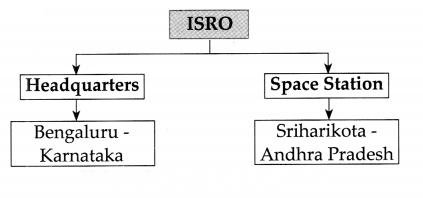
Indian Space Research Organisation (ISRO) : After, the success of the basic programme in space research and rocket related project, Indian Space Research Organisation was established on 15th August 1969 in order to carry out further space research. ‘ The headquarters of ISRO are at Bengaluru. ISRO activated the space station at Sriharikota in Andhra Pradesh for launching our satellites in space.
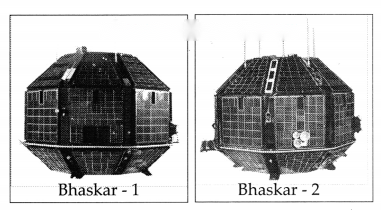
Bhaskar-1: India launched remote sensing,experimental satellite Bhaskar-1 from the Soviet Union in 1979 in order to observe various things on the surface of the earth by remote sensing technology, This remote sensing technology would be useful for India’s development by regarding water bodies, mineral deposits and forecasting weather. The photographs taken with the help of this technology about the bowels of the earth, environment and forests were important. Another area in which the information from this satellite was useful was oceanography. In 1981, ‘Bhaskar-2’ was launched from Soviet Union.
Passage II
Oil and Natural Gas Commission (ONGC) : In 1956, the Oil and Natural Gas Commission was established to search for the deposits of mineral oil and natural gas and to increase their production. After Digboi in Assam, mineral oil deposits were found in Ankleshwar, area in Gujarat. Later, mineral oil and natural gas deposits were found in the gulf of Khambhat in Gujarat. In 1974, the Oil and Natural Gas Commission, started digging an oil well in ‘Bombay High’ area, with the help of Russian scientists by a drillship called ‘Sagar Samrat’. From 1975, mineral oil and natural gas began to be extracted from there. Later, more than 8500 oil wells and 33 natural gas wells dug eventually in this area began to contribute, 38% of the total mineral oil production in the country and met 14% of the country’s demand for crude oil.
Railways and Technology : The technology adopted by railways has a big role in the history of modem India. In order to bring efficiency, accuracy and coordination in the reservation system in rail travel, computerised reservation system was started for the first time in Delhi in 1984. In the same year, the Metro was started in Kolkata. In this way India has been making progress in the fields of science and technology. New inventions have been made. India is an important 21st century nation, which has always used technology for establishing peace in the world. India is making all these advancements in order to be the foremost among nations in the 21st century. In the next chapter, we shall learn about the progress India, has made in the fields of commerce and trade.
Established | 1998 |
States Covered | Maharashtra, Goa, Karnataka Kerala. |
Longest Tunnel | 6.5 km long tunnel at Karbude |
Tallest Bridge | 64 mt. tall bridge on River Panvel near Ratnagiri |
Answer the following questions in detail:
(ii) In 1969, an atomic power station was set up at Tarapur. A Reactor Research Centre was set up at Kalpakkam in Tamil Nadu to successfully use Thorium for generating atomic power. The role of reactors is important in developing atomic power.
(iii) Factories manufacturing the heavy water needed for the generation of atomic power were set up at Vadodara, Talcher, Tutikorin, Kota, etc. An institution called Heavy Water Projects was set up to carry out research on manufacturing heavy water within the country. It was later renamed ‘Heavy Water Board’.
(ii) In 1976, the International Subscriber Dialled Telephone Service started to connect Mumbai and London directly on the phone.
(iii) Alongside the telephone service, services like telex, teleprinter and radio images started. In 1986, Videsh Sanchar Nigam Limited (VSNL) took a big leap in this field. Before that, Mahanagar Telephone Nigam Limited (MTNL) was a public sector company for giving telephone service in big cities.
(iv) In the 1990s, Videsh Sanchar Nigam Limited held the distinction of being the main internet service provider in India. The contribution of Sam Pitroda in this field is significant.
(ii) After Digboi in Assam, mineral oil deposits were found in Ankleshwar area in Gujarat. Later, mineral oil and natural gas deposits were found in the gulf of Khambhat in Gujarat.
(iii) In 1974, the Oil and Natural Gas Commission started digging an oil well in ‘Bombay High’ area with the help of Russian scientists by a drillship called ‘Sagar Samrat’.
(iv) From 1975, mineral oil and natural gas began to be extracted from there.
(v) Later, more than 8500 oil wells and 33 natural gas wells dug eventually in this area began to contribute 38% of the total mineral oil production in the country and met 14% of the country’s demand for crude oil.
Observe the picture and write relevant information: