Latest Maharashtra State Board (SSC & HSC) 2026-27 Syllabus Digest & Solutions Updated!
Class 9 (SSC)Geography2026-27 Syllabus

Chapter 5 Precipitation Solutions

Complete Maharashtra State Board Balbharati & Yuvakbharati textbook solutions for Chapter 5 Precipitation. Step-by-step solved exercises, numerical problems, and digest answers.

78 Solved Questions7 Diagrams2867 words

Maharashtra State Board Class 9 Geography Solutions Chapter 5 Precipitation

Class 9 Geography Chapter 5 Precipitation Textbook Questions and Answers

1. Identify the precipitation type with the help of the description given:

(a) It is the main source of the water that you use. Sometimes it is torrential and sometimes continuous. Most of the agriculture in India is dependent on it.
(b) It seems as if water droplets are floating in the atmosphere. In London, one cannot see the Sun till the afternoon during winters because of this phenomenon.
(c) It never precipitates like this in equatorial areas. Precipitation in the solid form sometimes causes damage to the crops.
(d) A white cotton-like layer spreads on the earth’s surface. Because of this form of precipitation, the State of Jammu and Kashmir has to change its capital in winters. In Maharashtra, it does not precipitate like this.
Answer:
(a) rainfall
(b) fog
(c) hail
(d) snow

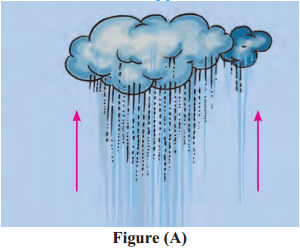
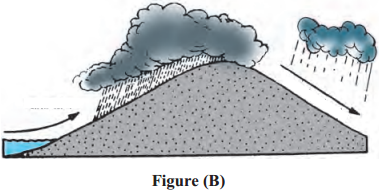
2. Look at the following pictures and identify the correct rainfall type.

Answer:
Convectional rainfall

Answer:
Orographic rainfall

Answer:
Cyclonic rainfall
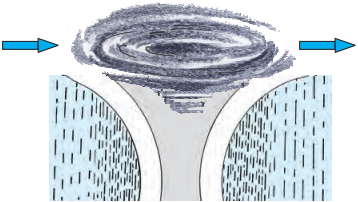
3. Look at the figures above and answer the following questions:

Question 1 Maharashtra Board Solution
In fig B, on which side of the mountain is it raining more?
Solution & Step-by-Step Answer:
The windward side is receiving more rainfall.
Question 2 Maharashtra Board Solution
Shade the rain shadow region in fig B and name it.
Solution & Step-by-Step Answer:
Students to show the leeward side in the picture.
Question 3 Maharashtra Board Solution
What is the difference between A and C?
Solution & Step-by-Step Answer:
In figure 5.4 i.e. convectional rainfall the hot air rises upwards and then the air cools and begins to condense and due to continuous condensation rainfall occurs. Here rainfall is accompanied by lightning and thunder.

In figure 5.6, i.e. cyclonic rainfall, air from surrounding regions comes towards the centre of the cyclone and starts moving upwards. As it rises, the temperature of the air reduces, condensation occurs and rainfall takes place.

Question 4 Maharashtra Board Solution
Stormy winds and floods are associated with which rainfall type?
Solution & Step-by-Step Answer:
Stormy winds and floods are associated with Cyclonic rainfall.
Question 5 Maharashtra Board Solution
What type of rainfall occurs in Singapore?
Solution & Step-by-Step Answer:
Cyclonic rainfall occurs in Singapore.

4. Identify the odd man out:

Question 1 Maharashtra Board Solution
Orographic rainfall, acid rain, cyclonic rainfall, convectional rainfall
Solution & Step-by-Step Answer:
Acid rain
Question 2 Maharashtra Board Solution
Snowfall, rainfall, hailstones, dew
Solution & Step-by-Step Answer:
Dew
Question 3 Maharashtra Board Solution
Thermometer, rain gauge, anemometer, measuring jar
Solution & Step-by-Step Answer:
Measuring jar

5. Answer in brief:

Question 1 Maharashtra Board Solution
In what ways does precipitation occur on the earth?
Solution & Step-by-Step Answer:
Precipitation means water falls in the solid or liquid state from the clouds to the earth surface. Snow, hailstorms, rainfall are the major forms of precipitation.

(i) Snow:
Answer:

(ii) Hail:

(iii) Rainfall:

(iv) Fog, dew and frost:

Question 2 Maharashtra Board Solution
Comment on the rainfall occurring in the rain shadow area.
Solution & Step-by-Step Answer:
Question 3 Maharashtra Board Solution
Which type of rainfall occurs in most of the world? Why?
Solution & Step-by-Step Answer:
Question 4 Maharashtra Board Solution
If condensation occurs closer to the earth’s surface, what types of forms become visible?
Solution & Step-by-Step Answer:
If condensation and solidification of the water vapour in the atmosphere closer to the earth surface are visible, they are in the form of fog, dew or frost.

(i) Fog:

(ii) Dew:

(iii) Frost:

Question 5 Maharashtra Board Solution
What precautions should be taken while measuring rainfall?
Solution & Step-by-Step Answer:

6. Distinguish between

Question 1 Maharashtra Board Solution
Dew and frost
Solution & Step-by-Step Answer:

Dew

Frost

(i)

When moisture-laden air near the earth’s surface comes into contact with very cold objects, condensation of vapour takes place into small water droplets called dew.

(i)

If the temperature of the air is less then CPC, the water droplets stuck to the surface of cold objects, freezes forming frost.

(ii)

Water vapour condenses and forms droplets of water.

(ii)

Water droplets stuck to cold surface turns to frozen water droplets.

(iii)

Dew sticks to the cold object but does not freeze.

(iii)

It sticks to the cold object and freeze.

Question 2 Maharashtra Board Solution
Snow and hail
Solution & Step-by-Step Answer:

Snow

Hail

(i)

Precipitation in the form of solid particles of snow is known as snow fall.

(i)

Precipitation in the form of frozen water droplets falling rapidly to the ground is know as hail.

(ii)

The fall of temperature in the atmosphere below the freezing point causes snow fall

(ii)

Extreme heat on the surface of the earth initiates the process of hail formation.

(iii)

Heavy accumulation of snow can collapse the transportation and communication system of the area.

(iii)

It destroys crops and causes loss of life an

Class 9 Geography Chapter 5 Precipitation Intext Questions and Answers

Can you tell?
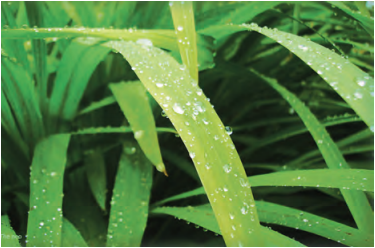
Question 1 Maharashtra Board Solution
The blade of grass look like this in winter mornings. From where does the water on the blades of grass come?
Solution & Step-by-Step Answer:

Question 2 Maharashtra Board Solution
Snow is found everywhere in the winters in Kashmir.
Solution & Step-by-Step Answer:
Snow is found everywhere in winters of Kashmir because Kashmir is located at a higher altitude where the temperature falls below freezing point. Hence water vapour directly turn into snowflakes leading to snowfall.
Question 3 Maharashtra Board Solution
Why isn’t snow found in our surroundings?
Solution & Step-by-Step Answer:
Because we have a moderate temperature and we are closer to the sea, snow is not found in our surroundings.
Question 4 Maharashtra Board Solution
Generally, it rains between June and September in our region.
Solution & Step-by-Step Answer:
We get rainfall between June and September, in our region when the moisture-laden south-west monsoon winds are obstructed by the Western Ghats leading to orographic rainfall.
Question 5 Maharashtra Board Solution
How do the rain droplets form?
Solution & Step-by-Step Answer:
Clouds form when condensed water droplets and dust particles accumulate forming large rain droplets.
Question 6 Maharashtra Board Solution
In London, there is a fog like this till the afternoon in the winters.
Solution & Step-by-Step Answer:
In London there is fog till the afternoon in winters because London is far away from equator and it has temperate oceanic climate and they have cool summers.
Question 7 Maharashtra Board Solution
We do not have fog until afternoons in summers.
Solution & Step-by-Step Answer:
We do not have fog until afternoons in summer because we are near to equator and we have tropical climate and hot summers.
Question 8 Maharashtra Board Solution
Sometimes hailstones destroy the standing crops in the field.
Solution & Step-by-Step Answer:
Hailstones are solid and heavy in nature and they hit the earth due to gravity and this is the reason they destroy the crops in the field.
Question 9 Maharashtra Board Solution
Why don’t we get hailstones frequently?
Solution & Step-by-Step Answer:
For the formation of hailstones the following 2 conditions are required:

Think about it.

Question 1 Maharashtra Board Solution
We use a raincoat or umbrella to protect ourselves from rainfall. What will you use to protect yourself from severe hailstorms?
Solution & Step-by-Step Answer:
If a person is outside without any coverage, he needs to seek shelter immediately, making sure to protect his head from hailstones.
Question 2 Maharashtra Board Solution
Because of the conventional processes, convectional rainfall occurs in the afternoon in equational areas. But why doesn’t it rain in afternoons in the oceanic areas of the equatorial belt?
Solution & Step-by-Step Answer:
One of the necessary conditions of convectional rainfall is intense heating of surface which causes air to expand and rise. Since land heats up faster than water, it rains only on the land in the equatorial regions and not in the oceanic areas.
Question 3 Maharashtra Board Solution
Why are the areas of high rainfall situated in tropical areas?
Solution & Step-by-Step Answer:

Class 9 Geography Chapter 5 Precipitation Additional Important Questions and Answers

Complete the statements choosing the correct option from the bracket:

Question 1 Maharashtra Board Solution
……………. part of the earth’s surface is full of water. (a) 30.7% (b) 4.09% (c) 60.5% (d) 70.8%
Solution & Step-by-Step Answer:
(d) 70.8%
Question 2 Maharashtra Board Solution
When the temperature in the atmosphere falls below the freezing point and the water vapour directly turns into snowflakes, the process is called as …………….. (a) sublimation2 (b) frostbite3 (c) carbonation (d) convection
Solution & Step-by-Step Answer:
(a) sublimation
Question 3 Maharashtra Board Solution
In areas located at higher altitudes and high latitudes, where the temperatures are below 0°C get precipitation in the form of …………. (a) dew (b) rain (c) snow (d) hail
Solution & Step-by-Step Answer:
(c) snow
Question 4 Maharashtra Board Solution
Because of ………………. crops may get destroyed and loss of life and property may occur. (a) dew (b) rain (c) snow (d) hail
Solution & Step-by-Step Answer:
(d) hail
Question 5 Maharashtra Board Solution
Hails do not occur in ……………… areas. (a) temperate (b) equatorial (c) landlocked (d) mountainous
Solution & Step-by-Step Answer:
(b) equatorial
Question 6 Maharashtra Board Solution
In equatorial areas, …………. type of rainfall occurs almost daily in the afternoons. (a) frontal (b) convectional (c) cyclonic (d) orographic
Solution & Step-by-Step Answer:
(b) convectional
Question 7 Maharashtra Board Solution
…………… rainfall occurs because of obstruction from high mountain ranges. (a) Frontal (b) Convectional (c) Cyclonic (d) Orographic
Solution & Step-by-Step Answer:
(d) orographic
Question 8 Maharashtra Board Solution
Cyclonic rainfall occurs more in …………… zones. (a) temperate (b) equatorial (c) torrid (d) polar
Solution & Step-by-Step Answer:
(a) temperate
Question 9 Maharashtra Board Solution
…………… rainfall occurs in most of the parts in the world. (a) Frontal (b) Convectional (c) Orographic (d) Cyclonic
Solution & Step-by-Step Answer:
(c) orographic
Question 10 Maharashtra Board Solution
Snowfall can also be measured with the help of …………… (a) hygrometer (b) rain gauge (c) barometer (d) anemometer
Solution & Step-by-Step Answer:
(b) rain gauge
Question 11 Maharashtra Board Solution
A layer of ice is equivalent to 10mm of rainfall. (a) 10mm (b) 50mm (c) 100mm (c) 120mm
Solution & Step-by-Step Answer:
(c) 120mm
Question 12 Maharashtra Board Solution
When moisture-laden air near the earth’s surface comes in contact of very cold objects and form water droplets which stick to the surface of the cold objects is formed. (a) dew (b) frost (c) hail (d) fog
Solution & Step-by-Step Answer:
(a) dew
Question 13 Maharashtra Board Solution
If the temperature of the air reaches less than 0°C, the water droplets stuck to the surfaces of cold objects freeze and form (a) dew (b) frost (c) hail (d) fog
Solution & Step-by-Step Answer:
(b) frost
Question 14 Maharashtra Board Solution
If precipitation does not take place, then conditions of arise. (a) floods (b) hail (c) snowstorm (d) drought
Solution & Step-by-Step Answer:
(d) drought
Question 15 Maharashtra Board Solution
Visibility reduces because of (a) floods (b) drought (c) fog (d) dew
Solution & Step-by-Step Answer:
(c) fog

Match the column:

Question 1 Maharashtra Board Solution

Column A

Column B

(1) Snowflakes

(a) upward air flow

(2) Hailstones

(b) sublimation

(3) Dew

(c) microscopic water particles floating in the air

(4) Fog

(d) condensation4on cold objects

Solution & Step-by-Step Answer:

(1 – b),
(2 – a),
(3 – d),
(4 – c)

Question 2 Maharashtra Board Solution

Column A

Column B

(1) Orographic rainfall
(2) Convectional Rainfall
(3) Cyclonic Rainfall

(a) Daily in equatorial areas
(b) More in temperate zones
(c) Mountain barrier

Solution & Step-by-Step Answer:
(1 – c),
(2 – a),
(3 – b)

Answer in one sentence:

Question 1 Maharashtra Board Solution
What percentage of the earth’s surface is covered with water?
Solution & Step-by-Step Answer:
70.8% of the earth’s surface is covered with water.
Question 2 Maharashtra Board Solution
Why do we see different forms of condensation?
Solution & Step-by-Step Answer:
Different forms of condensation are seen due to changes in atmospheric conditions.
Question 3 Maharashtra Board Solution
What is precipitation?
Solution & Step-by-Step Answer:
When water falls in the solid or liquid state from the clouds to the ground, it is called as precipitation.
Question 4 Maharashtra Board Solution
Name the major forms of precipitation.
Solution & Step-by-Step Answer:
Snow, hailstones and rainfall are the major forms of precipitation.
Question 5 Maharashtra Board Solution
Explain the process of sublimation.
Solution & Step-by-Step Answer:
When the temperature in the atmosphere falls below the freezing point, water vapour directly turns into snowflakes this process is called sublimation.
Question 6 Maharashtra Board Solution
In India, hails occur in which season?
Solution & Step-by-Step Answer:
Hails occur in summer reason in India.
Question 7 Maharashtra Board Solution
Why don’t hails occur in cold zones?
Solution & Step-by-Step Answer:
Hails do not occur in cold zones because of lack of upward flow.
Question 8 Maharashtra Board Solution
Why don’t hails occur in equatorial areas?
Solution & Step-by-Step Answer:
Hails do not occur in equatorial areas because of the heat in the atmosphere.
Question 9 Maharashtra Board Solution
Which type of rainfall occurs because of obstruction of mountain?
Solution & Step-by-Step Answer:
Orographic rainfall occurs because of obstruction of mountains.
Question 10 Maharashtra Board Solution
Convectional rainfall is mainly experienced in which region?
Solution & Step-by-Step Answer:
Convectional rainfall is mainly experienced in equatorial region.
Question 11 Maharashtra Board Solution
What is a Cyclone?
Solution & Step-by-Step Answer:
Cyclone is a specific air formation when the pressure at an area is less than the surrounding regions.
Question 12 Maharashtra Board Solution
What is acid rain?
Solution & Step-by-Step Answer:
Precipitation of water with dissolved acids is called acid rain.

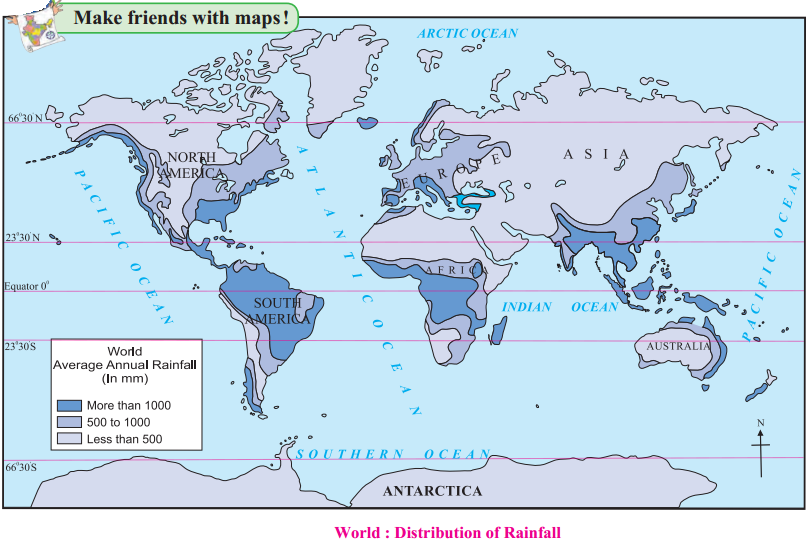
Study the rainfall map of the world given below and answer the following question:

Question 1.
Which region experiences more rainfall?
Answer:
The tropical region experiences more rainfall.

Question 2 Maharashtra Board Solution
What is the reason for low rainfall in the Central Peninsular India?
Solution & Step-by-Step Answer:
The Central Peninsular India falls on the leeward side of the Western Ghats and hence a rain shadow region is formed here.
Question 3 Maharashtra Board Solution
Why does the eastern part of Central African continent gets less rainfall than the western part despite its location close to the equator?
Solution & Step-by-Step Answer:
Question 4 Maharashtra Board Solution
Why does the amount of high rainfall in the western part of the European continent reduce in the eastern part?
Solution & Step-by-Step Answer:
There are many mountain ranges in the western part of Europe. These obstruct the rain-bearing clouds coming from the west and therefore the amount of rainfall received is high in the west and it reduces towards the east.
Question 5 Maharashtra Board Solution
Why is rainfall more only in the eastern coast of Australia?
Solution & Step-by-Step Answer:
The eastern part of Australia is a mountainous region. The winds blowing from the Pacific Ocean are obstructed by these mountains resulting in orographic rainfall towards the east and the formation of a rain shadow zone towards the west.

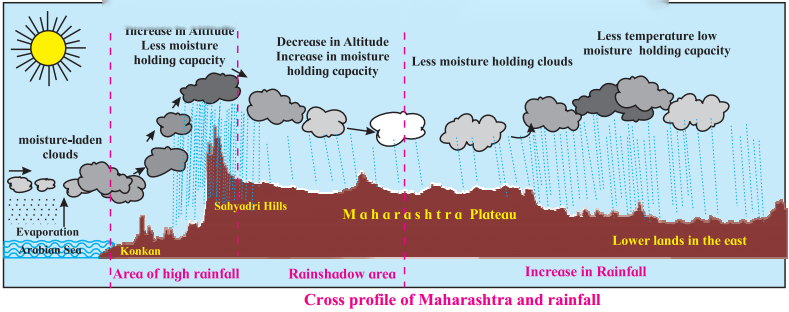
Observe the horizontal profile of Maharashtra in the following figure and answer the following questions:

Question 1.
What type of rainfall occurs in Maharashtra?
Answer:
Orographic rainfall occurs in Maharashtra.

Question 2 Maharashtra Board Solution
Where will the rain shadow area lie in Maharashtra?
Solution & Step-by-Step Answer:
The rain shadow area lies to the Leeward side of Sahyadri hills (Maharashtra plateau).
Question 3 Maharashtra Board Solution
Think about the figure and estimate the rainfall of your district.
Solution & Step-by-Step Answer:
The answer may vary.

Give reasons:

Question 1 Maharashtra Board Solution
Crops may get destroyed due to hailstones.
Solution & Step-by-Step Answer:
Question 2 Maharashtra Board Solution
There is a difference between ice and snow.
Solution & Step-by-Step Answer:

Thus, there is a difference between ice and snow.

Question 3 Maharashtra Board Solution
In equatorial areas, convectional rainfall occurs almost daily in the afternoons.
Solution & Step-by-Step Answer:
Question 4 Maharashtra Board Solution
A rain shadow area is formed on the leeward side of the Western Ghats.
Solution & Step-by-Step Answer:
Question 5 Maharashtra Board Solution
Snowfall is not experienced in Maharashtra.
Solution & Step-by-Step Answer:
Question 6 Maharashtra Board Solution
Hailstones do not occur frequently.
Solution & Step-by-Step Answer:
Question 7 Maharashtra Board Solution
Dew and frost occur on a large scale in winters.
Solution & Step-by-Step Answer:

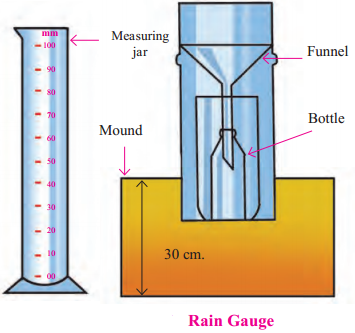
Draw diagram of Rain Gauge:
Answer:

Question 6 Maharashtra Board Solution
Explain the effects of precipitation.
Solution & Step-by-Step Answer:

Explain:

Question 1 Maharashtra Board Solution
Snowfall
Solution & Step-by-Step Answer:
Question 2 Maharashtra Board Solution
Formation of hailstones.
Solution & Step-by-Step Answer:
Question 3 Maharashtra Board Solution
Cyclonic rainfall
Solution & Step-by-Step Answer:
Question 4 Maharashtra Board Solution
Rain Gauge.
Solution & Step-by-Step Answer:
Question 5 Maharashtra Board Solution
Fog, dew and frost
Solution & Step-by-Step Answer:
(i) Fog:

(ii) Dew:

(iii) Frost:

Question 6 Maharashtra Board Solution
Acid Rain
Solution & Step-by-Step Answer:
Question 7 Maharashtra Board Solution
Convectional Rainfall
Solution & Step-by-Step Answer:
Question 8 Maharashtra Board Solution
Orographic rainfall
Solution & Step-by-Step Answer: