Maharashtra State Board Class 9 My English Coursebook Solutions Chapter 2.3 Mark Twain
My English Coursebook Std 9 Digest Chapter 2.3 Mark Twain Textbook Questions and Answers
Warming up!
Chit-chat:
Quick Thinkers:
Within one minute, write as many meaningful phrases as possible using the numbers given below. Do not repeat the ideas.

Try to imagine a situation context where all the above items fit in. Describe it in 8 – 10 lines.
Think of a title for your passage.
At last, the girls’ parents complained to Five gardens police station. Six policemen from the police station came to his school and took the boy to a remand home where seven roads meet. Now the boy is in a forty feet room and taking his punishment for sending hundreds of – indecent messages to the innocent girls.
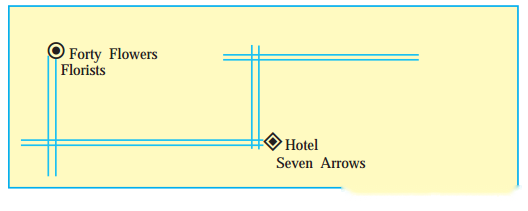
Try to draw a map incorporating your phrases in a meaningful way. (Two examples are given below.) Write a key/index for your map.
English Workshop:
1. Answer the following questions:
Question a.
Did Twain tell the barber who he was?
Answer:
Twain did not tell the barber who he was because he didn’t want to disclose his identity. But he told him that it was his first visit to that town.
Question b.
Was Twain particular about how he dressed when he was visiting friends?
Answer:
Yes, Twain was particular about his dress because when Mrs. Stowe saw him without any collar and tie she was surprised. She disapproved his dressing, it shows that he was always in formal, particular dress.
Question c.
Was Twain particular about what words he used?
Answer:
Yes, Twain was very much particular about what words he used.
Question d.
Do you think Twain approved of spelling reforms? Give reasons for your answer.
Answer:
Twain proposed a different plan for the improvement of English spellings. He wanted to convey that further changes and reformation in English spellings would be harmful for the language. So I think he did not approve of spelling reforms.
Question e.
How did Twain explain the spider in the paper? What did he want to highlight?
Answer:
Twain explained that the spider was on the paper to see which merchant was not advertising, so that he could go to that store; spin his web across the door and lead a life of undisturbed peace afterwards. He wanted to highlight that there was no logical reason behind superstitions as the spider just happened to be there on the newspaper by chance. He also wanted to highlight that we should not believe in superstitions.
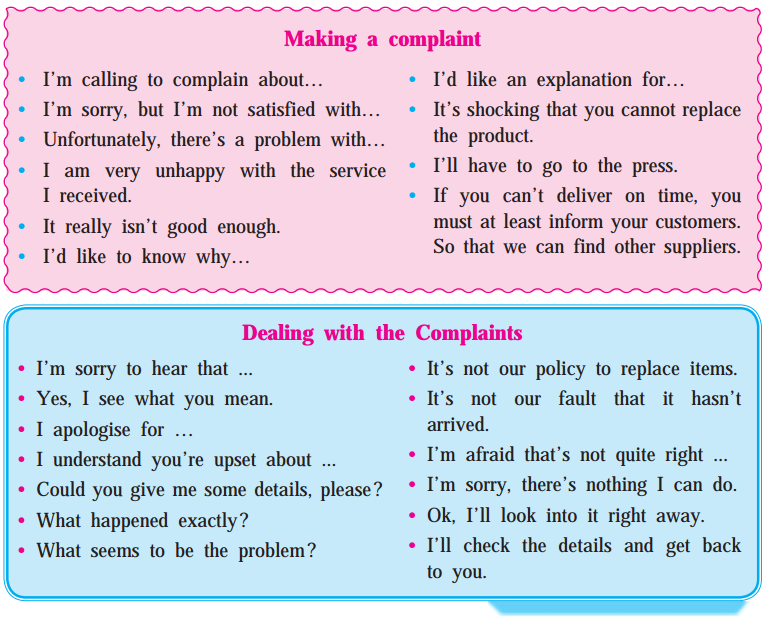
2. Read the following and write the two meanings of ‘mind’ and ‘matter’ :
‘Age is an issue of mind over matter. If you don’t mind, it doesn’t matter.’
3. Enact any one anecdote in the classroom.
4. Translate any five of the quotations you like.
Question 1
Maharashtra Board Solution
Translate any five of the quotations you like. |
5. Form groups of four to six.
Discuss whether and how you can improve English spelling.
Question 1. Discuss whether and how you can improve English spelling. |
6. Arrange a ‘Jokes’ session in the classroom where each student tells a joke. The jokes must be told in English.
Question 1. Arrange a ‘Jokes’ session in the classroom where each student tells a joke. The jokes must be told in English. |
Language Study:
7.Many actions involve two people/things – one that performs the action and one that is affected by the action. Example: Sonali ate the mango.
Here, the action of eating involves Sonali (who eats) and the mango (which gets eaten).
Sonali is the subject and ‘mango’ is the object of the verb ‘eat’. When you want to talk about who performed the action, the doer of the action is the subject.
Sometimes, you want focus on the object – the thing affected by the action. Then you make it the subject of that sentence. Example: The mango was eaten.
You may or may not mention the doer – here, Sonali or the person who ate it.
This is passive construction or passive voice. In this type of construction, the thing affected by the verb is the subject of the sentence, the verb is in the passive form (be + past participle), and the ‘doer’ of the action may or may not be mentioned.
In the following examples of passive voice, the ‘doer’ of action is not mentioned.
Examples :
If we wish to mention the ‘doer’ in passive sentences, we mention it by adding ‘by’
before it. Examples :
This pen was given to me by my Aunt.
Note that only transitive verbs can be used in the passive voice.
8. Refer to the Language Study pages and read the entries ‘irony’ and ‘pun’. Find one example of each from the passage or the quotations.
Question 1. Find the examples of ‘irony’ and ‘pun’ from the lesson or the quotations.
Solution & Step-by-Step Answer:
block bg-white dark:bg-slate-900/80 border-l-4 border-emerald-500 rounded-r-xl p-5 my-3 shadow-xs border border-slate-200/60 dark:border-slate-800">
Solution & Step-by-Step Answer:
irony – use of words to imply the opposite of what they mean. Examples:
pun – a play on words based on their different meanings, for a humorous effect. (2 examples of irony and pun are given here. Students are expected to find more examples from the lesson.) 8. Activity: Live English: Customer Care Question a. Question b. Question c. Question d.
My English Coursebook 9th Class Solutions Chapter 2.3 Mark Twain Additional Important Questions and Answers Read the following passage and do the activities: Simple Factual Activities:
Question 1
Maharashtra Board Solution
Complete the following sentences with the help of the given passage: (Answers are directly given.)
Solution & Step-by-Step Answer:
Question 2
Maharashtra Board Solution
Name the following:
Solution & Step-by-Step Answer:
Question 3
Maharashtra Board Solution
Answer the following in words :
Solution & Step-by-Step Answer:
Question 4
Maharashtra Board Solution
Complete the following sentences : (Answers are directly given.)
Solution & Step-by-Step Answer:
1. Henry Irving asked Mark Twain if he had heard the story before “because he wanted to assure that he had not heard the story which he was telling him.” 2. Mark Twain could not lie the third time at any cost because he had not only heard the story but also invented it after hearing it for the third time.
Question 5
Maharashtra Board Solution
State whether the following statements are True or False: (Answers are directly given.)
Solution & Step-by-Step Answer:
Complex Factual Activities:
Question 1
Maharashtra Board Solution
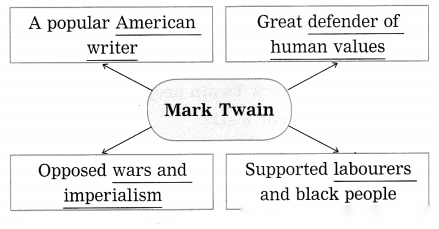
Describe Mark Twain.
Solution & Step-by-Step Answer:
Mark Twain was a popular American writer who was famous for his humorous stories, novels and other writings. Many anecdotes related to Mark Twain are told and enjoyed even today. He was a great defender of human values like liberty, equality and fraternity.
Question 2
Maharashtra Board Solution
Complete the following web describing Mark Twain: (Answers are directly given.)
Solution & Step-by-Step Answer:
Question 3
Maharashtra Board Solution
Complete the following: (Answers are directly given.) The two social activities that Mark Twain supported: 1. Being a great defender of human values like liberty, equality and fraternity, Mark Twain opposed wars and imperialism. 2. He also supported the cause of labourers and of the black people in his country. |
Question 4
Maharashtra Board Solution
Was Twain particular about what words he used?
Solution & Step-by-Step Answer:
block bg-white dark:bg-slate-900/80 border-l-4 border-emerald-500 rounded-r-xl p-5 my-3 shadow-xs border border-slate-200/60 dark:border-slate-800">
Solution & Step-by-Step Answer:
Yes, Twain was very much particular about what words he used.
Question 5
Maharashtra Board Solution
Why was Henry Irving asking Mark Twain the same question again and again?
Solution & Step-by-Step Answer:
While telling a humorous story to Mark Twain, Henry Irving noticed his friend’s face. He noticed some unknown gestures on his face. Thinking, he might have heard the story, Henry was reassuring whether Mark Twain had heard the story or not so to make it sure he was asking the same question again and again.
Question 6
Maharashtra Board Solution
What did Mark Twain propose? What was his plan at the year 6-12?
Solution & Step-by-Step Answer:
Mark Twain proposed a plan for the improvement of English Spelling. At the year 6-12 his plan was modifying vowels and the remaining voiced and unvoiced consonants.
Question 7
Maharashtra Board Solution
How did Twain explain the spider in the paper? What did he want to highlight?
Solution & Step-by-Step Answer:
1. Twain explained that the spider was on the paper to see which merchant was not advertising, so that he could go to that store spin his web across the door and lead a life of undisturbed peace afterwards. 2. He wanted to highlight that there was no logical reason behind superstitions as the spider just happened to be there on the newspaper by chance. He also wanted to highlight that we should not believe in superstitions.
Question 8
Maharashtra Board Solution
Which episode shows that Mark Twain did not believe in superstitions?
Solution & Step-by-Step Answer:
A letter was received by Mark Twain from a reader asking him whether finding a spider in his j paper portended good or bad luck. His reply to the reader shows that he did not believe in superstitions, whereas we should take such situations humorously.
Activities based on vocabulary:
Question 1
Maharashtra Board Solution
Find out similar meaning words (synonyms) for the following from the passage : (Answers are directly given.)
Solution & Step-by-Step Answer:
Question 2
Maharashtra Board Solution
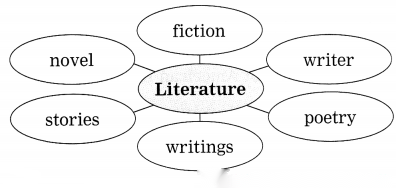
Complete the following word-web with the words related to literature: (Answers are directly given.)
Solution & Step-by-Step Answer:
Question 3
Maharashtra Board Solution
Find out any four wrongly spelled words and correct them:
Solution & Step-by-Step Answer:
Question 4
Maharashtra Board Solution
Find out from the passage the words used for the following words:
Solution & Step-by-Step Answer:
Question 5
Maharashtra Board Solution
Classify the following words in the given table: reader, remind, wonder, spider, merchant, return, declare, comet.
Solution & Step-by-Step Answer:
Activities based on contextual grammar:
Question 1
Maharashtra Board Solution
Change the following sentences in indirect speech: 1. “You have chosen a good time to come,” the barber said to Mark Twain. 2. The barber said to Mark Twain, “Have you bought your ticket?”
Solution & Step-by-Step Answer:
1. The barber told Mark Twain that he had chosen a good time to come. 2. The barber asked Mark Twain if he had bought his ticket.
Question 2
Maharashtra Board Solution
Use ‘not only’ …. ‘but also’ and rewrite the sentences: 1. Many anecdotes related to Mark Twain are told and enjoyed even today. 2. Mark Twain opposed wars and imperialism.
Solution & Step-by-Step Answer:
1. Many anecdotes related to Mark Twain are not only told but also enjoyed even today. 2. Mark Twain opposed not only wars but also imperialism.
Identify the mistakes in the following ( sentences and write the correct sentences:
Question 1
Maharashtra Board Solution
Jenerally, then, the improvement would kontinue iear bai iear.
Solution & Step-by-Step Answer:
Generally, then, the improvement would continue year by year.
Question 2
Maharashtra Board Solution
it wud fainali bi possible to meik ius ov thi ( ridandant letez.
Solution & Step-by-Step Answer:
It would finally be possible to make use of the redundant letters.
Identify the tense:
Question 1
Maharashtra Board Solution
1. Henry Irving was telling a humorous story. 2. Mark Twain proposed a plan for the improvement of English Spelling
Solution & Step-by-Step Answer:
1. Past Continuous Tense. 2. Simple Past Tense.
Make the sentences affirmative:
Question 1
Maharashtra Board Solution
1. A man cannot be comfortable without his own approval. 2. Don’t be careless about reading health books.
Solution & Step-by-Step Answer:
1. A man is (can be) uncomfortable without his own approval. 2. Be careful about reading health books.
Frame a wh-question to get the underlined part as an answer in each sentences:
Question 1
Maharashtra Board Solution
Mark Twain received a letter from a reader.
Solution & Step-by-Step Answer:
What did Mark Twain receive from a reader?
Question 2
Maharashtra Board Solution
Mark Twain’s birth was heralded by the return of Halley’s comet.
Solution & Step-by-Step Answer:
What was heralded by the return of Halley’s comet?
Personal Response:
Question 1
Maharashtra Board Solution
What is the importance of humour in our life?
Solution & Step-by-Step Answer:
Humour is the most effective and important ingredient, to spice up the dish of life. It is enjoyed by all irrespective of age, caste, gender, whatever. It is one thing which can bind us all and generate a positive and happy environment. Even the most difficult situations can be handled with ease, if we are armed with humorous mind and disposition.
Question 2
Maharashtra Board Solution
What do you know about Mark Twain?
Solution & Step-by-Step Answer:
Mark Twain, was an American writer, humorist, publisher and lecturer. He was born on 30th November, 1835 in Florida (U.S.). Twain earned a great deal of money from his humorous writings and lectures. He was lauded as the greatest American humorist of his age. The Adventures of Tom Sawyer and The Adventures of Huckleberry Finn were his two major classics of American literature.
Question 3
Maharashtra Board Solution
Why should we avoid spelling mistakes while writing?
Solution & Step-by-Step Answer:
Correct spelling improves the overall presentation of our work and helps with our confidence in writing. Incorrect spelling can be both embarrassing and damaging. It changes the meaning of the sentences. It also leaves a bad impression of the writer on the readers’ mind.
Question 4
Maharashtra Board Solution
How can you improve English spellings?
Solution & Step-by-Step Answer:
We can improve our English spellings in the following ways:
Question 5
Maharashtra Board Solution
Why should we take part in humorous sessions?
Solution & Step-by-Step Answer:
Jokes can make people laugh and this impacts the blood circulation. Humorous sessions are often considered as good time for individuals with heart and other cardiovascular problems. It indirectly improves immune system by increasing infection-fighting antibodies. It reduces pains and takes us out from our problems.
Activities Based on Language study Do as directed:
Question 1
Maharashtra Board Solution
Complete the words by using correct letters: |
Question 2
Maharashtra Board Solution
Copy the following sentences correctly:
Solution & Step-by-Step Answer:
1. “Have you bought your ticket yet?” 2. “You’ve chosen a good time to come,” he declared.
Question 3
Maharashtra Board Solution
Put the following words In alphabetical order: 1. reader, spider, merchant, honour. 2. careless, classic, curiosity, cosmically.
Solution & Step-by-Step Answer:
1. honour, merchant, reader, spider. 2. careless, classic, cosmically, curiosity.
Question 4
Maharashtra Board Solution
Punctuate the following sentences: 1. are you quite sure you havent heard this he demanded suspiciously. 2. i not only heard the story invented it said mark twain.
Solution & Step-by-Step Answer:
1. “Are you quite sure you haven’t heard this?” he demanded suspiciously. 2. “1 not only heard the story, I invented It!” said Mark Twain.
Question 5
Maharashtra Board Solution
Write four small words (minimum 3 letters each) using the letters in the given word: ‘generalizations’
Solution & Step-by-Step Answer:
Question 6
Maharashtra Board Solution
Spot the error and rewrite the correct sentences: 1. A man does not be comfortable without his own approval. 2. Mark Twain will oppose wars and imperialism and supported the cause of labourers.
Solution & Step-by-Step Answer:
1. A man cannot be comfortable without his own approval. 2. Mark Twain opposed wars and imperialism and supported the cause of labourers.
Question 7
Maharashtra Board Solution
Write related words as shown in the example: (Answers are directly given.)
Solution & Step-by-Step Answer:
Question 8
Maharashtra Board Solution
Complete the following word-chain of verbs. Add four words, each beginning with the last letter of the previous word: find → ……………… → ……………. → …………….. → ……………….
Solution & Step-by-Step Answer:
find → drink → keep → play → yell.
Do as directed:
Question 1
Maharashtra Board Solution
Make your own meaningful sentence by using the phrase ‘to wait for’.
Solution & Step-by-Step Answer:
We should always wait for the right opportunity.
Question 2
Maharashtra Board Solution
Add a prefix or suffix to make new words and use one of the root words in your own sentence: 1. advantage 2. agree.
Solution & Step-by-Step Answer:
1. disadvantage 2. disagree. Sentence: There are many advantages of reading good books.
Question 3
Maharashtra Board Solution
Add a clause to expand the sentence meaningfully: I bought a new mobile …………………..
Solution & Step-by-Step Answer:
I bought a new mobile which is not at all useful for me.
Activities:
Question 1
Maharashtra Board Solution
Can you think of other examples of irregularities in English spelling? (Few examples are given here. Students may think and write other examples.)
Solution & Step-by-Step Answer:
Question 2
Maharashtra Board Solution
Write a few sentences according to the improvements suggested for each year:
Solution & Step-by-Step Answer:
|
