Maharashtra State Board Class 8 Science Solutions Chapter 11 Human Body and Organ System
Class 8 Science Chapter 11 Human Body and Organ System Textbook Questions and Answers
1. Find out my partner.
Question a.
Group ‘A’ | Group ‘B’ |
1. Heartbeats | a. 350 ml |
2. RBC | b. 7.4 |
3. WBC | c. 37° C |
4. Blood donation | d. 72 per min |
5. Normal body temperature | e. 50 – 60 lakh/mm3 |
6. pH of oxygenated blood | f. 5000 – 6000 per mm3 |
Answer:
Group ‘A’ | Group ‘B’ |
1. Heartbeats | d. 72 per min |
2. RBC | e. 50 – 60 lakh/mm3 |
3. WBC | f. 5000 – 6000 per mm3 |
4. Blood donation | a. 350 ml |
5. Normal body temperature | c. 37° C |
6. pH of oxygenated blood | b. 7.4 |
2. Complete the following table.
Question a.
Answer:
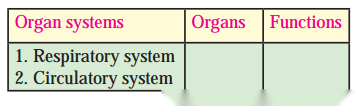
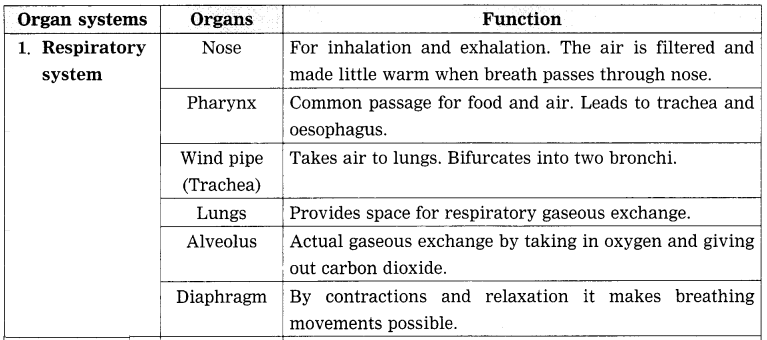
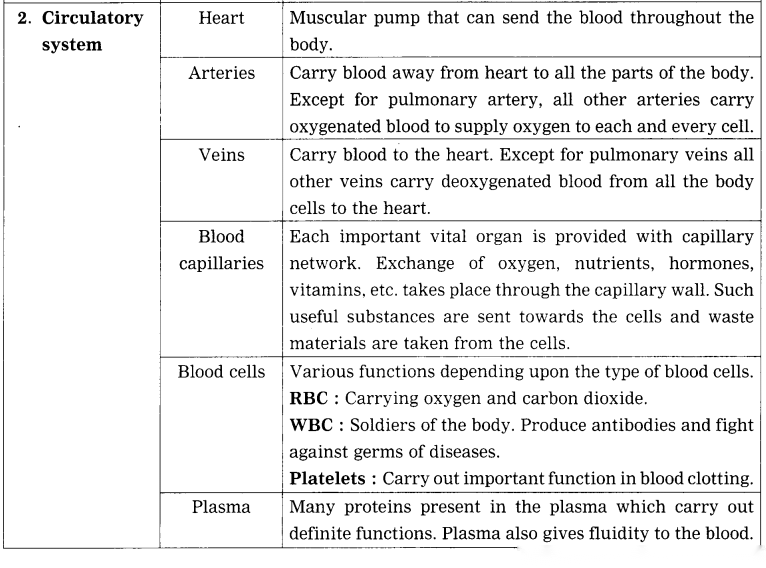
3. Draw neat and labeled diagrams.
Question a.
Respiratory system.
Answer:
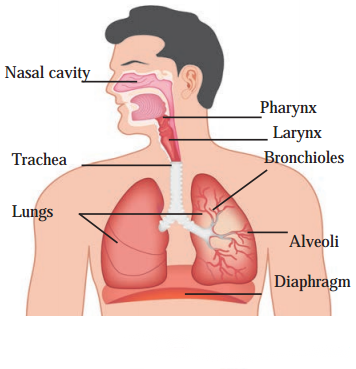
Question b.
Internal structure of heart.
Answer:
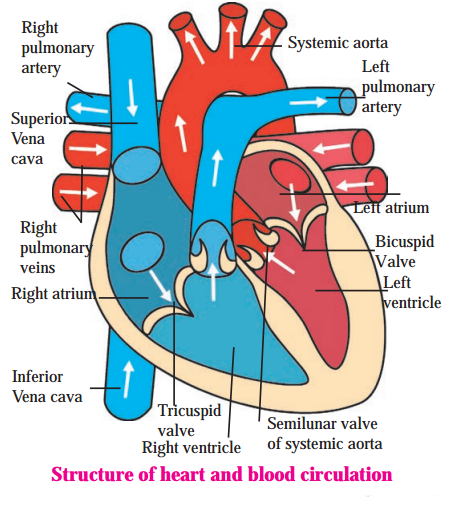
4. Explain with reasons.
Question a.
Human blood is red coloured.
Answer:
The red colour of human blood is due to hemoglobin which is a red coloured conjugated protein with iron that is present on the red blood cells. Therefore, it looks red.
Question b.
Upward and downward movement of diaphragm occurs consecutively.
Answer:
The breathing movements are possible due to contraction and relaxation of the diaphragm. The rib muscles also help in these movements. When the ribs rise and diaphragm is lowered at the same time, then there is a decrease in pressure on lungs.
This causes movement of air into the lungs at the time of inhalation. On the other hand, when ribs come back to their normal position and diaphragm is risen, then pressure on the lungs increases. This causes movement of the air out of the body through the nose in the form of exhalation. These movements are possible only due to consecutive upward and downward movement of the diaphragm.
b
Question c.
Blood donation is considered to be superior of all donations.
Answer:
Blood cannot be manufactured by any artificial chemical process. The only way to obtain blood is by donations of blood from a live donor. Blood is needed at times of emergency. The life of person can be saved if timely blood transfusion is given to the needy victim or a patient. Since such donation can save a valuable human life, it is called superior of all donations.
Question d.
Person with ‘O’ blood group is considered as ‘universal donor’.
Answer:
Person with ‘O’ blood group does not have any antigen on his/her RBCs. The ‘O’ type blood thus cannot cause clotting reactions in the body of the recipients. Such persons with ‘O’ blood group can donate blood to any person having any blood group therefore they are considered as ‘universal donor’.
Question e.
Food must have limited amount of salts.
Answer:
More salt in diet means more sodium ions. These extra sodium salts cause rise in blood pressure. Such condition is called hypertension. This condition can be dangerous and fatal in some cases. Therefore, one must keep control over sodium content of the food.
5. Answer the following questions in your own words.
Question a.
Explain the functional correlation of circulatory system with respiratory, digestive and excretory system.
Answer:
1. Three systems viz. respiratory, digestive and circulatory always work in coordination.
2. Digestive system helps in breaking down complex food molecules into simple soluble nutrients at the end of the digestion process.
3. The soluble nutrients are absorbed in the circulating blood in the villi of the intestine.
4. The blood carries these nutrients to each cell during its circulation.
5. The respiratory system helps the oxygen from the air to be absorbed in the blood.
6. This process takes place in alveolus present in lungs. The oxygen is absorbed in the blood and through haemoglobin it is taken to every cell of the body. At the same time the unwanted carbon dioxide produced in each cell is given out in a process of gaseous exchange.
7. The soluble nutrients, and chiefly glucose is metabolized with the help of oxygen-producing energy. Thus, all the three systems bring about coordinated functions to keep the body alive.
Question b.
Explain the structure and function of human blood.
Answer:
I. Structure, i.e. components of the human blood: Human blood is a fluid connective tissue consisting of blood plasma and blood corpuscles suspended in it.
1. Plasma: Plasma is the fluid part of the blood which is pale yellow in colour. It is slightly alkaline in nature. It has 90-92% water, 6-8 % proteins and 1-2 % inorganic salts.
It contains proteins such as albumin, globulin, fibrinogen, etc. There are inorganic ions such as Ca, Na and K.
2. Blood cells:
a. Blood cells are mainly of three types, viz. RBCs, WBCs and blood platelets. They are produced in the red bone marrow.
b. RBCs are small, circular and enucleated cells. They are full of haemoglobin which is essential in transporting oxygen. RBCs are red blood cells which are 50 to 60 lakh per cubic millimetre. Their life span is 100 to 127 days.
c. WBCs are large, nucleated and colourless. They are of five subtypes, viz. neutrophils, basophils, eosinophils, monocytes and lymphocytes. They are 5 to 10 thousands per millimetre of blood.
d. Platelets are very small disc-shaped blood cells which are 2.5 to 4 lakh per cubic millimetre of blood.
II. Function of human blood:
1. Transport functions:
2. Protection: Antibodies are produced in the blood and they protect the body from microbes and other harmful particles.
3. Thermoregulation: Body temperature is maintained constant at 37 °C by vasodilation and vasoconstriction.
4. Maintaining the balance of minerals like Na, K in the body.
5. If bleeding occurs at the injury, platelets and a protein called fibrinogen of the blood form a clot and seal the injury.
6. Functions of blood cells:
Question c.
Explain the importance and need of blood donation.
Answer:
Blood can never be synthesized artificially. There is no substitute for natural blood. Every healthy person possesses about 5 litres of blood in his or her body. In case of haemorrhage i.e. blood loss, the blood volume may reduce which can result into threat to life. Moreover, the loss of blood should be immediately taken care of, otherwise it may cost the life.
Therefore blood transfusion is very crucial in case of victims of accidents, patients of surgeries or mothers who suffer from blood loss during childbirth (parturition). Some diseases such as thalassemia, blood cancer, etc. also need regular transfusions. Therefore, blood is always needed in many such conditions. Blood donation is only option for such transfusions.
6. Explain the differences.
Question a.
Arteries and veins.
Answer:
Arteries | Veins |
1. Arteries carry blood away from the heart to the tissues of the body. | 1. Veins carry blood from the tissues of the body back to the heart. |
2. Arteries are located deeper within the body. | 2. Veins are usually located superficially beneath the surface of the skin. |
3. Arteries are thick walled | Veins are thin walled. |
4. Arteries do not have valves. | 4. Veins have valves. |
5. Arteries would generally remain open if blood flow stopped, due to their thick muscular layer. | 5. Veins would collapse if blood flow stops. |
6. Except pulmonary artery, all arteries carry oxygenated blood. | 6. Except pulmonary vein, all veins carry deoxygenated blood. |
7. Arteries are more muscular than veins, which helps in transporting blood that is full of oxygen efficiently to the tissues. | 7. Veins are less muscular than arteries, but contain valves to help keep blood flowing in the right direction, usually toward the heart. |
8. There is maximum blood pressure in the arteries. | 8. There is minimum blood pressure in the veins. |
Question b.
External and internal respiration.
Answer:
External respiration | Internal respiration |
1. Intake of air from the outside into the body and release of air from the body to outside is called external respiration. | 1. Exchange of gases between cells and tissue fluid is called internal respiration. |
2. External respiration occurs between cells and the external environment. | 2. Internal respiration occurs only in the cells of the body. |
3. It involves processes of inspiration and expiration. | 3. It involves movement of O2from blood into tissue fluid and movement of CO2from tissue. |
4. External respiration involves breathing and gaseous exchange. | 4. Internal respiration involves neither breathing nor gaseous exchange. |
5. Oxygen combines with haemoglobin in external respiration. | 5. Chemical reactions occur in the cells to form energy. |
7. Which health parameters of blood donor should be checked?
Question a.
Which health parameters of blood donor should be checked?
Answer:
Blood donor should be healthy. He or she should have good haemoglobin’s content. The RBC and WBC count should also be normal. They should not carry any parasites in their blood such as malarial parasite or dengue virus. The donor should not be HIV positive or should not have any infectious diseases. He should not have any addictions such s drug-abuse or alcohol consumption.
8. Fill in the blanks using appropriate words given in the bracket.
(hemoglobin, alkaline, diaphragm, red bone marrow, acidic, voluntary, involuntary,)
Question a.
RBCs of the blood contain ……….., an iron compound.
Answer:
RBCs of the blood containhaemoglobin, an iron compound.
Question b.
……………….. is present between thoracic and abdominal cavity.
Answer:
Diaphragmis present between thoracic and abdominal cavity.
Question c.
Cardiac muscles are …………….
Answer:
Cardiac muscles areinvoluntary.
Question d.
pH of oxygenated blood is …………….
Answer:
pH of oxygenated blood isalkaline.
Question e.
Production of RBCs occurs in ……………….
Answer:
Production of RBCs occurs inred bone marrow.
8. Find odd one out.
Question a.
A, O, K, AB, B.
Answer:
K (All others are blood groups.)
Question b.
Blood plasma, platelets, blood transfusion, blood corpuscles.
Answer:
Blood transfusion (All others are components of blood.)
Question c.
Trachea, alveoli, diaphragm, capillaries.
Answer:
Capillaries (All others are parts of respiratory system. Capillaries exist throughout the body.)
Question d.
Neutrophils, globulins, albumins, prothrombin.
Answer:
Neutrophils (All others are proteins present in the plasma.)
10. Read the following paragraph and identify the disease.
Today, her child became one and half year old. However, that child does not seem to be healthy and happy. It was continuously crying and gradually becoming weak. It has shortness of breath. Its nails have become blue.
Answer:
The heart of the child is not functioning properly. Bluish nails show lack of oxygen, thus the baby may be suffering also from respiratory problems.
11. Your neighboring uncle has been diagnosed with hypertension. What should he do to keep his blood pressure within normal range?
Question a.
Your neighboring uncle has been diagnosed with hypertension. What should he do to keep his blood pressure within normal range?
Answer:
Hypertension has many causes. Try to find out what is the exact cause. Is it lack of exercise, obesity, lots of fast and junk food consumption, over-intake of salt, mental tension, etc. He should visit a proper physician and take prescribed blood pressure control medicines. He should never miss a single tablet. He should avoid salty and preserved food. He should practice yoga and meditation. He should also undertake some stress- management techniques.
Project:
Question a.
Collect information about various modern treatments on heart diseases.
Class 8 Science Chapter 11 Human Body and Organ System Important Questions and Answers
Rewrite the statements after correcting them:
Match the columns/Find out my partner:
Group ‘A’ | Group ‘B’ |
1. William Harvey | a. Blood group AB. |
2. Carl Landsteiner | b. A, B, O blood group system. |
3. Decastello and Sturli | c. Mechanism of circulation of blood. |
Group ‘A’ | Group ‘B’ |
1. William Harvey | c. Mechanism of circulation of blood. |
2. Carl Landsteiner | b. A, B, O blood group system. |
3. Decastello and Sturli | a. Blood group AB. Complete the following table:
Question 1
Maharashtra Board Solution
|
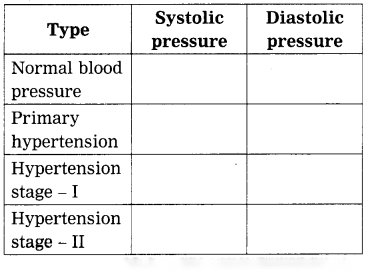
Type | Systolic pressure | Diastolic pressure | ||||||||||||||||||||||||||||
Normal blood pressure | 90 – 119 mmHg | 60 – 79 mmHg | ||||||||||||||||||||||||||||
Primary hypertension | 120 – 139 mmHg | 80 – 89 mmHg | ||||||||||||||||||||||||||||
Hypertension stage – I | 140 – 159 mmHg | 90 – 99 mmHg | ||||||||||||||||||||||||||||
Hypertension stage – II | > 160 mmHg | > 100 mm Define the following terms: Answer the following questions in one or two sentences each:
Question 1
Maharashtra Board Solution
What are the heart sounds and why are they produced?
Solution & Step-by-Step Answer:
There are two types of heart sounds, one is ‘lubb’ and other is ‘dub’. These are produced due to closure of the heart valves.
Question 2
Maharashtra Board Solution
What is blood circulation?
Solution & Step-by-Step Answer:
The process of pumping the blood to all the parts of the body and bringing it back again to the heart is called the blood circulation.
Question 3
Maharashtra Board Solution
Name any four proteins present in the blood plasma.
Solution & Step-by-Step Answer:
The proteins present in the blood plasma are albumin, globulins, fibrinogen and prothrombin.
Question 4
Maharashtra Board Solution
Which inorganic ions control the function of muscles and nerves?
Solution & Step-by-Step Answer:
Calcium, sodium and potassium control the functions of muscles and nerves.
Question 5
Maharashtra Board Solution
What is the basis on which blood group is determined?
Solution & Step-by-Step Answer:
The antigen present on the RBCs: and the antibodies present in the plasma of I the blood determine the type of blood group. The genes of parents are responsible for the type of blood group that the child inherits.
Question 6
Maharashtra Board Solution
Under which conditions, blood is required for donation?
Solution & Step-by-Step Answer:
Whenever there is hemorrhage, the patient requires blood. Such patients are accident victims, those who excessively bleed, women during childbirth (parturition) and for patients undergoing surgeries.
Question 7
Maharashtra Board Solution
How much blood is collected from a person during donation?
Solution & Step-by-Step Answer:
About 350 ml of blood is collected from a person during donation.
Question 8
Maharashtra Board Solution
When is National Voluntary Blood Donation Day observed?
Solution & Step-by-Step Answer:
National Voluntary Blood Donation Day is observed on 1st October every year.
Explain the differences:
Question 1
Maharashtra Board Solution
Atria and ventricles:
Solution & Step-by-Step Answer:
Question 2
Maharashtra Board Solution
RBCs and WBCs:
Solution & Step-by-Step Answer:
Give scientific reasons:
Question 1
Maharashtra Board Solution
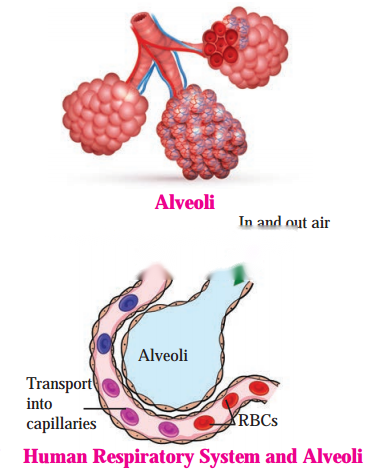
A very large number of alveoli is present in lungs, which are covered over by capillary network.
Solution & Step-by-Step Answer:
Due to very large number of alveoli the surface area of the lungs is increased many a times for the gaseous exchange. The alveoli are covered over by capillary network for rapid gaseous exchange. The oxygen is taken in the body and at the same time carbon dioxide is given out of the body only by the gaseous exchange occurring at the alveolar surface.
Question 2
Maharashtra Board Solution
Heart is covered by double layered pericardial membrane.
Solution & Step-by-Step Answer:
Pericardium is the protective double membrane that covers the heart. In between the two layers of this membrane there is protective fluid. The pericardium and the fluid together protect the heart from friction and mechanical shock. Since heart is a vital organ, it is well protected by such pericardial membrane.
Question 3
Maharashtra Board Solution
Veins are provided with valves.
Solution & Step-by-Step Answer:
Valves prevent the backflow of the blood. Blood in the veins is not under great pressure so it is likely that it may flow back. But valves prevent such movements. Therefore they are provided with valves.
Write short notes on the following:
Question 1
Maharashtra Board Solution
Cellular respiration:
Solution & Step-by-Step Answer:
Question 2
Maharashtra Board Solution
Lung:
Solution & Step-by-Step Answer:
Question 3
Maharashtra Board Solution
Diaphragm:
Solution & Step-by-Step Answer:
Question 4
Maharashtra Board Solution
Structure of human heart:
Solution & Step-by-Step Answer:
Question 5
Maharashtra Board Solution
Human Blood Groups:
Solution & Step-by-Step Answer:
Answer the following:
Question 1
Maharashtra Board Solution
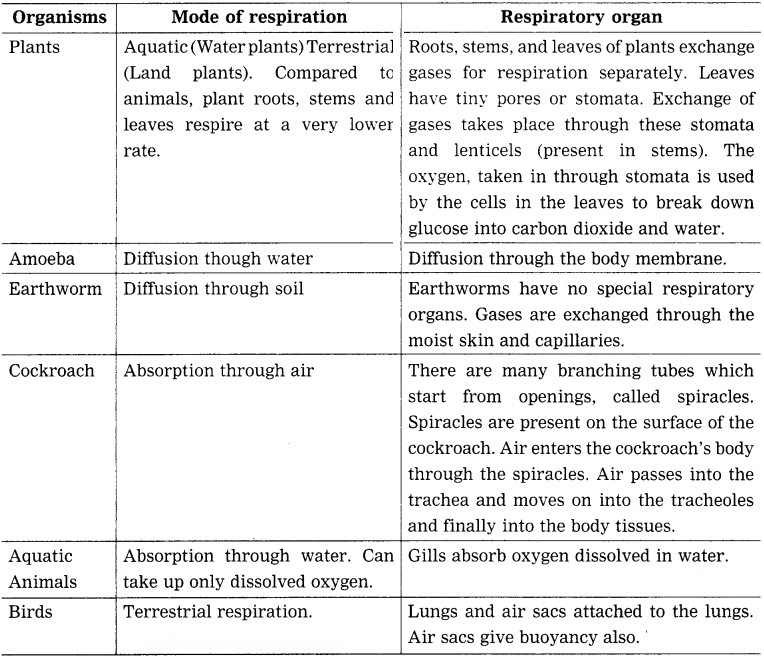
How do the organisms like amoeba, earthworm, cockroach, plants, various aquatic animals, bird, respire? Prepare a chart.
Solution & Step-by-Step Answer:
Diagram – based questions:
Question 1
Maharashtra Board Solution
Sketch and label structure of alveolus showing gaseous exchange.
Solution & Step-by-Step Answer:
Question 2
Maharashtra Board Solution
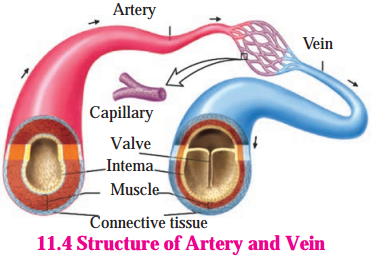
Sketch and label artery and vein showing structural difference between the two.
Solution & Step-by-Step Answer:
Question 3
Maharashtra Board Solution
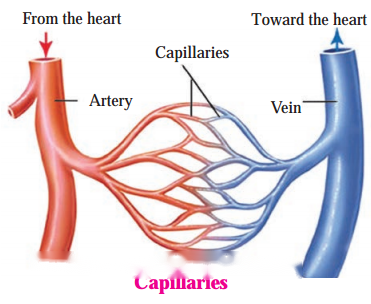
Draw a diagram to show formation of capillaries. Also show how capillaries form a vein.
Solution & Step-by-Step Answer:
MCQs based on experiments: I. Human respiratory system:
Question 1
Maharashtra Board Solution
From which organ does respiratory system of man begin? (a) Trachea (b) Lungs (c) Alveolus (d) Nose
Solution & Step-by-Step Answer:
(d) Nose
Question 2
Maharashtra Board Solution
Which of the statement given below is correct? (a) Wind pipe is present in front of food pipe. (b) Food pipe is present in front of wind pipe. (c) Wind pipe and food pipe are not near each other. (d) Wind pipe is same as oesophagus and food pipe is called trachea.
Solution & Step-by-Step Answer:
(a) Wind pipe is present in front of food pipe.
Question 3
Maharashtra Board Solution
Which type of respiration includes inhalation and exhalation? (a) Internal respiration (b) External respiration (c) Cellular respiration (d) None of the above
Solution & Step-by-Step Answer:
(b) External respiration
Question 4
Maharashtra Board Solution
How many molecules of ATP are produced from one molecule of glucose ? (a) 26 (b) 36 (c) 38 (d) 40
Solution & Step-by-Step Answer:
(c) 38
Question 5
Maharashtra Board Solution
Where is sound box located in the body? (a) At the beginning of the wind pipe. (b) At the beginning of the food pipe. (c) At the end of the wind pipe. (d) At the end of the food pipe.
Solution & Step-by-Step Answer:
(a) At the beginning of the wind pipe.
II. Structure of heart:
Question 1
Maharashtra Board Solution
What is the location of a bicuspid valve in human heart? (a) Between right and left ventricle. (b) Between left and right atrium. (c) Between left atrium and left ventricle. (d) Between right atrium and right ventricle.
Solution & Step-by-Step Answer:
(c) Between left atrium and left ventricle.
Question 2
Maharashtra Board Solution
Which blood vessels bring deoxygenated blood to the right atrium? (a) Superior and inferior vena cava (b) Pulmonary veins (c) Pulmonary artery (d) Systemic aorta
Solution & Step-by-Step Answer:
(a) Superior and inferior vena cava
Question 3
Maharashtra Board Solution
Which artery carries deoxygenated blood and which vein carries the oxygenated blood respectively? (a) Dorsal aorta and inferior vena cava respectively. (b) Pulmonary vein and pulmonary artery respectively (c) Pulmonary artery and pulmonary vein respectively (d) Superior vena cava and inferior vena cava respectively.
Solution & Step-by-Step Answer:
(c) Pulmonary artery and pulmonary vein respectively
Question 4
Maharashtra Board Solution
Under which of the following condition will rate of heartbeat be faster? (a) Sleeping (b) Resting (c) Running (d) Sitting
Solution & Step-by-Step Answer:
(c) Running
Question 5
Maharashtra Board Solution
Which chambers of the heart are called receiving chamber? (a) Both atria (b) Right ventricle (c) Left ventricle (d) Only left atria
Solution & Step-by-Step Answer:
(a) Both atria
|