Latest Maharashtra State Board (SSC & HSC) 2026-27 Syllabus Digest & Solutions Updated!
Class 12 (HSC Board)Psychology2026-27 Syllabus

Chapter 1 Psychology: A Scientific Discipline Solutions

Complete Maharashtra State Board Balbharati & Yuvakbharati textbook solutions for Chapter 1 Psychology: A Scientific Discipline. Step-by-step solved exercises, numerical problems, and digest answers.

24 Solved Questions2 Diagrams2343 words

Maharashtra State Board Class 12 Psychology Solutions Chapter 1 Psychology: A Scientific Discipline

1. Choose the correct option and complete the following statements.

Question 1 Maharashtra Board Solution
Till 1879, psychology was a branch of ………. (a) physics (b) philosophy (c) physiology
Solution & Step-by-Step Answer:
(b) philosophy
Question 2 Maharashtra Board Solution
Psychology is a science. (a) natural (b) social (c) biological
Solution & Step-by-Step Answer:
(b) social
Question 3 Maharashtra Board Solution
…………………. is considered as founder of Psychoanalysis. (a) Wilhelm Wundt (b) Carl Rogers (c) Sigmund Freud
Solution & Step-by-Step Answer:
(c) Sigmund Freud

2. Match the pair

Group A

Group B

(1) Structuralism

(a) John Watson

(2) Functionalism

(b) Carl Rogers

(3) Behaviourism

(c) Ulric Neisser

(4) Cognitivism

(d) William James

(e) Wilhelm Wundt

Answer:

Group A

Group B

(1) Structuralism

(e) Wilhelm Wundt

(2) Functionalism

(d) William James

(3) Behaviourism

(a) John Watson

(4) Cognitivism

(c) Ulric Neisser

3. State whether the following statements are true or false.

Question 1 Maharashtra Board Solution
Psychology is a study of mental processes.
Solution & Step-by-Step Answer:
True
Question 2 Maharashtra Board Solution
Case study method is quite often used by clinical psychologists.
Solution & Step-by-Step Answer:
True
Question 3 Maharashtra Board Solution
An experimenter is a person on whom the experiment is conducted.
Solution & Step-by-Step Answer:
False

4. Answer the following in one sentence each.

Question 1 Maharashtra Board Solution
In which year was the first psychology laboratory established?
Solution & Step-by-Step Answer:
The first psychology laboratory was established in 1879 by Wilhelm Wundt, at the University of Leipzig in Germany.
Question 2 Maharashtra Board Solution
Who is considered as the ‘Father of American Psychology’?
Solution & Step-by-Step Answer:
William James, founder of Functionalism school of thought of psychology is considered ‘Father of American Psychology’.
Question 3 Maharashtra Board Solution
What is meant by an experimenter?
Solution & Step-by-Step Answer:
The person who conducts the experiment is called the experimenter.

5. Define / Explain the concepts in 25 – 30 words each.

Question 1 Maharashtra Board Solution
Replicability
Solution & Step-by-Step Answer:
Replicability is one of the key features of science. Scientific knowledge can be replicated under the same circumstances as the original experiment. This ensures reliability of results towards establishing a scientific theory.
Question 2 Maharashtra Board Solution
Correlation coefficient.
Solution & Step-by-Step Answer:
Correlation coefficient is the measurement of the correlation between two or more variables. Its value extends between -1.00 to +1.00. The concept was first introduced by Sir Francis Galton. The Pearson product-moment correlation coefficient is the most commonly used type of correlation coefficient.

6. Write short notes on the following in 50 – 60 words each.

Question 1 Maharashtra Board Solution
Observation method
Solution & Step-by-Step Answer:
Observation method is a research method that is employed in conditions where experiments may not be possible or even necessary. Observation is used by child psychologists and social psychologists. It may be carried out in a natural setting, for e.g., observing candidates waiting their turn for an interview. It may also be carried out in controlled conditions. The following factors should be kept in mind while carrying out the observation

The disadvantages of observation are:

Question 2 Maharashtra Board Solution
Survey method
Solution & Step-by-Step Answer:
A survey is a research method used to collect data from a pre-determined group of respondents, i.e., a sample. It is used to obtain information about the preferences, opinions, etc., of the ‘sample’ population. It makes use of tools like questionnaire, checklist, interviews, etc. Survey method is employed by social psychologists, industrial psychologists, etc. The researcher must ensure that-

The disadvantages of survey method are:

Question 3 Maharashtra Board Solution
Case study method
Solution & Step-by-Step Answer:
Case study method is a qualitative research method employed by clinical psychologists. It provides intensive, descriptive information about an individual from multiple sources such as family, peers, school, academic and health records, etc. This helps to assess the person’s level of psychological and social functioning. Researchers may employ techniques like observation, interview, psychological tests, etc. Psychologist such as Sigmund Freud and Jean Piaget made extensive use of case study method. However, this method is very time consuming and subjective.
Question 4 Maharashtra Board Solution
Importance of rationality
Solution & Step-by-Step Answer:
Rationality implies being agreeable to reason. According to Stanovich, “Rationality involves adaptive reasoning, good judgement and good decision making.” According to Dr. Albert Ellis, rationality helps a person to successfully attain goals and be happy. He proposed Rational Emotive Behavioural Therapy (REBT), which is a popular intervention method in counselling psychology. Rationality is important because:

7. Define / Explain the concepts in 25 – 30 words each.

Question 1 Maharashtra Board Solution
Science
Solution & Step-by-Step Answer:
The word science is derived from the Latin word ‘Scientia’ which means ‘knowledge’. Science is the pursuit and application of knowledge and understanding of the natural and social world, following a systematic methodology based on evidence. The key features of science are empirical evidence, objectivity, scientific causality, systematic exploration and replication.
Question 2 Maharashtra Board Solution
Objectivity
Solution & Step-by-Step Answer:
Objectivity is one of the key features of science. It refers to the ability to observe and accept facts as they exist setting aside all sources of expectations, values, prejudices, etc. Science objectively studies some particular phenomenon.

8. Answer the following questions in detail.
Question 1 Maharashtra Board Solution
Explain the types of correlation.
Solution & Step-by-Step Answer:
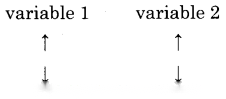
A correlation refers to a statistical tool used to measure the relationship between two or more variables. If the change in one variable is accompanied by a change in the other variable, this interdependence is called correlation. It is measured by correlation coefficient which extends between -1.00 to + 1.00. The types of correlation are: (i) Positive correlation – Both variables either increase or decrease at the same time, for e.g., extent of rehearsal (revision)↑ and recall score↑. The value of positive correlation from 0.00 to + 1.00. It is represented as: variable 1 variable 2

(ii) Negative correlation – An increase in one variable is associated with a decrease in the other and vice-versa. The value of the correlation is between 0.00 to -1.00, for e.g., bunking of lectures (↑) and score in exams (↓).
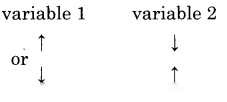
(iii) Zero correlation – A change in one variable leads to no significant change in the other variable, for e.g., height and intelligence.

Question 2 Maharashtra Board Solution
Explain some of the challenges in establishing psychology as a science.
Solution & Step-by-Step Answer:
Many criticisms of psychology as a science have been made on practical, philosophical and ethical grounds. The challenges in establishing psychology as a science are: (i) It is in preparadigmatic state – According to American philosopher, Thomas Kuhn, psychology is still in a preparadigmatic state as it has not succeeded in producing a cumulative body of knowledge that has a clear conceptual cove.

(ii) Issues related to objectivity and validity – Methods used in psychology such as introspection, surveys and questionnaires are subjective. Due to this, psychology lacks two criteria of science, i.e., objectivity and validity.

(iii) Issues related to predictability and replicability – In psychology it is difficult to make exact predictions as people respond differently in different situations. Test result are more varied and hence difficult to replicate.

(iv) Objectifying humans – According to some psychologists, subjecting human behaviour to experimentation amounts to objectifying individuals.

Question 3 Maharashtra Board Solution
Explain the key features of science.
Solution & Step-by-Step Answer:
The word science is derived from the Latin word ‘Scientia’ which means ‘knowledge’. Science is the pursuit and application of knowledge and understanding of the natural and social world, following a systematic methodology based on evidence. They key features of science are:
Question 4 Maharashtra Board Solution
Write detailed information of the experimental method in psychology.
Solution & Step-by-Step Answer:
The systematic observation about a certain problem under controlled laboratory conditions is called an experiment. For example, Albert Bandura conducted experiment to investigate if social behaviours i.e., aggression can be acquired by observation and imitation. The steps involved in an experiment are:

The key terms of experimental method with examples are:

The two variables in an experiment are:

The features of the method are:

The limitations of the method are:

Question 5 Maharashtra Board Solution
Explain the characteristics of a rational individual.
Solution & Step-by-Step Answer:
One of the significant aims of individuals is attainment of happiness. However, in the pursuit of happiness, one should not be driven by irrational influences or compromise on social norms and ethics. Psychology helps to improving life quality by applying the concept of rationality in daily life. According to Stanovich, “Rationality involves adaptive reasoning, good judgement and good decision making.” According to Dr. Albert Ellis, rationality helps a person to successfully attain goals and be happy. He proposed Rational Emotive Behavioural Therapy (REBT), which is a popular intervention method in counselling Psychology.

According to Ellis, rational people possess characteristics such as:

The concept of rationality can be explained as:

B (Balance)

Balance between self-interest and interest of others

E (Estimate)

Estimate the time, efforts, gains and losses

R (Respect)

Respect oneself and others

A (Affiliate)

Affiliate with others

T (Tolerate)

Tolerate oneself and others

I (Intergrate)

Integrate personal wellbeing with social wellbeing

0 (Optimize)

Optimize potential fully

N (Navigate)

Navigate path of success

A (Accept)

Accept the limitations and overcome them

L (Live)

Live life fully

How Rational Am I?

Question 1 Maharashtra Board Solution
Identify the strongest and the weakest characteristics in you from those explained by Dr. Albert Ellis.
Solution & Step-by-Step Answer:
Rational people are psychologically healthy and show adaptive reasoning and good decision making. According to Dr. Albert Ellis, some characteristics of rational persons are:

The strongest characteristic in me is self-direction. The weakest characteristic in me is flexibility.

Question 2 Maharashtra Board Solution
How will you work on your weakest characteristic? Write two strategies.
Solution & Step-by-Step Answer:
Two strategies that I can use to improve the flexibility in my life is:

(A) Identify the Independent Variable and Dependent Variable.

Answer:

Independent Variable

Dependent Variable

1. Colour

Moods

2. Positive feedback

Self confidence

3. Loud noise

Concentration levels

4. Classical music

Reading skills

5. Type of diet

Weight loss

6. Fertilizer

Crop Growth

7. Previous year question papers

Scores in the exam

8. Workers participation in decision making

Job satisfaction

(B) Identify the type of correlation.

Answer:

Positive Correlation

3, 4, 8, 10, 12, 13.

Negative Correlation

2, 5, 9, 11, 14.

Zero Correlation

1, 6, 7.

Class 12 Psychology Chapter 1 Psychology: A Scientific Discipline Intext Questions and Answers

ACTIVITIES (Textbook Page. No. 1)

Activity 1

Read the following statements. Think and discuss whether the given statements are facts or myths and misconceptions about psychology:
(i) Psychology is just common sense and not a real science.
(ii) Psychology is simply a pseudoscience.
(iii) Psychologists are simply mind readers or the face readers.
(iv) Psychology is related only to the study of crazy people who are in need of therapy.
(v) Psychologists, psychiatrists and counsellors have the same professional qualifications and their jobs are almost of the same nature.
(vi) Anyone with a degree in psychology can provide counselling to a need person. Answer:
Answer:
All the statements are misconceptions.
Statement 1, 2 are misconceptions because Psychology is a social science that fulfils the criteria of a science, e.g., it employs the scientific method.

Statement 3 is a misconception. Psychologists are trained professionals in some field of psychology, e.g., counselling psychology. They employ tools like observation, case study, experiments, etc.

Statement 4 is a misconception. There are numerous branches of psychology such as Social Psychology, Developmental Psychology, Abnormal Psychology, Environmental Psychology, etc.

Statement 5 is a misconception. Psychiatrists are trained medical doctors and focus on medication management. Psychologists employ psychotherapy such as CBT, REBT, etc.

Statement 6 is a misconception. A counsellor is a person who has academic qualifications as well as professional training in counselling techniques.

Activity 2 (Textbook Page. No. 3)

Read the following statements and discuss about the same in the classroom:
(i) Psychology is a science because it fulfils many conditions of science.
(ii) Psychology is not an exact science like physics or chemistry.
(iii) Psychology is a social science that studies human (and animal) behaviour and mental processes.
(iv) Psychology uses some objective research methods, it examines cause-and-effect relationships to produce laws governing human behaviour and its findings can be verified.
(v) Psychology can be distinguished from pseudoscience and folk wisdom as psychology has evidence against its theories.
(vi) The subject matter of psychology is complex as human behaviour is dynamic and the mental processes are abstract. Therefore, the theories of psychology are not as universal, exact and precise as those in physics and chemistry.
Answer:

Activity 3 (Textbook Page. No. 4)

Visit the website given below and collect information about various schools of thought of psychology:verywellmind.com/psychology-schools-of-thought-2795247
Answer:

In recent times, Behavioural school, Cognitive school and Humanistic school remain influential. Most psychologists adopt an eclectic approach drawing upon different perspectives.

Activity 5 (Textbook Page. No. 5)

Find out the Independent Variable and Dependent Variable from the experiment ideas given below:
(i) To study the effect of practice on memory.
(ii) To study the effect of mental set on problem solving.
(iii) To study the effect of noise pollution on the speed of writing.
(iv) To study the effect of colour on perception.
(v) To study the effect of feedback on decision making.
Answer:

Independent Variable

Dependent Variable

(1) Practice

Efficient memory

(2) Mental set

Problem solving

(3) Noise pollution

Speed of writing

(4) Colour

Perception

(5) Feedback

Efficient decision making

Activity 6 (Textbook Page. No. 8)

Discuss about the following topics that can be studied using correlation study method:
(i) Bunking lectures and score in exams
(ii) Weight and intelligence
(iii) Amount of salary and level of job satisfaction
(iv) Rehearsal and forgetting
(v) Height and aptitude in music
(vi) Urbanization and pollution
(vii) Speed of vehicles and road accidents
Answer:
(a) Positive correlation

(b) Negative correlation

(c) Zero correlation